
Last updated November 23, 2026
 Whole-home duct cleaning
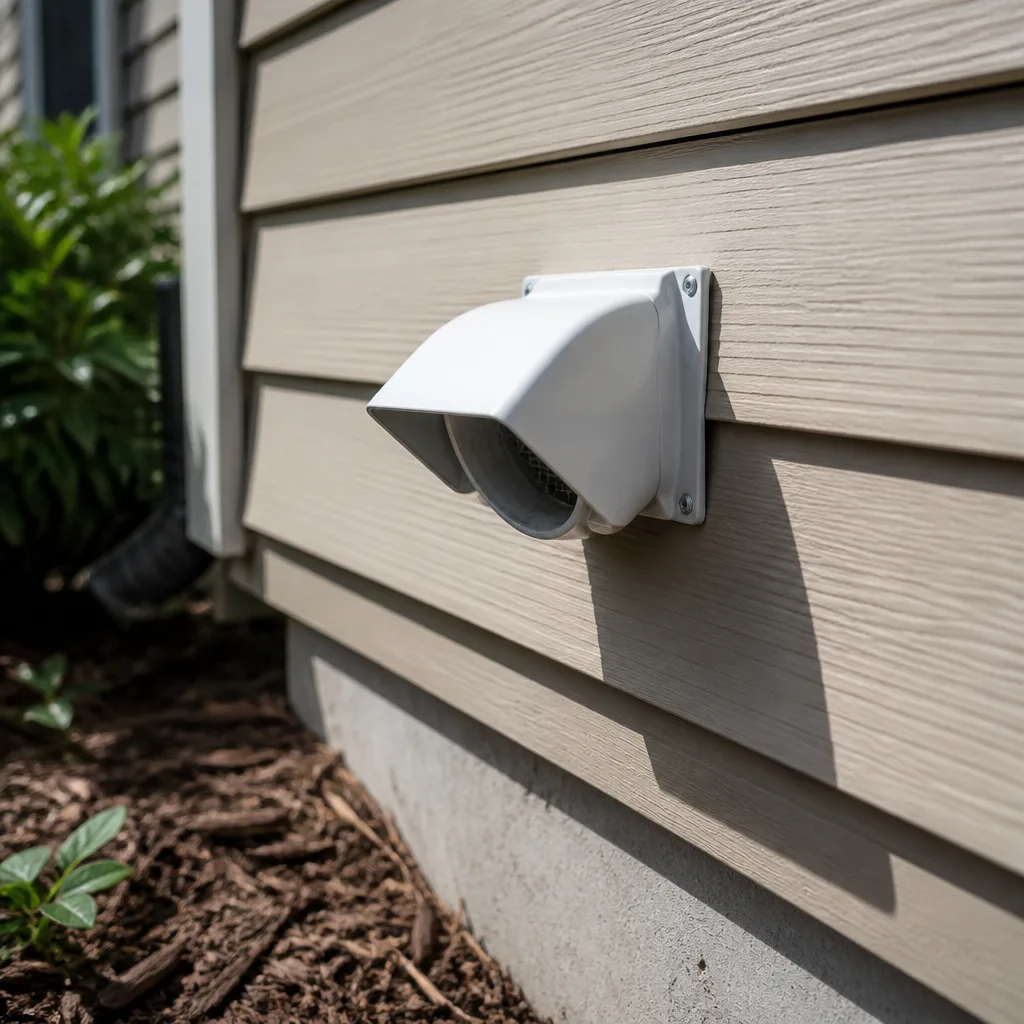 Dryer vent cleaning
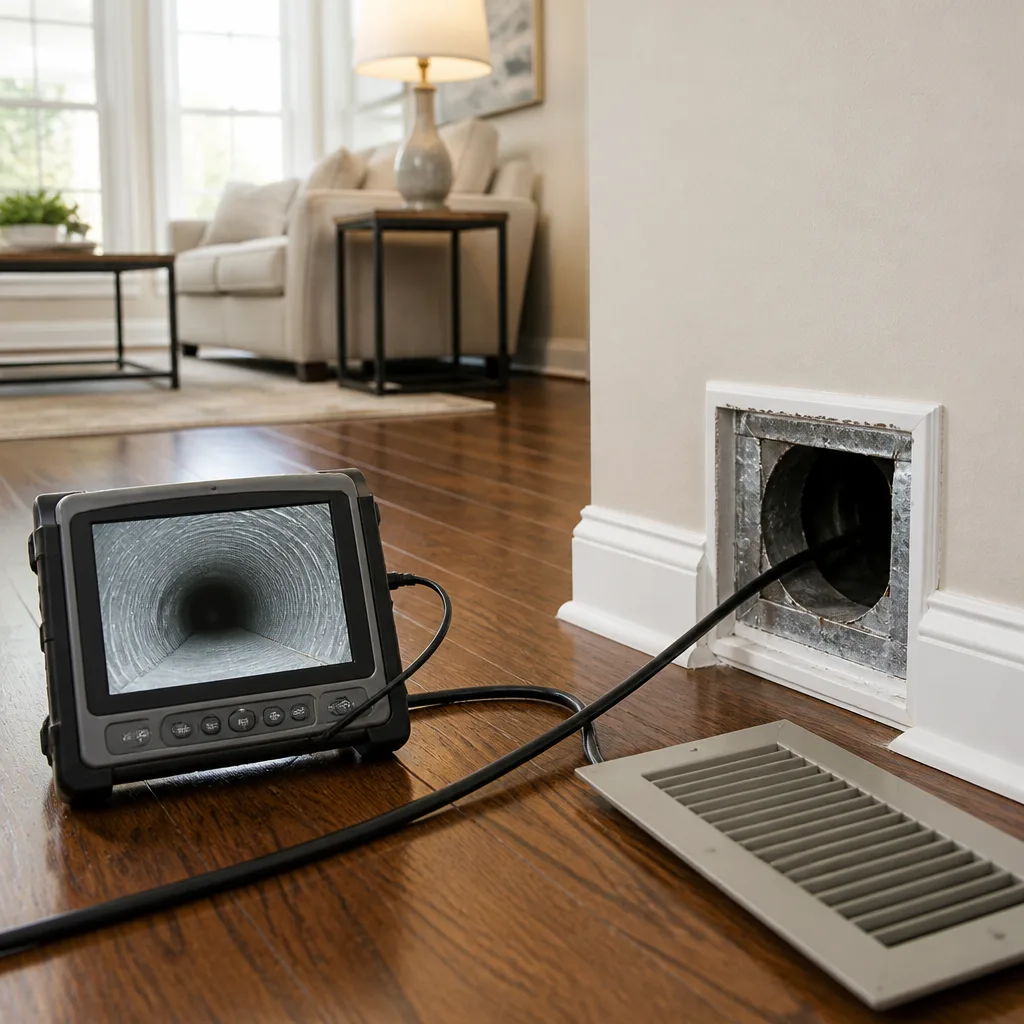 Camera inspection
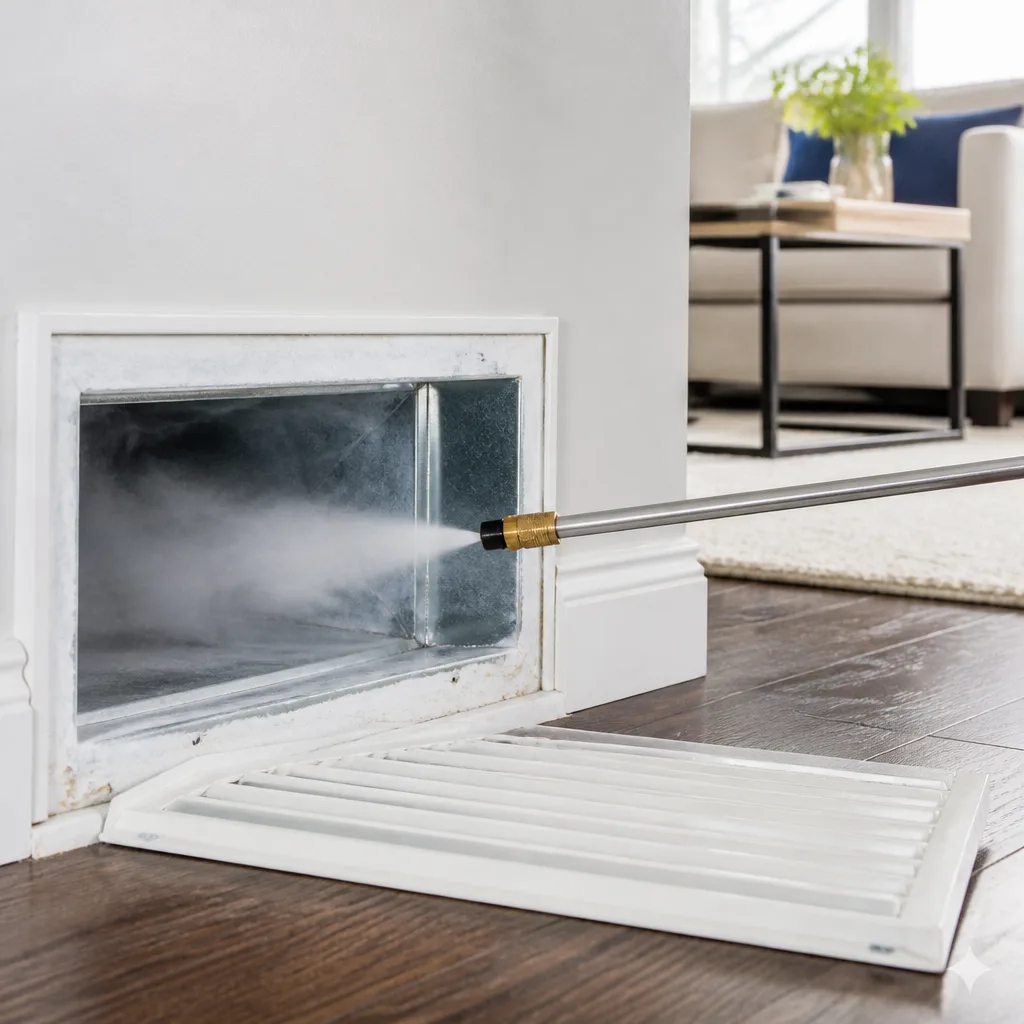 Sanitizing & deodorizing
Whole-system duct and dryer vent check with before-and-after photos - you see exactly what came out of your vents
That "$99 whole-house special" is a bait ad - the real number appears once they are in your hallway, or the "clean" is a shop-vac at the register. We photograph the inside of your ducts before and after instead.
DIY vs Professional Air Duct Cleaning: The Highland Creek Homeowner’s Decision Guide
A shop vac pulls roughly 100 CFM of airflow. A truck-mounted duct cleaning system pulls well over 10,000 CFM. That gap isn’t a matter of a bigger motor or a longer hose. It’s the difference between stirring dust around inside your ductwork and actually removing it from the building. Most homeowners in Highland Creek who set out to clean their own ducts start from confidence and stop somewhere around the third floor register, because the problem was never effort. It was physics. In this guide we’ll explain what negative pressure actually does, where DIY genuinely helps, which tasks are worth doing yourself and which ones make things worse, and how to judge the real cost of each path so you can decide with a clear picture instead of a vague hunch.
Quick Answer
DIY is worth doing for the easy surface tasks – wiping registers, changing filters, keeping return grilles clear – but it cannot clean the inside of your duct runs, because consumer equipment can’t create the sustained negative pressure that pulls debris out of the system. Professional cleaning is the only method that removes accumulated debris rather than redistributing it, and in Highland Creek it’s usually the right call any time ducts haven’t been serviced in more than five years, or after renovation, water intrusion or pest activity.
Styles & brands we work with
- Whole-home duct cleaning
- Dryer vent cleaning
- Camera inspection
- Sanitizing & deodorizing
Table of Contents
- What negative pressure actually does in duct cleaning
- The DIY tasks that genuinely help
- Why Highland Creek flex duct systems punish bad DIY
- When professional cleaning is non-negotiable
- The real cost comparison: DIY versus professional
- What professional-grade equipment actually changes
- How to vet a duct cleaner in Highland Creek
- How to know the work was actually done
What negative pressure actually does in duct cleaning
Duct cleaning works on one principle: you pull air and debris out of the system under controlled vacuum, and you keep pulling until the duct run is clear. That’s what the trade means by source removal. The debris comes out of the building entirely instead of being brushed loose to settle somewhere downstream.
For that to happen, the vacuum has to overcome a few things at once. Duct runs have length, elbows, transitions, and often flex sections with ridges that trap material. Air leaks at joints bleed off vacuum. Every foot of flexible hose between the vacuum and the working end cuts suction. A truck-mounted unit pulls enough air volume to keep real vacuum at the far end of a long run. A shop vac with ten feet of hose and a brush duct-taped to the wand has almost nothing left by the time the tool reaches the boot.
That’s why the numbers matter. The typical shop vac moves roughly 100 CFM. A truck-mounted duct cleaning system moves 10,000 CFM or more. A 100x gap isn’t a detail you can close with a clever attachment. It’s the reason a shop vac creates a dust cloud at the register while the vacuum nozzle is running – the debris is being disturbed and pushed out into the room instead of pulled out of the system.
Professional setups add a second layer. Equipment like Nikro cleaning units and Abatement Technologies negative-air machines keep the work area under contained negative pressure, so debris that gets dislodged inside a duct stays inside the containment instead of drifting into the living space. That’s what separates actual extraction from a good-looking effort. If you want the full walkthrough of how a professional job runs end to end, our air duct cleaning page covers the process in detail.
The DIY tasks that genuinely help
We’re not going to tell you there’s nothing you can do yourself. There’s plenty of useful maintenance a Highland Creek homeowner can and should handle. It just isn’t the inside of the duct run.
Here’s what’s actually worth your time:
- Wipe down the registers and return grilles. Pop the cover off, wash it, dry it, and set it back. Dust that collects on the face of a register gets blown into the room every time the system cycles.
- Change your filter on schedule. A clogged filter chokes airflow, raises static pressure, and pushes dust back into the system. Match the filter to your system – a filter that’s too restrictive for the blower is worse than a clean mid-grade one.
- Clear the dryer vent. Pull the lint screen every load, and disconnect the transition hose behind the dryer a couple of times a year to clear lint buildup. Lint is what turns a dryer vent from an appliance detail into a fire risk. For anything beyond the transition duct, the run inside the wall needs proper equipment – our dryer vent cleaning page explains why.
- Keep return-air grilles unobstructed. Furniture, rugs, pet beds and storage boxes parked in front of a return starve the system and force it to pull air from leaks instead.
- Check the condensate line and drain pan. Standing water near the air handler is the beginning of biological growth inside the ducts. Catching it early is worth more than any cleaning you can do yourself.
None of these replaces professional cleaning, but all of them make professional cleaning last longer and keep the system in better shape between visits. Think of them as the maintenance that protects the investment, not the cleaning itself.
If your goal is a genuinely cleaner system rather than just a tidier register, the honest answer is that the professional side is where the actual work happens. Our HVAC cleaning page walks through what that involves for the air handler and cabinet, which is a whole other zone most homeowners never touch.
Why Highland Creek flex duct systems punish bad DIY
Plenty of homes around Highland Creek were built with flexible duct in at least part of the system, and that changes the DIY risk profile in ways most guides skip. Flex duct isn’t a rigid metal tube. It’s an inner liner of plastic or foil supported by a wire helix, wrapped in insulation, and finished with an outer sleeve. The inner liner is what actually carries the air.
A rotary brush or a stiff bristle attachment run into flex duct at the wrong angle or with the wrong tension can tear the inner liner loose from the outer sleeve. Once it separates, the duct collapses inward. You end up with a choke point that strangles airflow to that whole branch, and you won’t notice until the room starts running warm or cold and every HVAC technician who looks at it wants to cut out the section and rebuild it.
Three failure modes show up again and again with DIY brush work in flex:
- Liner separation – the inner liner detaches, sags, and blocks airflow.
- Wire helix deformation – the spiral support gets bent, creating a permanent dent that traps debris.
- Tape and joint failure – pulling on a duct can break the seal at a boot or a plenum, opening a leak that pulls attic or crawlspace air straight into the living space.
That’s the part most homeowners don’t see coming. A DIY effort that feels successful in the moment can leave the system worse than it started and cost more to fix than the cleaning would have. If you’re looking at a duct run that feels soft, sagging, or torn, stop before you touch it – our duct repair and sealing work exists specifically because of damage like this.
When professional cleaning is non-negotiable
There are situations where DIY isn’t a question of quality but of suitability. If any of these describes your home, professional cleaning isn’t optional – it’s the minimum response.
- Post-renovation debris. Drywall dust, sawdust, fiberglass fragments and construction grit settle into every branch. Sheetrock dust is fine enough to travel straight through a return and coat the inside of the air handler.
- Rodent or pest evidence. Droppings, nesting material or a live infestation in the ductwork means contamination, not dust. Rodent-contaminated systems need dedicated cleaning and sanitizing because disturbance without containment spreads the problem into the living space.
- Moisture intrusion. Any active leak, standing water in the pan or humid smell in the air means growth inside the system. Cleaning without fixing the moisture source doesn’t solve it.
- Mold or musty odor. A persistent smell that doesn’t clear with filter changes is a sign the contamination is inside the duct envelope, where wiping registers can’t reach it.
- A system that hasn’t been serviced in more than five years. Years of accumulation don’t lift out with a shop vac. The equipment gap we described earlier matters most here.
- Recent home purchase with unknown service history. If you don’t know what the previous owners did, a professional inspection is how you find out what you’re working with.
In any of those situations the right call is a full source-removal cleaning, and often a follow-up sanitizing to address whatever the contamination left behind. If a moisture problem or a rough exhaust is part of the picture, that’s the moment to call rather than the moment to experiment. Call (855) 323-8125. We answer 24/7. Fast dispatch from 7am to 7pm, Sunday through Friday.
The real cost comparison: DIY versus professional
DIY looks free until you count what it costs. The honest comparison has to include the price of the tools, the time it takes, and the chance that you’ll pay to have the work redone – which is the most common hidden line item.
Here’s how the two paths compare on the things that actually cost money:
| Cost factor | DIY approach | Professional service |
|---|---|---|
| Tools | Shop vac, brush kit, hoses, tape, ladder; several hundred dollars for decent equipment, and it still can’t produce real vacuum at the far end of a duct run | Included in the job |
| Time | A weekend of work per floor for a partial, surface-level effort | Scheduled, typically same day |
| Coverage | Registers, boots, and the first few feet you can reach | Every branch, plenum, and cabinet, including return runs |
| Containment | None – dislodged dust drifts into the room | Negative-air containment keeps debris inside the system until it’s extracted |
| Cleanup risk | Frequently re-contaminates rooms that were clean | Cleaned up and verified as part of the job |
| Realistic outcome | Dust displaced, not removed; possible duct damage in flex systems | Debris extracted; system is actually cleaner |
That last row is the one that matters most. The hidden cost of DIY isn’t a number on an invoice – it’s the re-cleaning that follows when a partial job pushes debris into runs that were previously clean. You don’t save money by paying twice. You just pay in two visits instead of one.
One more factor: the number that matters at the end of any duct job is not how much dirt came out, but whether the ducts are now clean. The only way to judge that is to see the system before and after the work. Ask any company you hire to show you both.
What professional-grade equipment actually changes
There’s a category of equipment in duct cleaning that a homeowner simply cannot buy, because it’s built for commercial and restoration work rather than a garage shelf. Understanding what each piece does makes the difference between a partial job and a clean system easier to picture.
Here’s what a real professional setup includes, and why each piece matters:
- Rotobrush rotary-brush extraction. A brush on a flexible shaft that rotates and agitates in the same direction the vacuum pulls, so loosened debris gets caught instead of pushed along. This is the industry-standard tool for the inside of a duct run.
- Nikro cleaning units. Industrial vacuum systems built for long runs and heavy debris loads, used in commercial and restoration environments. They hold vacuum where a shop vac loses it.
- Abatement Technologies negative-air machines. These keep the work area under controlled negative pressure, so the debris you dislodge is contained from the moment it’s freed. That’s the difference between cleaning a duct and rearranging what’s inside it.
- Honeywell and Aprilaire air-quality products. The step that changes what enters the system going forward – upgraded filtration and air treatment devices that keep the clean state from degrading in a single season.
- Guardsman-grade sanitizing treatments. Where contamination exists (mold, rodent residue, moisture-affected areas), a dedicated sanitizing step follows the cleaning rather than standing in for it.
Add duct sealing to the list and the picture gets clearer. Cleaning without sealing leaves leaks that pull unfiltered attic or crawlspace air back into the ducts within months. Sealed and clean is what makes the work last. Our duct repair and sealing service exists because cleaning alone doesn’t hold up against a leaky system.
How to vet a duct cleaner in Highland Creek
Duct cleaning has a reputation problem for a reason: the industry includes companies that advertise a low headline price and then present a much larger invoice once the technician is on site. The way to avoid that is to ask the right questions before anything is scheduled. A good company will answer them without hesitation.
Here’s the vetting checklist we’d suggest to any Highland Creek homeowner:
- Ask what equipment they use. A rotary-brush system plus a truck-mounted or industrial vacuum is standard. A shop vac and a sticky brush attachment on the end of a hose is not a duct cleaning.
- Ask whether the price is per system or per vent. Per-vent pricing invites the creep that gives this industry its bad name. One flat price for the whole system, agreed in writing before work starts, is what you want.
- Ask for before-and-after photos of your own ducts. Not stock photos, not another customer’s system. Yours.
- Ask whether they can seal leaks. A cleaning crew that can’t check for and repair duct leaks will leave air loss in place – and the system gets dirty again fast.
- Ask whether they can sanitize. If a company has no contamination-level response, they’re not set up for the cases that actually matter.
- Confirm the local pro is licensed and insured as the state requires. A written estimate and a straightforward scope of work should be in your hands before anyone shows up.
Get the estimate in writing and read it. A written scope is what turns a vague promise into a clear job.
How to know the work was actually done
The one question nobody wants to ask after a duct cleaning is whether it happened. You shouldn’t have to wonder. There are a few concrete things you can check that separate a real cleaning from a vague promise.
What to look for after a professional visit:
- Before-and-after photos of your own ducts. Not proof of effort in general – photos of the system that was cleaned.
- Debris in the collection unit. A real extraction shows what came out of the building. You’re welcome to look.
- Registers and boots visibly clean. Not spotless covers over dusty interiors – the whole register face and boot should read clean.
- No dust puff when the system runs. Turn the system on after the crew leaves. If dust hits the airflow, the work wasn’t finished.
- A written record of what was cleaned and what wasn’t. Branches, plenum, cabinet, returns. The scope should match the estimate.
If any of those don’t check out, that’s the moment to call the company back. And if you’re getting a quote from anyone who won’t commit to before-and-after photos, that’s your signal to keep looking. Call (855) 323-8125 for a free estimate on a properly documented job. We answer 24/7. Fast dispatch from 7am to 7pm, Sunday through Friday.
Common Mistakes to Avoid
- Buying a per-vent price. The low headline figure often balloons once the technician is in the house. Ask for a flat price for the whole system in writing before anyone is scheduled.
- Running a bristle brush into flex duct without checking the liner. Highland Creek homes with flexible duct in the attic or crawlspace are especially at risk. A brush at the wrong tension separates the inner liner and creates a collapse point that’s a bigger repair than the cleaning.
- Cleaning filter-side without cleaning the returns. Dust pulled from the supply runs and pushed toward return grilles settles there, so the system looks clean and acts dirty. Both sides of the system have to be cleaned on the same visit.
- Skipping the system check when ducts are cleaned. If the blower cabinet, coil or plenum are left out of scope, the clean will be undone within a heating season. Confirm those are included.
- Assuming duct cleaning fixes airflow problems. Poor airflow is often a duct design, sizing or leak problem. Cleaning makes a system cleaner, not a system better designed – if airflow is uneven room to room, leaks are part of the conversation.
- Using a shop vac around any moisture or mold. A wet/dry vac blows fine particulate back into the room. Any duct in that condition needs contained, professional-level cleaning, not a home vacuum.
- Skipping registration of the dryer vent. Dryer vents are a separate fire risk and are often forgotten because they sit behind the appliance. Add them to the maintenance routine alongside duct checks.
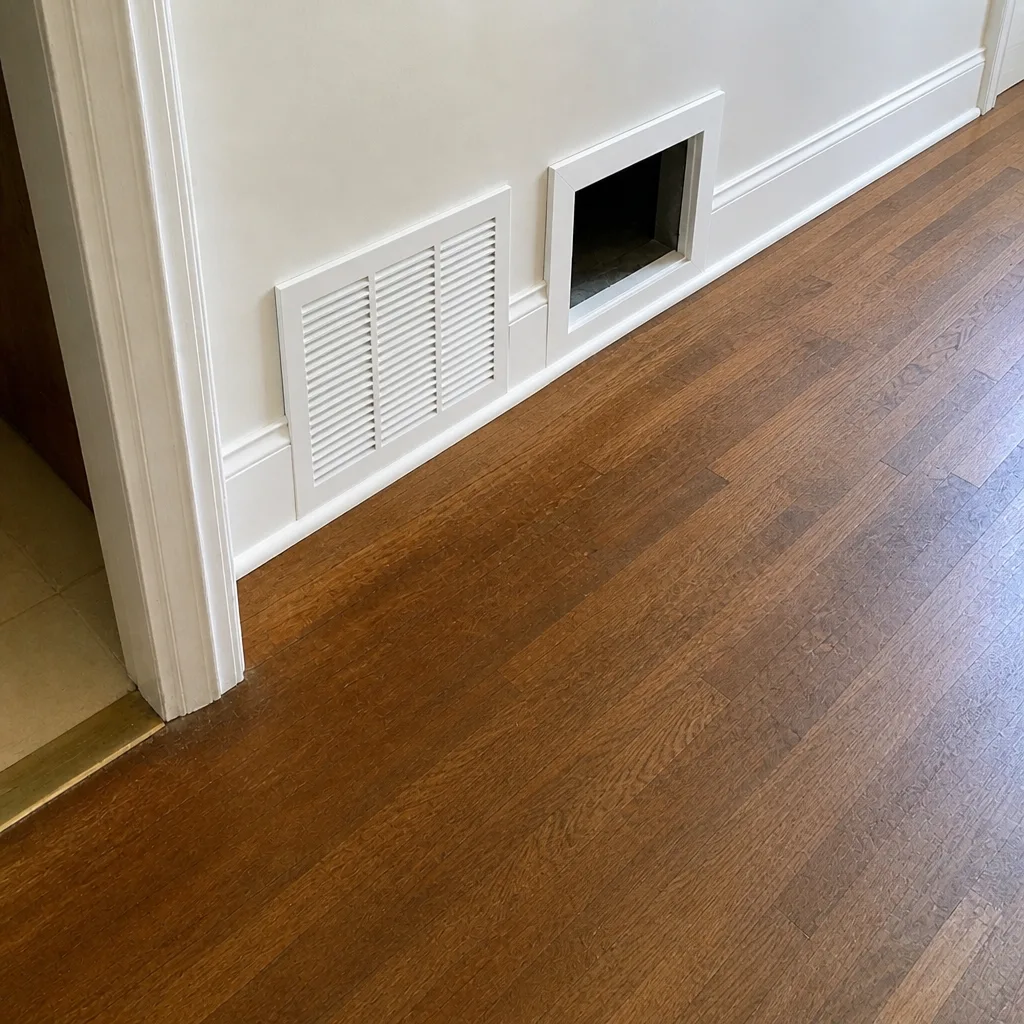
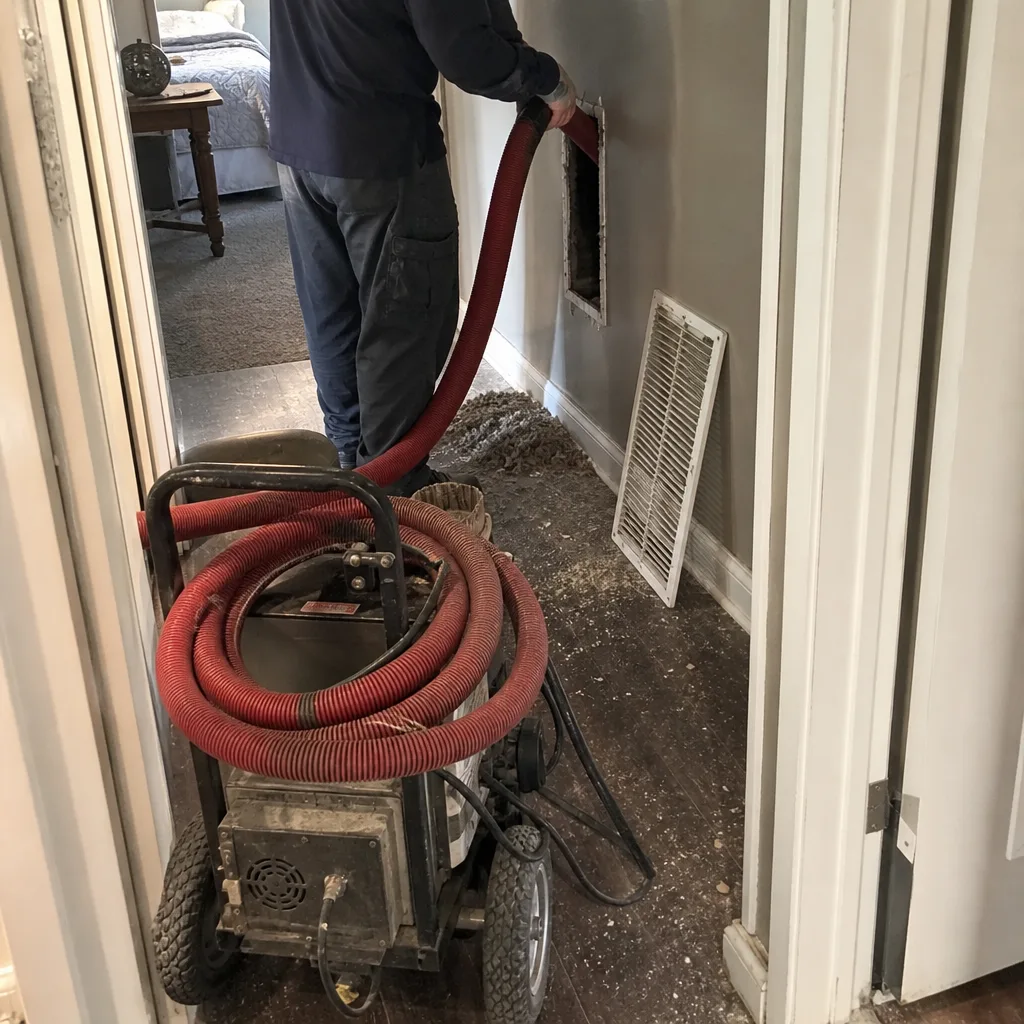
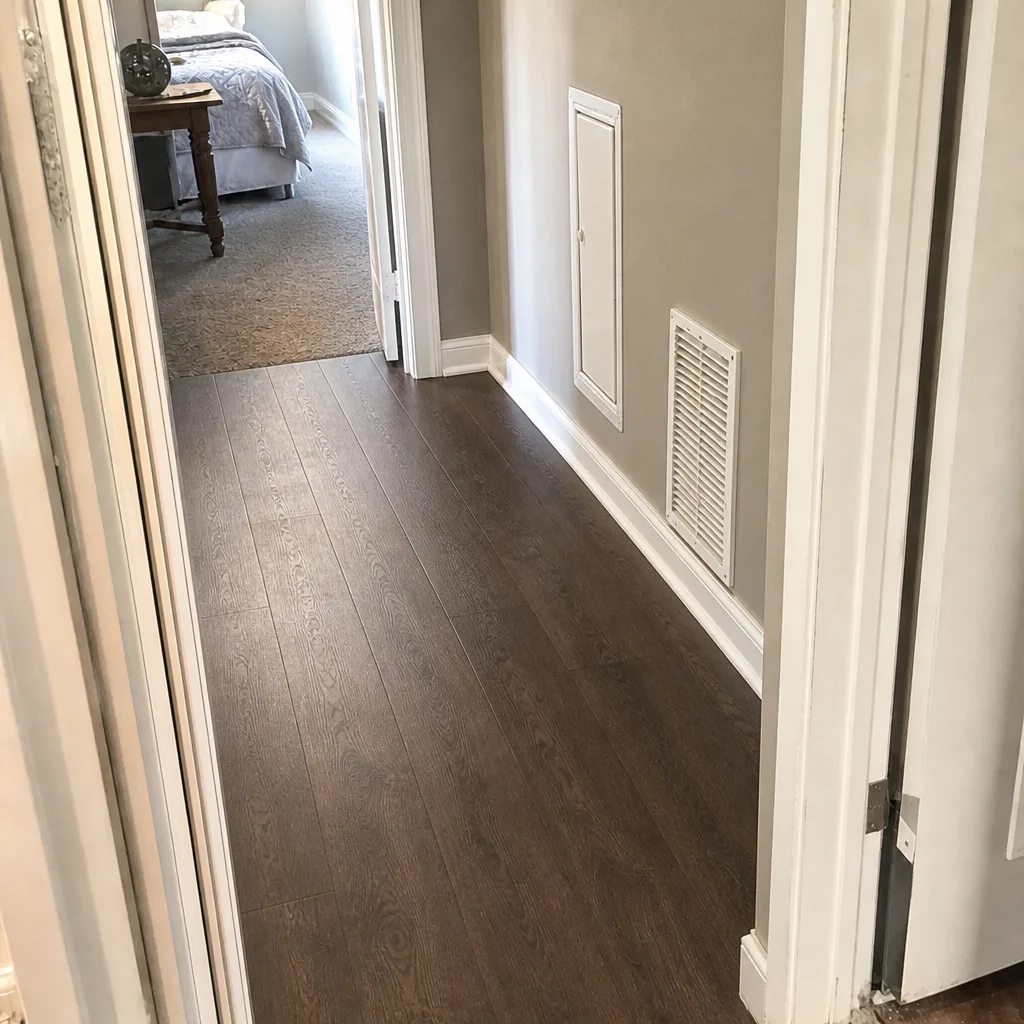
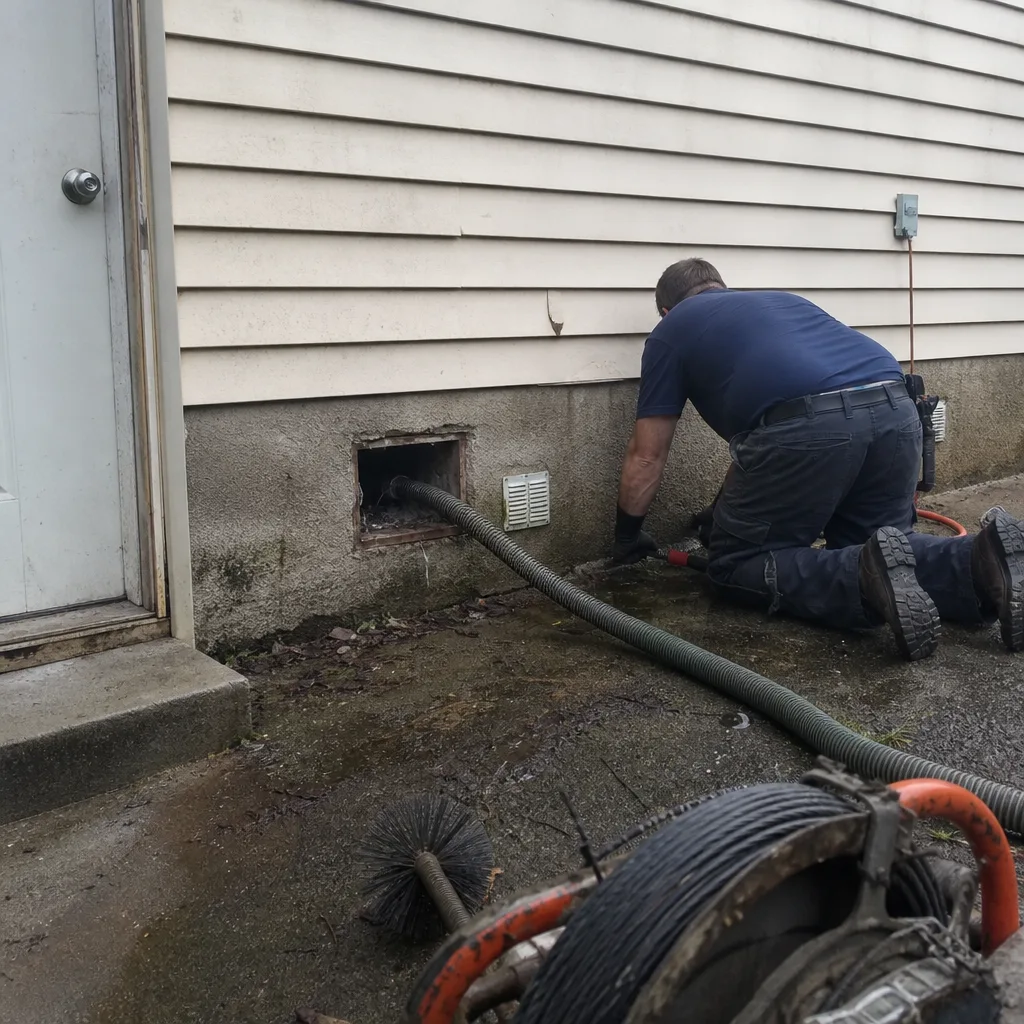
See the difference
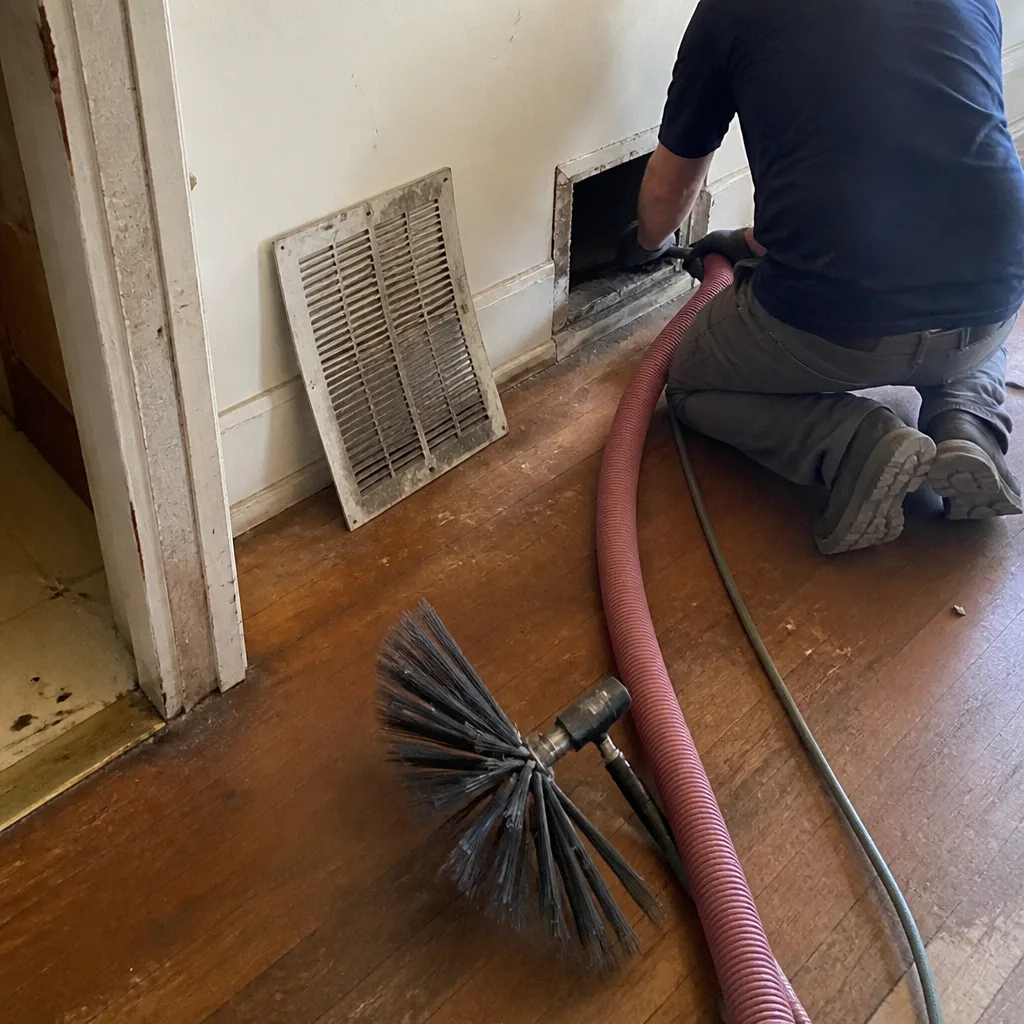 Before
 After
 Before
 After
 Before
 After
When to Call a Professional
Call a professional duct cleaning company when any of these is true in your Highland Creek home: ducts haven’t been serviced in more than five years; renovation, pest activity or water intrusion has added material to the system; the air handler or coils show dust, debris or growth; you’re seeing musty odors or consistent dust around the registers; or you’re moving into a home where you don’t know the service history. If ducts are soft, torn or sagging, or if a DIY effort has already introduced damage, that’s the same call. Air Duct Cleaning Highland Creek offers free estimates in Highland Creek – call (855) 323-8125. We answer 24/7. Fast dispatch from 7am to 7pm, Sunday through Friday. A written estimate sets the final price, so there’s no surprise once a technician is on site.
Frequently Asked Questions
A shop vac can reach the surface of a register or a boot, but it can’t create the sustained negative pressure needed to pull accumulated debris out of a duct run. A shop vac moves around 100 CFM; a truck-mounted duct cleaning system moves 10,000 CFM or more. In practice, a shop vac disturbs debris and disperses it into the room rather than removing it. Call (855) 323-8125 for a free estimate on a system that can actually pull it out.
The cost depends on the size of the home, how many duct runs there are, how long it’s been since the last cleaning, and whether duct sealing or sanitizing is needed. Because we price per system rather than per vent, the written estimate is what sets the exact figure – there’s no reason to guess in advance. Call (855) 323-8125 for a free estimate – estimates are free.
Cheap quotes tend to reflect a small scope: registers wiped, a shop vac at the boots, none of the actual duct runs cleaned, and no containment. The number looks great until you see the system two weeks later. The right comparison isn’t the headline figure, it’s what’s actually included in the scope. A written estimate that spells out branches, plenum, cabinet and returns is the fair starting point. Call (855) 323-8125 for a free estimate – estimates are free.
Every few years for a typical Highland Creek home, and sooner after renovation, water intrusion or pest activity. Homes with pets or allergy-sensitive residents often benefit from a shorter interval, and homes with a lot of foot traffic and open doors will collect more. If you don’t know when it was last done, the answer is now. Call (855) 323-8125 for a free estimate.
Ask for before-and-after photos of your own ducts and check that the register faces, boots and returns all read clean when the technician is finished. Turn the system on after the crew leaves and watch for dust hitting the airflow. If dust puffs out, the job wasn’t finished. Call (855) 323-8125 for a free estimate and a written scope you can check against.
DIY is enough for the easy tasks – register wipe-downs, filter changes, dryer lint clearing, keeping returns unobstructed – but not for the duct runs themselves. Highland Creek’s long cooling season and heavy pollen load push more material into the system over the year, and that accumulation needs real vacuum and containment. The DIY tasks help the system stay cleaner between professional visits; they don’t replace them.
The Bottom Line
The DIY versus professional question comes down to what the job actually needs. Surface maintenance is yours – keep the registers clean, change the filter on schedule, clear the dryer vent screen, keep returns unobstructed. The duct runs themselves are a different problem, and one that needs continuous negative pressure, contained airflow, and equipment built for it. That’s the honest boundary, and knowing where it sits is what lets you spend your time and money where each actually helps. When the system has gone more than five years without service, when renovation or moisture has gotten into the ducts, or when you want a documented, verifiable clean, call (855) 323-8125 for a free estimate. We answer 24/7. Fast dispatch from 7am to 7pm, Sunday through Friday.
Written by the team at Air Duct Cleaning Highland Creek.