
Last updated November 23, 2026
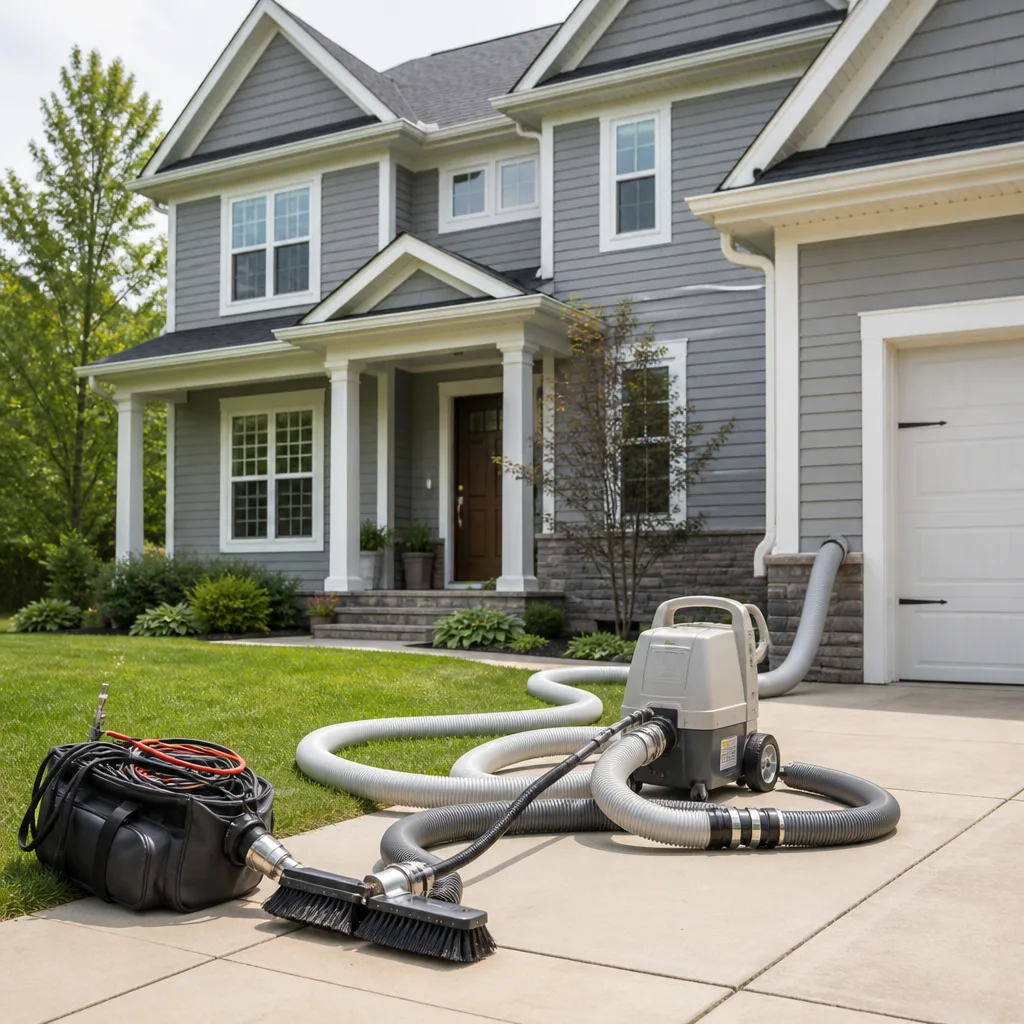 Whole-home duct cleaning
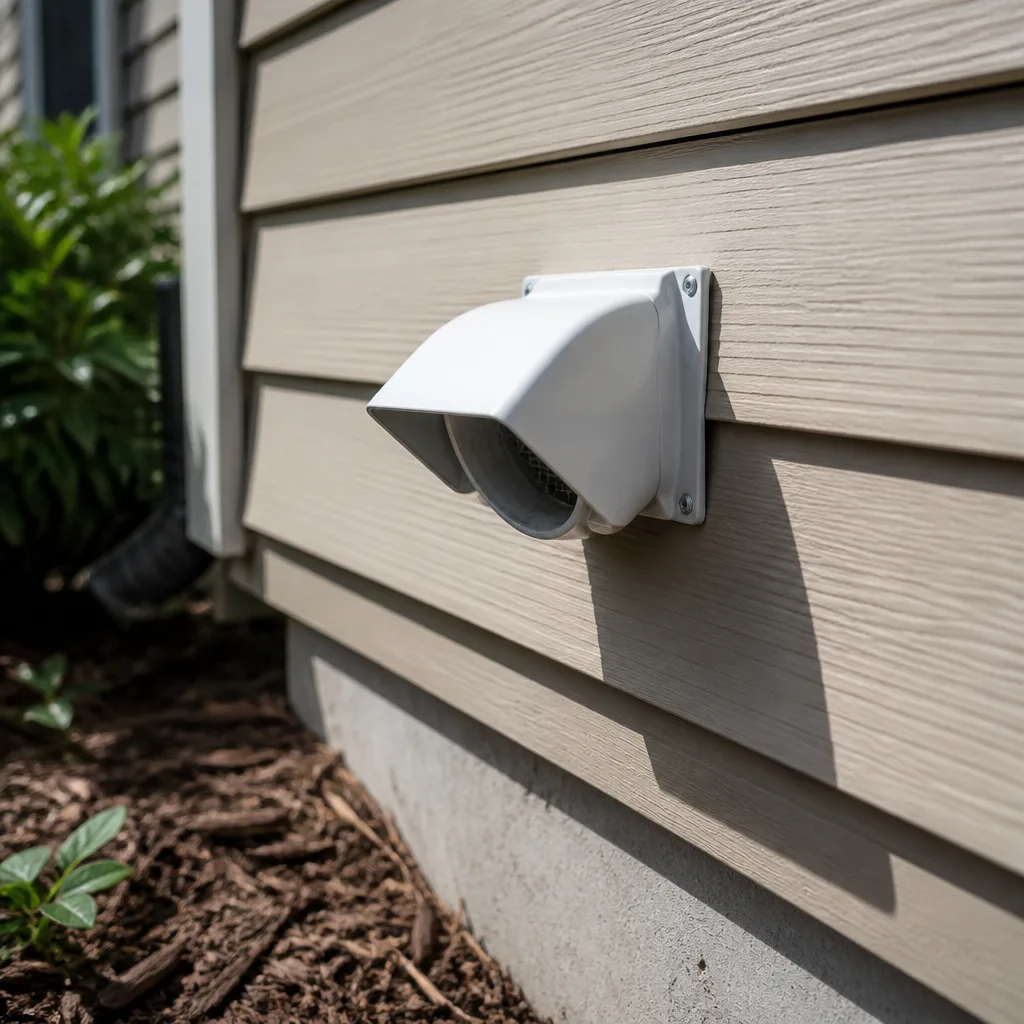 Dryer vent cleaning
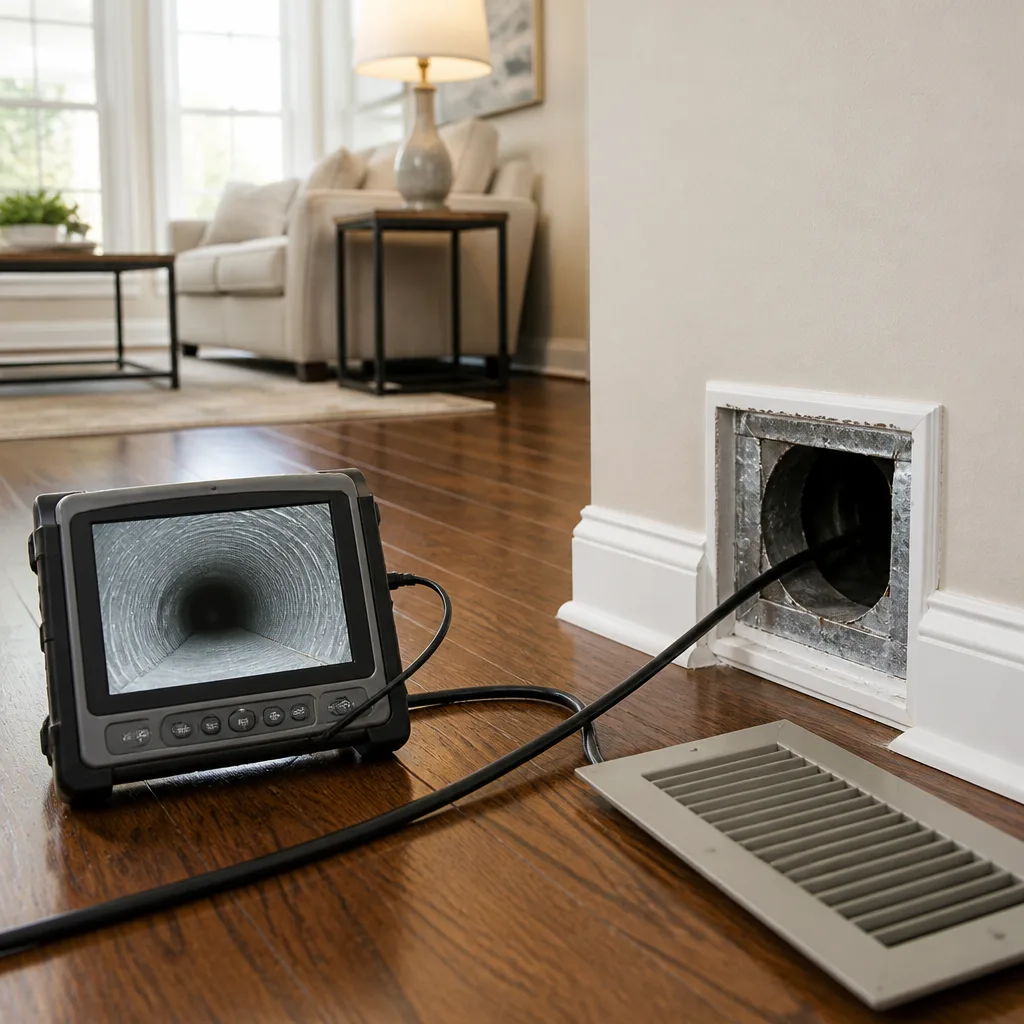 Camera inspection
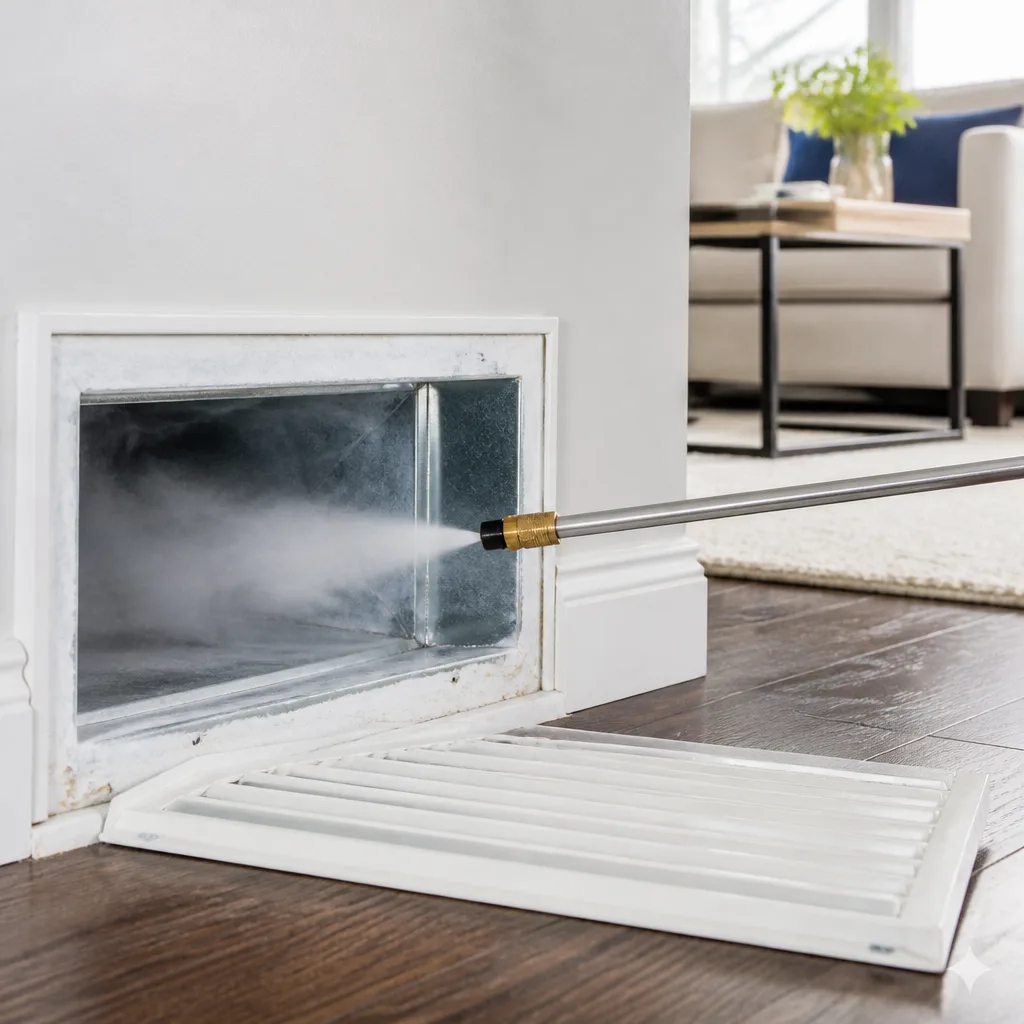 Sanitizing & deodorizing
Whole-system duct and dryer vent check with before-and-after photos - you see exactly what came out of your vents
That "$99 whole-house special" is a bait ad - the real number appears once they are in your hallway, or the "clean" is a shop-vac at the register. We photograph the inside of your ducts before and after instead.
Air Duct Cleaning Cost Breakdown: The Highland Creek Homeowner’s Reference for 2026
That $99 duct cleaning special circulating in Highland Creek Facebook groups is real. It’s also not a full cleaning. What gets advertised as “whole-house duct cleaning” for the price of a pizza dinner is almost always a contact cleaning: a vacuum waved at the visible vent openings with a spinning brush run a few inches inside. The blower pulls air back through the rest of the system the moment the equipment is switched off. Understanding the difference between a contact cleaning and true negative-pressure source removal is the single most useful thing you can learn before requesting quotes. This guide breaks down what actually drives cost in Highland Creek, what each line item should cover, and how to read a quote so you’re comparing scope, not just a number.
Quick Answer
A standard air duct cleaning for a 2,000-2,500 sq ft Highland Creek home in 2026 typically costs $400 to $800 for a full negative-pressure source-removal clean, with most homes landing in the $500-$650 range. That price should include the supply and return runs, main trunk line, register and grille cleaning, blower compartment wipe-down, and before-and-after photos of your own system. Anything under $300 is almost certainly a contact cleaning or a teaser price that excludes the majority of the work.
Styles & brands we work with
- Whole-home duct cleaning
- Dryer vent cleaning
- Camera inspection
- Sanitizing & deodorizing
Table of Contents
- What Drives Air Duct Cleaning Cost in Highland Creek?
- Why “Per Vent” Pricing Is Misleading
- How Your Home’s Build Era Changes the Price
- Add-On Costs: Dryer Vent, Coils, Sanitizer, and Sealing
- What a Fair 2026 Price Looks Like for a Highland Creek Home
- How to Read a Duct Cleaning Quote: A Step-by-Step Checklist
- Common Mistakes to Avoid
- When to Call a Professional
- Frequently Asked Questions
What Drives Air Duct Cleaning Cost in Highland Creek?
Four variables account for nearly all of the price spread between two quotes for the same Highland Creek house:
- Square footage and system size. A 1,400 sq ft townhome in the Prosperity Village area of Highland Creek might have eight supply vents and two returns. A 3,400 sq ft single-family home off Ridge Road could easily have twenty-two supplies and four returns. More runs mean more time on the truck-mounted vacuum, more rotary brush passes, and more registers to pull and reset. Expect roughly $60 to $100 of added cost per additional supply run beyond what a base quote covers.
- Duct material. Sheet metal ductwork cleans fast and holds up to a rotary brush. Flex duct takes slower, lower-RPM agitation to avoid tearing the inner liner. Duct board (rigid fiberglass) is the most fragile of the three and often needs hand work rather than powered brushes. A system that’s mostly sheet metal will sit at the lower end of any range; a system with significant duct board sections pushes toward the top.
- Accessibility. Ductwork buried behind drywall with no access panels, returns located in tight closets, and slabs where the return chases run through the ceiling all add labor. A crew that has to cut and reinstall access panels to reach a main trunk line will charge for that work because it isn’t on the base ticket.
- Condition. Light household dust is one price. Heavy debris from a renovation, pet hair accumulation, or visible biological growth on the liner is another. Contamination-level work requires negative-air containment and often a sanitizer application, both of which push a job toward the upper end of the range in Highland Creek.
We’ve seen quotes swing from $180 to $1,400 on the same three-bedroom house in Highland Creek, and the difference was never the neighborhood. It was what the crew physically planned to touch. A quote is a scope document first and a price second. If the scope doesn’t name the main trunk line, the returns, and the blower compartment, the price is decorating a service you’re not buying.
Why “Per Vent” Pricing Is Misleading
Per-vent pricing is the most common quote structure in Highland Creek, and it’s designed to hide what’s excluded. A company says “$35 per vent” and the homeowner with fourteen vents hears “$490 for a full house.” What that number almost never covers:
- The main trunk line. This is often the largest single run of ductwork in the house, sometimes sixteen to twenty feet of sheet metal, and it carries the majority of accumulated debris. Many per-vent quotes skip it or charge it as an extra line item.
- The return air system. Returns pull the dustiest air in the house. If a quote prices only supply vents, the returns get a surface wipe at best.
- The blower compartment and evaporator coil face. The blower wheel is a magnet for dust and often the source of the musty smell homeowners notice first. Cleaning it takes real time, so it’s a common exclusion.
- Negative-pressure equipment. True source removal requires a vacuum powerful enough to hold the entire duct system under negative pressure while brushes agitate the debris loose. That equipment (on our jobs, that’s a Nikro unit paired with Abatement Technologies negative-air machines) is a capital expense a $35-per-vent crew usually doesn’t carry. Without it, you get a contact clean: debris is dislodged, then drifts back into the duct when the vacuum is shut off.
- Before-and-after documentation. A short video of the inside of your own main trunk line before and after the work is the only objective proof the job happened. Ask every company whether they provide it. If the answer is a polite deflection, that tells you the crew never planned to open the duct at all.
Do the arithmetic before you sign. A credible full-scope quote for a 2,200 sq ft Highland Creek home should land somewhere in the $500-$650 range. If someone offers to do it for $199, they’re either pricing half the system or planning to sell you the other half in your living room once the equipment is set up. Neither is a deal.
How Your Home’s Build Era Changes the Price
Highland Creek is not a single-era neighborhood, and that matters for quotes more than most homeowners realize. Homes built in the 1990s in the established sections of Highland Creek typically used galvanized sheet metal for the main trunk lines and short runs of flex duct to the branches. That combination cleans efficiently. The sheet metal handles the rotary brush and the flex branches are short enough to manage without stress.
Homes built from the mid-2000s onward, including the newer phases on the eastern side of the neighborhood, more often use fully flexed systems. Flex duct has a corrugated inner liner that traps dust and is far easier to tear. Cleaning it requires lower agitation, more passes, and a watchful technician. The reason price often rises for a newer Highland Creek home isn’t age, it’s material. A fully flexed system takes longer and demands more careful negative-pressure management so the liner isn’t damaged.
Duct board complicates things further. Some Highland Creek homes built during the 2000s have sections of fiberglass duct board in the trunks or plenum. Duct board can’t take aggressive brushing, so the crew has to work by hand in those sections. Expect an upcharge of $80 to $150 when a substantial section of the system is duct board.
North Carolina’s hot, humid summers intensify the stakes here. Flex duct runs that sag or have loose joints in Highland Creek’s climate will sweat in the attic and pull humid air into the airstream, which accelerates mold growth on the liner. Cheap contact cleanings don’t fix that problem. Duct sealing does, and any quote that doesn’t include an option for sealing loose joints in a humid-climate house is missing the root cause.
Add-On Costs: Dryer Vent, Coils, Sanitizer, and Sealing
Add-ons are where honest quotes get padded and dishonest quotes get dangerous. Here’s what each one should cost in Highland Creek and when it’s genuinely worth adding:
- Dryer vent cleaning: typically $130 to $220. Worth it in nearly every Highland Creek home once a year, and non-negotiable if the vent run is long or has elbow bends. Lint accumulation in the dryer vent is a real household fire risk. This is a dedicated service on our jobs, not a grabbed-afterthought at the end of a duct clean, and the crew runs a rotary brush the full length of the vent and verifies airflow at the exterior hood.
- Evaporator coil cleaning: typically $100 to $180 as an add-on. Worth it if you’ve noticed weaker cooling on the second floor or musty odor near the air handler. Coil cleaning is a different task than duct cleaning and shouldn’t be lumped into the base price silently; it should appear as a line item so you know what you’re paying for.
- Sanitizer application: typically $80 to $150. Worth it after a contamination event (rodent activity, water intrusion, visible growth on the liner) or in Highland Creek homes where a musty smell persists after cleaning. This is a Guardsman-grade treatment applied as a fogged or wiped application over the cleaned surfaces. A sanitizer sprayed into a dirty system wastes money; the cleaning comes first.
- Duct repair and sealing: typically $200 to $600 depending on scope. The add-on most Highland Creek homeowners skip and then regret. A duct system with loose joints and unsealed seams will re-contaminate itself within a few months of cleaning because unfiltered attic air gets pulled in with every HVAC cycle. If a quote offers cleaning without ever checking the seals, the job’s lasting value is short.
- Access panel installation: typically $60 to $120 per panel. Sometimes the crew has to cut access to reach a return chase or main trunk. A fair quote includes cutting, sealing, and finishing the panel to look intentional. If a company plans to leave an open hole in your drywall or a sheet metal plate bolted to an interior wall, that’s a red flag.
None of these add-ons should be presented as required. They’re worth choosing based on what’s actually in your system. A Highland Creek home with strong airflow, no odor, and recent construction may not need coil cleaning or sanitizing. A Highland Creek home with an older system, visible dust, and a smell on first startup usually needs many of them.
What a Fair 2026 Price Looks Like for a Highland Creek Home
Here’s a structured breakdown of what a fair quote should look like for a standard 2,000-2,500 sq ft Highland Creek home in 2026:
| Line Item | Typical Range | What It Should Cover |
|---|---|---|
| Full-system negative-pressure clean | $400 – $800 | Supply and return runs, main trunk, registers and grilles, blower compartment |
| Before-and-after documentation | Included | Photos or short video of your actual main trunk and at least two branch runs |
| Register and grille removal and cleaning | Included | Each grille physically removed, washed, and reinstalled |
| Dryer vent cleaning | $130 – $220 | Rotary brush full run, airflow verified at exterior hood |
| Evaporator coil cleaning | $100 – $180 | Coil face cleaned and inspected |
| Sanitizer application | $80 – $150 | Guardsman-grade treatment after cleaning |
| Duct repair and sealing | $200 – $600 | Loose joints taped or mastic-sealed inside accessible areas |
| Access panel installation | $60 – $120 each | Cut, sealed, and finished panel |
What should NOT appear as extras on a standard Highland Creek ticket: a “disinfection fee” if you didn’t request sanitizing, a “system assessment surcharge,” a “shop supplies” line item, or a trip charge for the estimate. Our estimates are free. The written estimate you receive before work starts is what you pay, not a starting number that grows once the crew is inside. If a company won’t put their full scope on paper before the equipment comes out of the truck, that’s the moment to call someone else.
If you want a lower-effort place to start, our overview of air duct cleaning in Highland Creek lays out what a proper full-system clean involves and what the crew touches. Once you understand that scope, the tables above will make every quote readable at a glance.
How to Read a Duct Cleaning Quote: A Step-by-Step Checklist
Use this seven-step process when comparing Highland Creek duct cleaning quotes so you’re comparing scope, not just price:
- Look for the main trunk line in writing. If the quote names the supply runs but never mentions the trunk, it’s a partial job. Ask directly: “Does this include the main trunk line?” If the answer is vague, that’s your answer.
- Confirm the returns. Ask how many return vents the quote covers and whether they’ll be cleaned to the same standard as the supplies. Returns are the dustiest part of the system.
- Ask what equipment will be on-site. A true source-removal clean uses truck-level or high-powered portable negative-pressure equipment with HEPA filtration. If the answer is “a shop vac,” that’s a contact clean, not a duct clean. Ask specifically about rotary brush systems and negative-air machines, and whether they’ll confirm brand names. Rotobrush systems, Nikro units, and Abatement Technologies negative-air equipment are the industry baseline; anything less is a sales visit pretending to be a cleaning.
- Request before-and-after documentation. A short video of your own main trunk line, before and after the crew has run the brush, is the only verifiable proof of work in this category. The crew should offer it without being asked.
- Check whether sanitizing is separate. Sanitizer is an add-on, not a base requirement, and it should be priced clearly. A quote that bundles $200 of sanitizing into a “full package” you never asked for is a red flag.
- Ask about duct condition and sealing. A thorough quote mentions whether the technician observed loose joints or sagging runs. If the crew plans to clean and then walk away from a leaking system, the money was spent on a temporary fix.
- Get the final price in writing before work starts. One flat price per system, agreed before the crew unloads equipment, is the industry standard a fair operator should offer. If a Highland Creek quote grows once the technician is standing in your hallway, you’ve been sold, not quoted.
Run every quote through this checklist. The number that survives all seven steps is the actual comparison. The rest is decoration.
See the difference
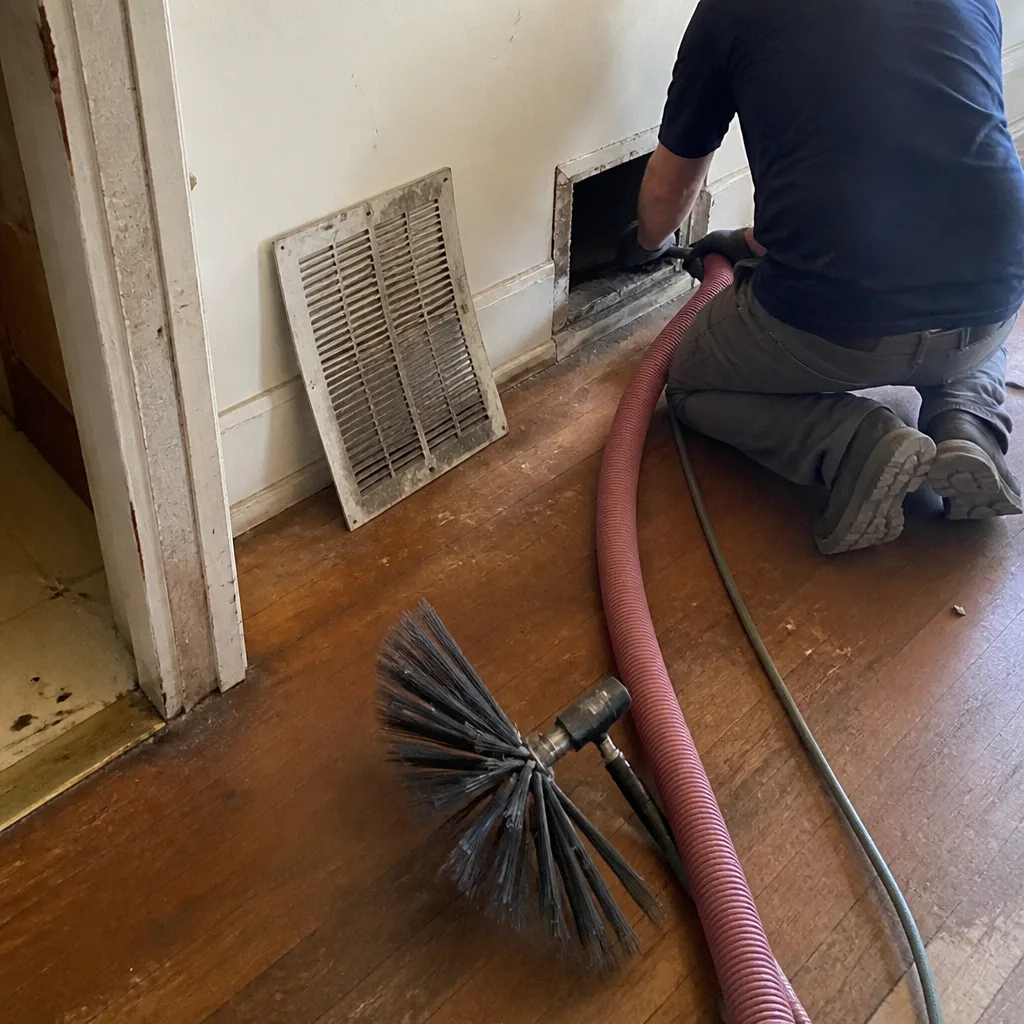 Before
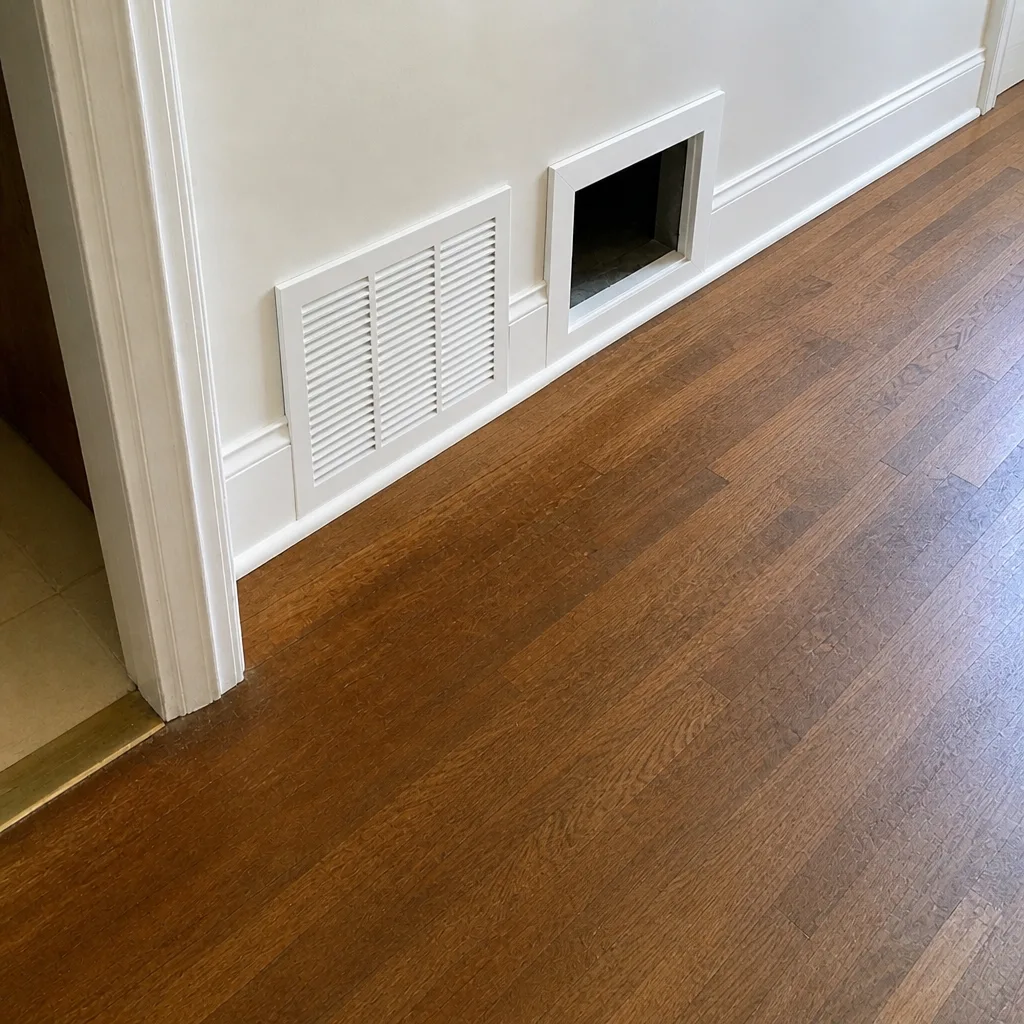 After
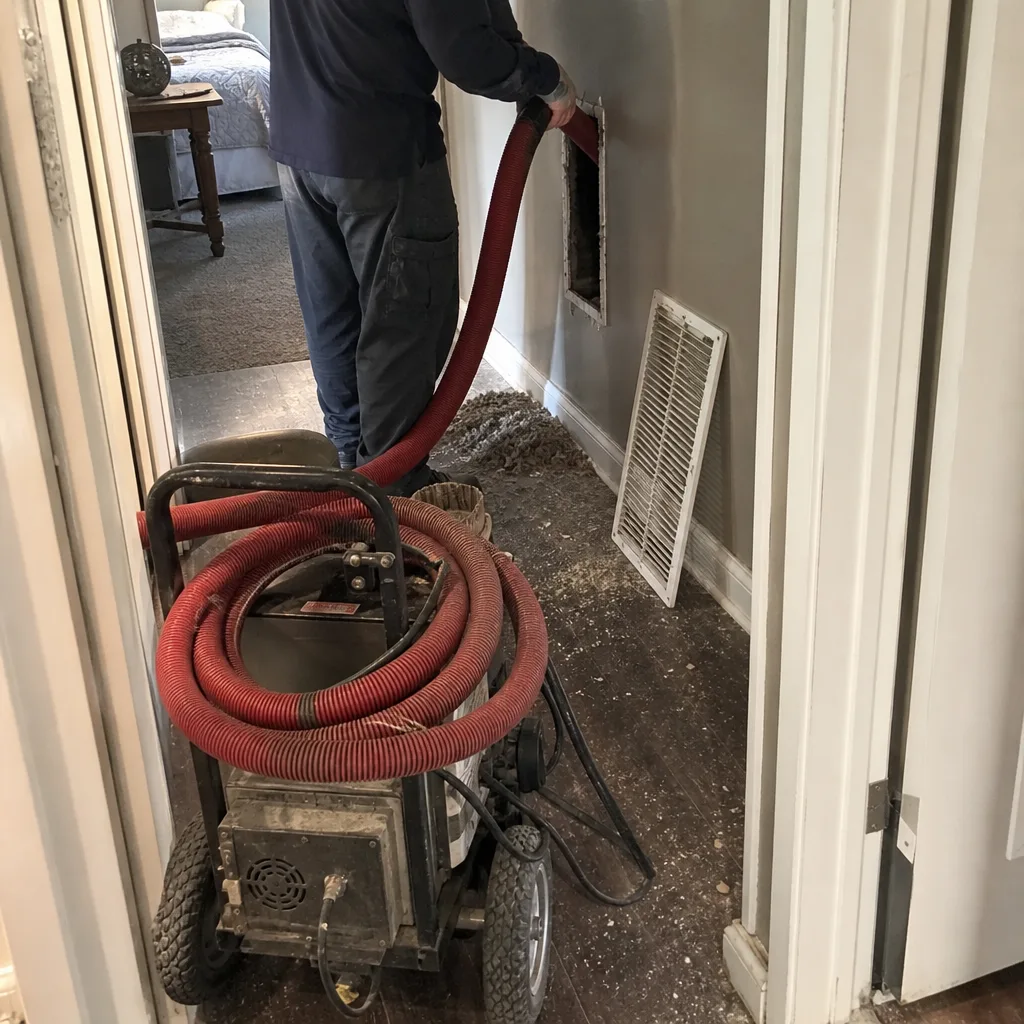 Before
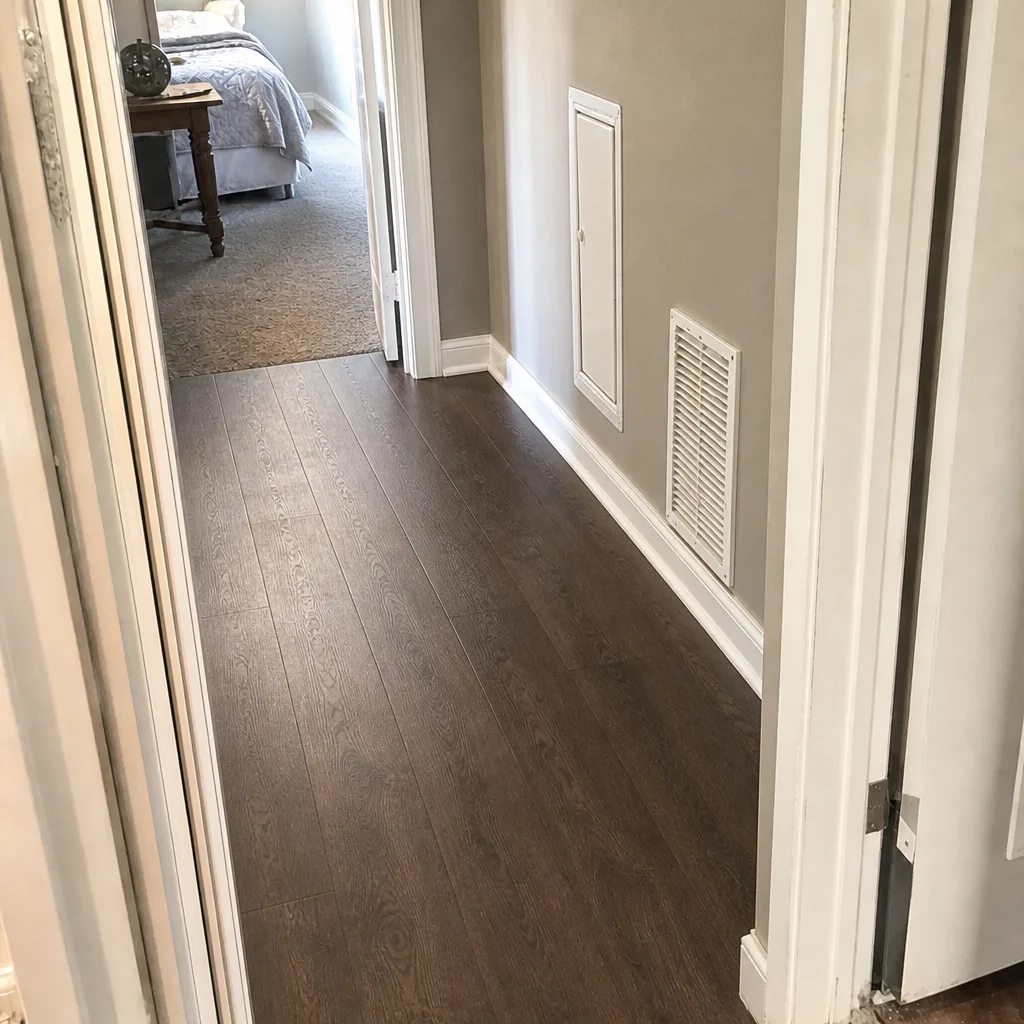 After
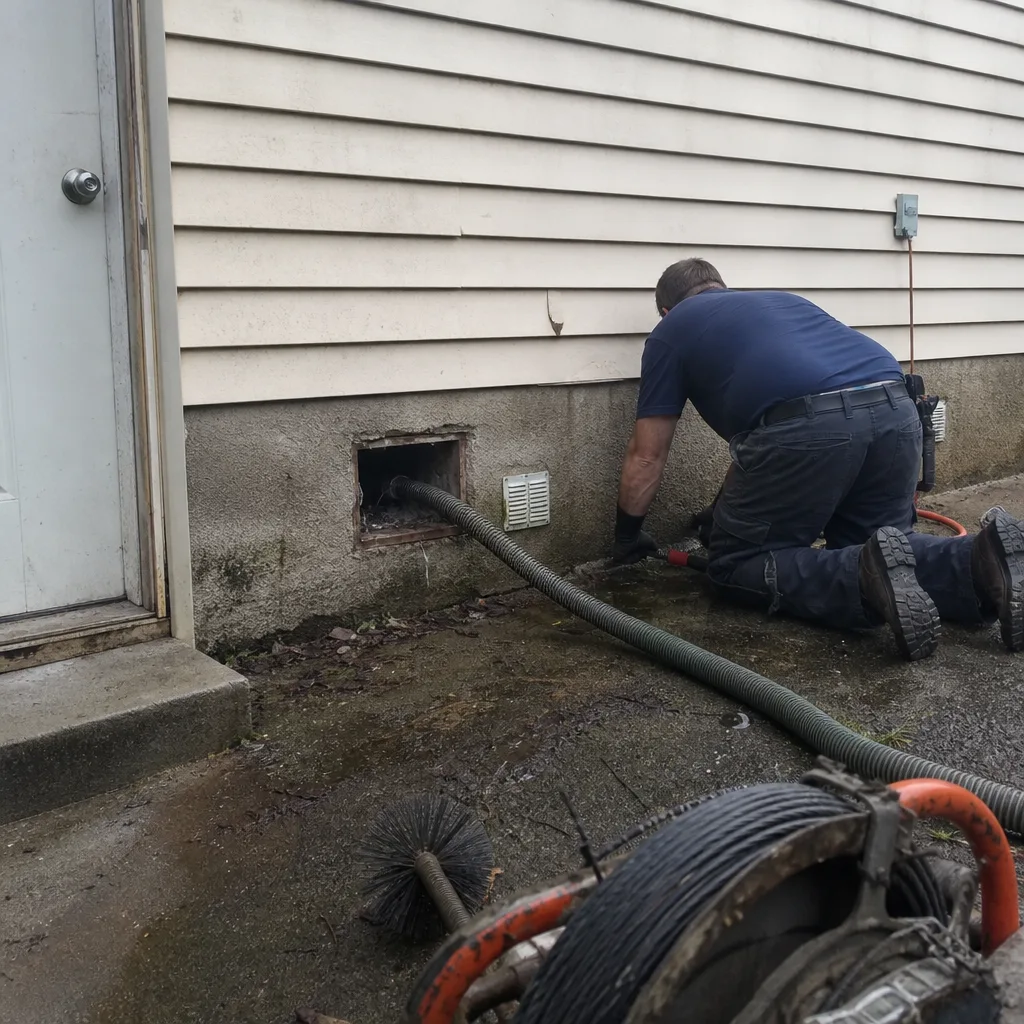 Before
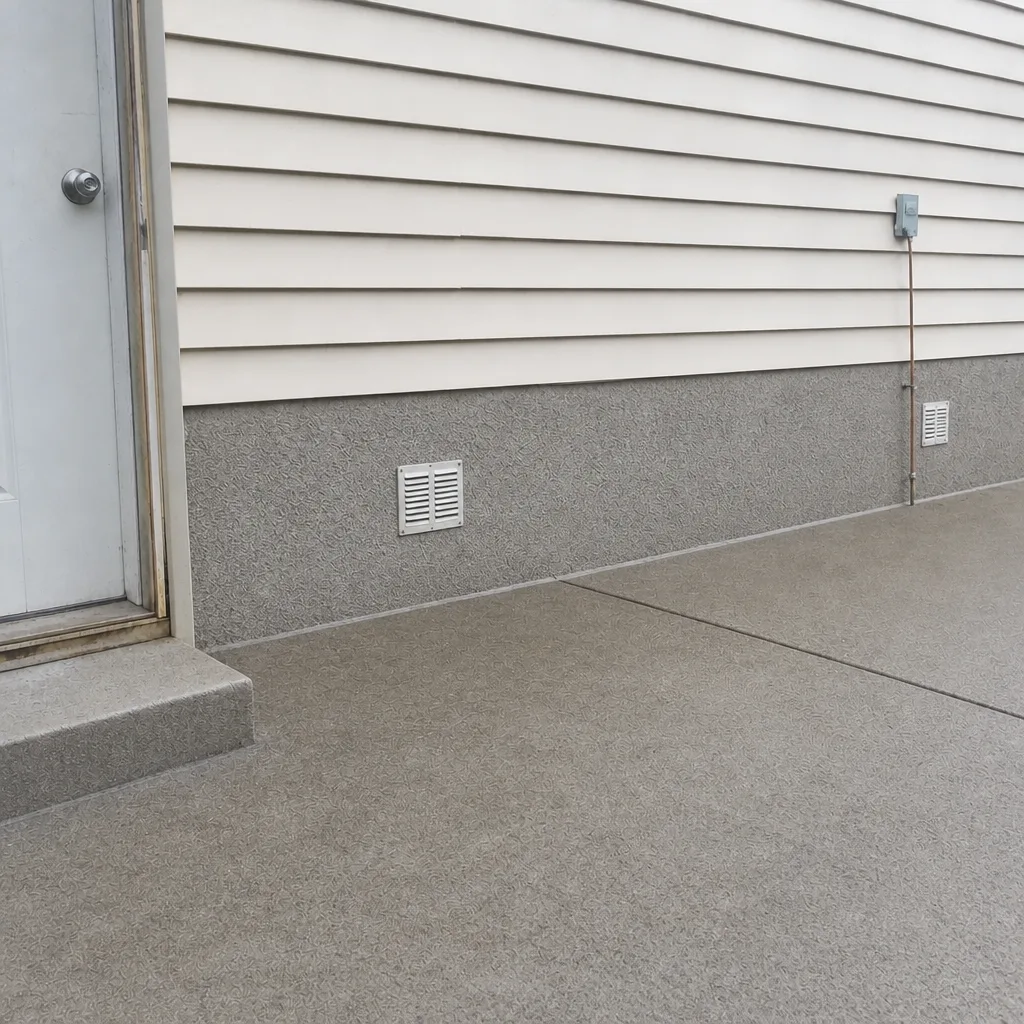 After
Can Duct Cleaning Actually Lower Energy Bills in Highland Creek?
Yes, moderately, and mostly in homes where duct leakage was already a problem. A dirty duct system restricts airflow, which makes the blower work harder and can cause rooms at the end of a long run to stay warm in summer even with the thermostat satisfied. Cleaning restores airflow, but the bigger savings come from sealing the ducts afterward. A Highland Creek home with unsealed seams in the attic can lose a meaningful share of its cooled air before it ever reaches a register. Cleaning without sealing is cleaning a leaky bucket. Cleaning followed by proper duct sealing is the version that pays you back through the summer.
Ask two questions before signing: Does the quote include a visual inspection of seams and joints? And does the company offer sealing as a follow-on? If the answer to either is no, the work is half the job. Our air duct cleaning service and our sealing work are delivered as connected steps rather than separate vendor relationships, precisely because doing one without the other wastes the investment.
How Often Do Highland Creek Ducts Need Cleaning?
For most Highland Creek homes, every three to five years is the honest answer. Here’s the pattern we see based on how each home uses its system:
- Every three years: homes with pets, homes on a busy street where dust enters readily, and homes with anyone in the household who has asthma or seasonal allergies.
- Every five years: homes with no pets, regular filter changes, and no recent renovation activity.
- After specific events: post-renovation (drywall dust travels through the entire system), after rodent activity has been confirmed in the crawl space or attic, after a roof leak, or any time visible growth is found on the liner during inspection.
- Annual regardless: dryer vent cleaning. Ducts have some flexibility in scheduling; dryer vents don’t. Lint accumulation is a fire risk that grows every month, and a vent that’s overdue on cleaning should be addressed before the ducts come into the discussion.
Highland Creek’s humid summers are a longer-term factor. Homes here that run the AC heavily from May through September tend to accumulate debris faster than homes in drier climates because the condensation that forms inside the evaporator and nearby duct transitions traps dust more aggressively. That doesn’t mean every Highland Creek home needs cleaning every year. It means the upper end of the three-to-five-year window is a place you don’t want to drift past if you’ve already noticed symptoms.
Practical Prep for Your Highland Creek Duct Cleaning
What you do before and after the cleaning affects whether the job holds up. Here’s the sequence that works best:
- Change the HVAC filter within a week before the visit. A clogged filter fights the vacuum. The crew will change it if you ask, but a fresh filter on arrival keeps the system pulling air the way it should through the cleaning.
- Clear access to the air handler, the thermostat, and any attic hatch. The crew needs physical access to run negative-air equipment and to open the plenum. A stack of boxes in front of the air handler costs you time.
- Move fragile items away from register covers. Grilles come off during cleaning. A vase on the floor beneath a vent is a problem waiting to happen.
- Note what you smell and where. If there’s a musty smell in a particular room, tell the tech before they start. Their inspection can focus on that branch of the system.
- Change the filter again within a week after the cleaning. Cleaning dislodges fine dust that circulates through the system for a day or two as the equipment hands off. A fresh filter catches what’s still moving.
- Ask for the before-and-after footage the same day. Don’t accept “we’ll email it.” The crew should have it ready before they pack up.
- Schedule sealing if the inspection found leaks. Cleaning alone doesn’t seal cracks, and a Highland Creek home with attic ductwork in a hot, humid climate re-contaminates quickly through unsealed seams. Sealing is the step that makes the cleaning last.
None of this takes more than an hour of prep on the homeowner’s side. All of it makes the cleaning worth doing.
Common Mistakes to Avoid
- Buying the $99 whole-house special. It’s a contact cleaning at best, and in some Highland Creek cases it’s a setup for a high-pressure upsell once the tech is in your living room. Ask what the special actually includes before you hand over a card.
- Comparing per-vent quotes against full-scope quotes. A $35-per-vent quote and a $600 full-system quote aren’t the same product. Pull the scope line items side by side before you compare the totals, or you’ll accidentally buy less than you think.
- Skipping duct sealing because the cleaning finally made the house feel fresh. Highland Creek’s hot, humid summers mean unsealed attic ducts pull moist air back into the system within months. Cleaning without sealing is a short-term fix to a long-term problem.
- Ignoring the dryer vent until it’s a problem. Lint buildup is a slow process that’s invisible from the outside. Yearly dryer vent checks are cheap; the alternative is not. Treat dryer vent cleaning as scheduled maintenance, not a one-time chore.
- Choosing on price alone. A $180 quote and a $650 quote for the same Highland Creek house are not doing the same work. Compare the scope first, then the price. The scope tells you which company is actually going to clean your ducts.
- Believing a home inspector’s “ducts look fine” report. A home inspection cannot see inside a main trunk line. Only a camera or a rotary brush excursion can tell you what’s actually in the system.
- Assuming newer homes don’t need the work. Highland Creek homes built in the 2010s often have fully flexed systems that require more careful handling than older sheet metal ductwork, not less. Age isn’t the variable; material and condition are.
When to Call a Professional
Call when you notice symptoms you can’t explain or fix with a filter change. Persistent dust settling on furniture within two days of cleaning. Allergy symptoms that get worse inside the house, especially in the mornings after the HVAC runs overnight. A musty smell that starts when the system kicks on and fades when it cycles off. Weakened airflow from the registers in specific rooms. Visible dust streaks near grilles or on the ceiling around vent locations. Any of these is worth a professional inspection rather than another round of vacuuming and hoping.
Also call when the dryer takes longer than one full cycle to dry a load, or when clothes come out unusually hot. Those are signs the vent is partially blocked, which matters in Highland Creek homes with long vent runs. Our dryer vent cleaning is a dedicated service precisely because vent lint isn’t an afterthought. And if you already know your ducts need more than a clean (leaks, tears in flex, sagging runs), our HVAC cleaning covers the air handler and coil face while we’re in the system.
Air Duct Cleaning Highland Creek offers free estimates in Highland Creek. Call (855) 323-8125. We answer 24/7. Fast dispatch from 7am to 7pm, Sunday through Friday.
Frequently Asked Questions
For a 2,000-2,500 sq ft Highland Creek home in 2026, a full-system negative-pressure cleaning typically runs $400 to $800, with most homes in the $500-$650 range. That covers supply and return runs, the main trunk line, register and grille cleaning, the blower compartment, and before-and-after documentation of your actual system. Add-ons like dryer vent cleaning, sanitizer, or duct sealing are priced separately. Call (855) 323-8125 for an exact quote on your home. Estimates are free.
Because they’re selling a different service. A $99 or $35-per-vent quote almost always describes a contact cleaning: a vacuum held at the register openings while a brush spins a few feet inside. The main trunk line, the returns, and the blower compartment are typically excluded. True source-removal cleaning uses negative-pressure equipment and rotary brush systems to extract debris from the entire duct system, and that equipment and labor cost more. The lower price is honest for what it delivers, but it’s not the same product as a full-system clean. Call (855) 323-8125 to schedule a free estimate before you compare.
Ask for before-and-after photos or short video of your own system’s main trunk line and at least two branch runs. A credible crew will offer this without being asked. If the answer is vague, that’s a red flag. Visual proof beats any verbal assurance, and it’s the only way to see the difference between what was in your duct system before the cleaning and what’s there after. Call (855) 323-8125 to schedule a free estimate and ask what documentation is included.
Every three to five years for most homes, and more often if you have pets, asthma or allergy concerns, or recent renovation work. Highland Creek’s humid summers can accelerate buildup in some systems, so homes that run the AC heavily from May through September often benefit from the shorter end of that window. Dryer vents are separate and should be cleaned yearly regardless. Call (855) 323-8125 for a free estimate if you’re overdue.
Cleaning alone is not enough if the ducts are leaking. In Highland Creek’s hot, humid climate, unsealed attic ducts pull in unfiltered, moist air that re-contaminates the system within a few months of cleaning. A thorough inspection of the seams and joints during the cleaning tells you whether sealing is needed. When it is, sealing is the step that makes the cleaning last. Call (855) 323-8125 for a free estimate on cleaning and sealing together.
Yes, typically $130 to $220 in Highland Creek, and it’s worth doing every year independently of duct cleaning. The dryer vent is a distinct system with its own fire-risk profile: lint accumulation in the vent run is a real household concern, and a dedicated cleaning uses a rotary brush for the full length of the vent with airflow verified at the exterior hood. Bundling it with a duct cleaning is convenient, but bundling isn’t the reason to do it. The reason is risk reduction. Call (855) 323-8125 for a free estimate.
Can I just clean the visible vents myself and save the money?
You can vacuum the outside of the grille and remove it to wipe the visible opening, and that helps a little. What you can’t reach is the main trunk line, the returns, and the plenum, and that’s where the bulk of accumulated debris lives. The register opening is a doorway, not the room behind it. If symptoms like persistent dust, odor, or weaker airflow are already present, the visible surfaces were never the problem. Call (855) 323-8125 for a free estimate on a full-system cleaning.
The Bottom Line
Duct cleaning pricing in Highland Creek comes down to scope, not to neighborhood or to how many companies you call. A fair 2026 price for a 2,000-2,500 sq ft home is $400 to $800 for a full negative-pressure source-removal cleaning, and that price should include the main trunk line, returns, blower compartment, register cleaning, and before-and-after documentation. Per-vent quotes and $99 specials rarely cover half of that scope. Your home’s build era, duct material, and accessibility all push the price within the range in predictable ways. Add-on costs for dryer vent cleaning, sanitizer, sealing, or coil work are worth choosing based on what your system actually needs, and duct sealing paired with cleaning is what makes the investment last in Highland Creek’s humid climate. Agree on one flat price per system before work starts, get the written scope, and require visual proof of the work.
Call (855) 323-8125 for a free estimate. We answer 24/7. Fast dispatch from 7am to 7pm, Sunday through Friday. Our technicians have up to 11 years of experience, and every job is quoted as one flat price per system agreed before the work begins, with before-and-after photos of your own ducts included.
Written by the team at Air Duct Cleaning Highland Creek.