
Last updated November 23, 2026
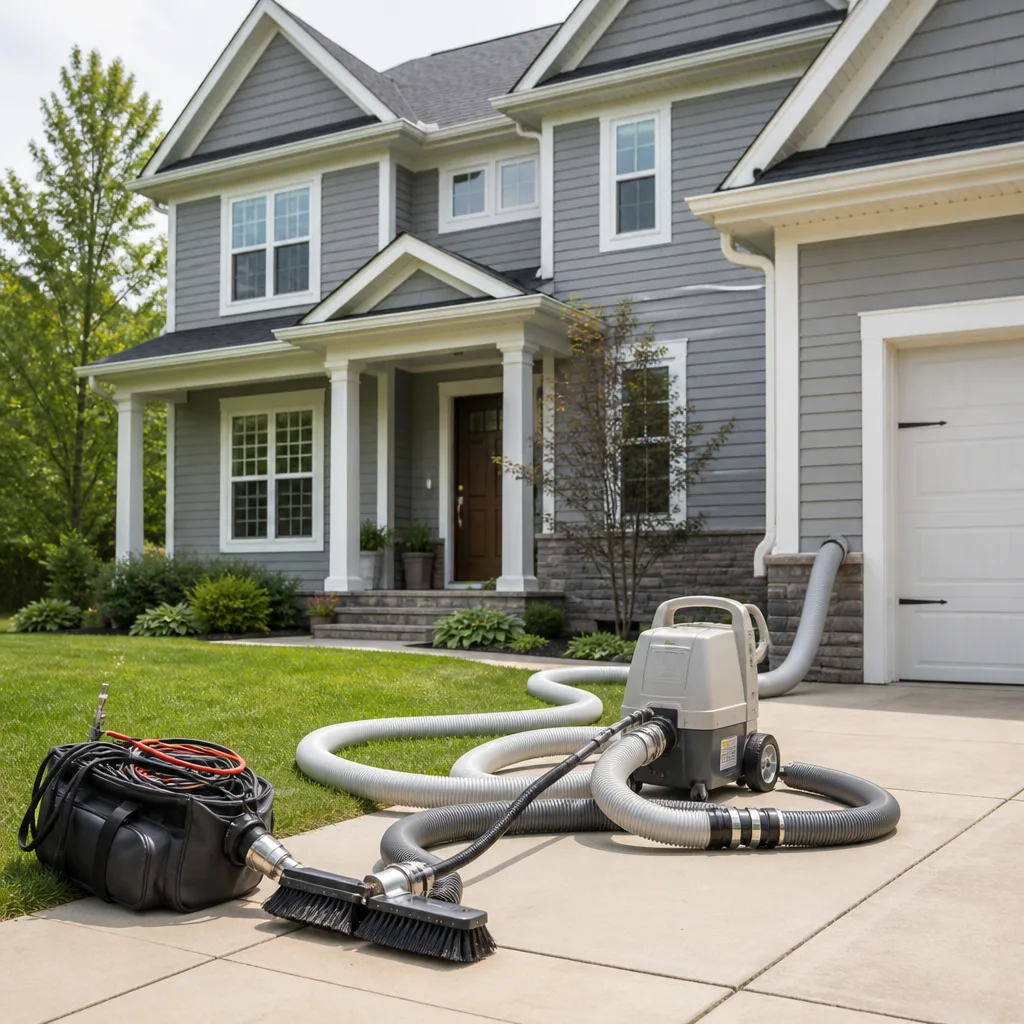 Whole-home duct cleaning
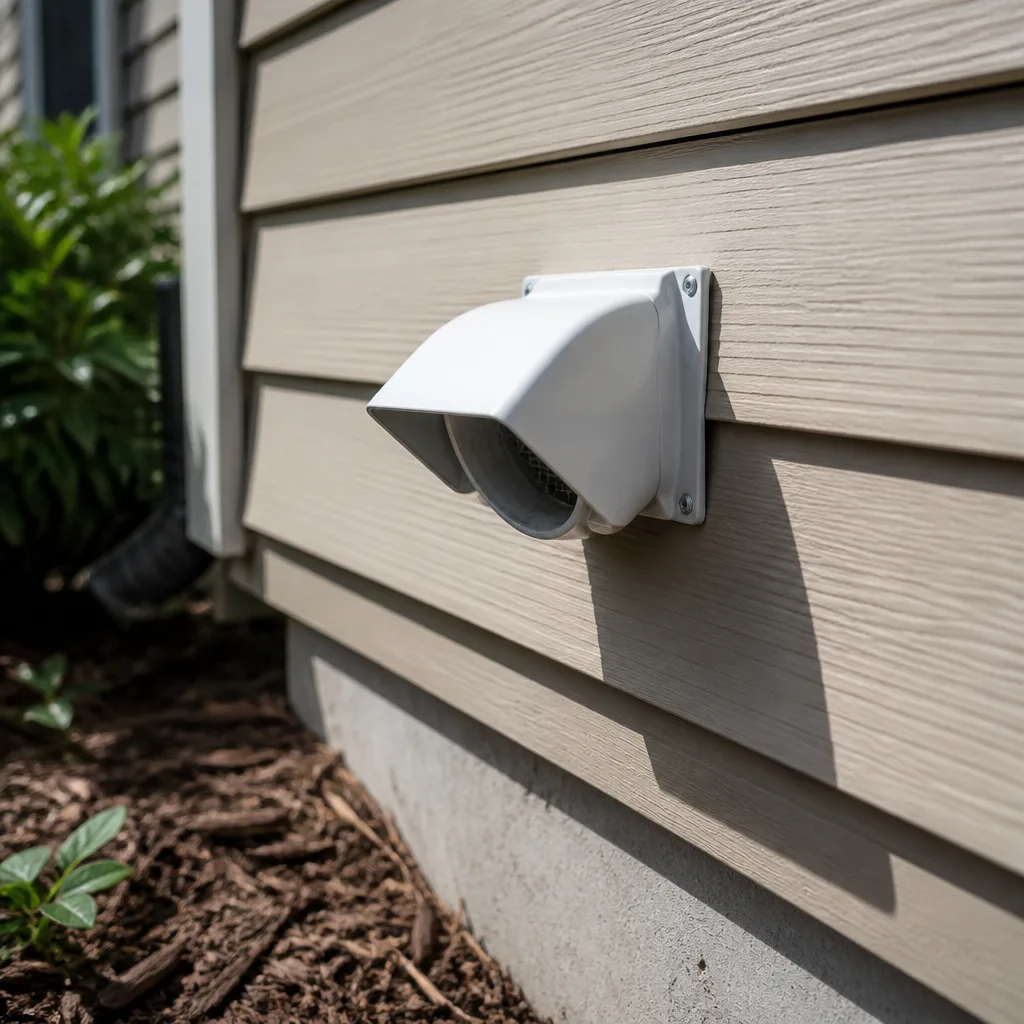 Dryer vent cleaning
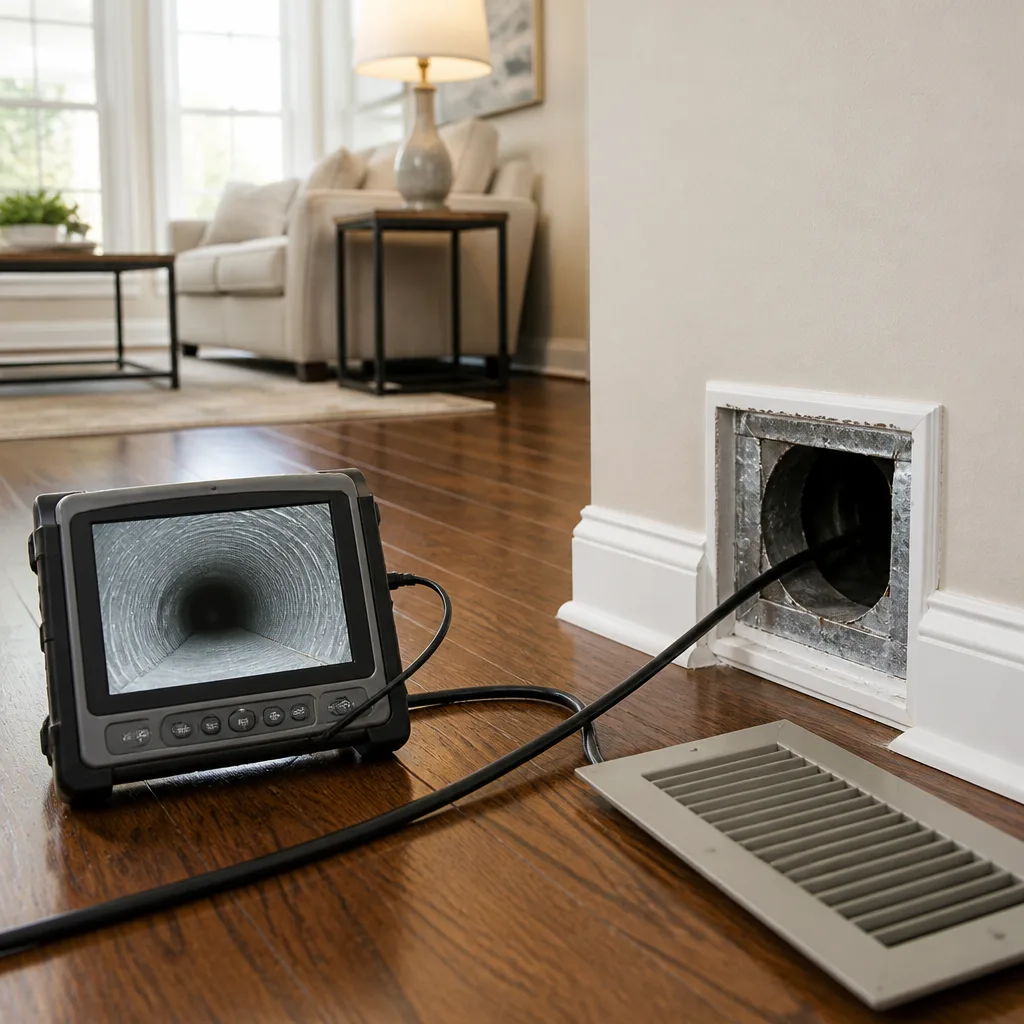 Camera inspection
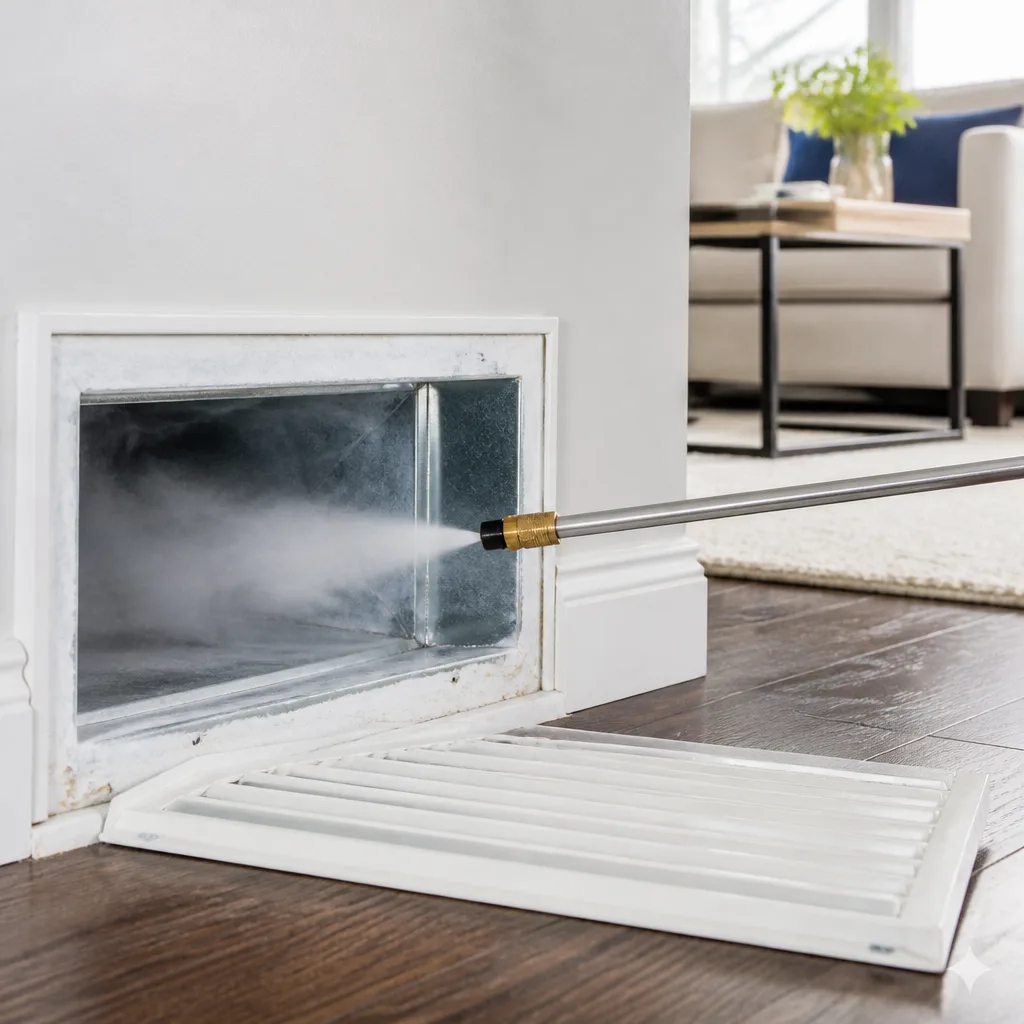 Sanitizing & deodorizing
Whole-system duct and dryer vent check with before-and-after photos - you see exactly what came out of your vents
That "$99 whole-house special" is a bait ad - the real number appears once they are in your hallway, or the "clean" is a shop-vac at the register. We photograph the inside of your ducts before and after instead.
How to Hire an Air Duct Cleaning Contractor in Highland Creek: A Step-by-Step Guide
The most dangerous thing a duct cleaning contractor can do in your home isn’t overcharge you. It’s loosen years of settled debris with the wrong equipment, then fail to capture it, and push that contamination straight into the air you breathe. The EPA has warned about exactly this: improper cleaning, or cleaning done with equipment that can’t contain what it disturbs, can release more contaminants into living spaces than leaving the ducts alone. Industry estimates put contractor error as a leading cause of post-cleaning air quality complaints, which means the person you let through the door matters more than the price they quote. This guide gives Highland Creek homeowners a question-by-question framework for telling a specialist from an opportunist before anyone touches your system.
Quick Answer
To hire a duct cleaning contractor in Highland Creek, verify five things before you book: the equipment they use (professional-grade rotary-brush and negative-air systems, not a shop vac), whether they perform a documented pre-inspection, what containment method keeps debris from spreading into your home, whether their NADCA credential is actual certification or just membership, and whether their written quote itemizes every line. Request references from inside Highland Creek itself, insist on a walkthrough before any price is named, and treat any full-system quote under $99 as a warning sign rather than a bargain.
Styles & brands we work with
- Whole-home duct cleaning
- Dryer vent cleaning
- Camera inspection
- Sanitizing & deodorizing
Quick Answer: The Five-Question Vetting Framework
- What equipment will you use, and is it truck-mounted or portable? A serious operation brings professional units like Rotobrush rotary-brush extraction systems or Nikro cleaning units, not consumer vacuums.
- How do you verify negative pressure during cleaning? The answer should describe a contained airflow setup, such as Abatement Technologies negative-air equipment, and a method for confirming it’s working.
- Will you perform a pre-inspection before quoting? A real specialist inspects and documents the system before naming a scope.
- Are you NADCA-certified, or just a member? Those are two different credentials and many contractors blur the line.
- Will you put every line item in writing? A quote without line items is a quote you can’t hold anyone to.
Table of Contents
- Why Vetting a Duct Cleaning Contractor Matters
- The Five Questions to Ask Before Booking
- How to Read a Duct Cleaning Quote
- NADCA Membership vs. NADCA Certification
- Red Flags Specific to Highland Creek
- What a Proper Pre-Inspection Includes
- Post-Service Accountability: What to Request
- Cleaning vs. Sealing: Why the Difference Matters
Why Vetting a Duct Cleaning Contractor Matters
Duct cleaning done wrong is worse than duct cleaning skipped. That sounds dramatic until you understand what’s actually in the system. A typical home’s ductwork holds years of accumulated dust, pet dander, construction debris from prior renovations, and the fine particulate that settles every time the HVAC cycles. Professional-grade extraction removes that material and captures it. Improper cleaning disturbs it and recirculates it, which is the failure mode the EPA warns about.
Flexible ductwork is especially vulnerable. Sections of flex duct in Highland Creek homes – particularly the runs through unconditioned attic space where summer heat is intense – can be damaged by aggressive brushing or by technicians who force a rotary tool through a collapsed section. Once flex duct is torn, it becomes a leakage point that undermines every future cleaning. That’s not a hypothetical; it’s a common repair we’re asked to make after a rushed job.
Warranty coverage is the other hidden risk. HVAC manufacturers often stipulate that duct cleaning must be performed to recognized industry standards, and improper work can complicate a warranty claim down the road. A contractor who can’t explain their process can’t protect your coverage.
Finally, there’s the plain fact that most homeowners don’t know what to ask. They ask about price. They should ask about equipment and containment. This guide flips that order.
The Five Questions to Ask Before Booking
These five questions separate specialists from opportunists faster than any review site. Ask each one by phone before you schedule, and note how confidently and specifically the answers come.
Question 1: What equipment will you use?
The right answer names professional systems: rotary-brush extraction equipment like Rotobrush, high-capacity cleaning units like Nikro, and negative-air machines like Abatement Technologies. The wrong answer is vague – “our equipment,” “industrial vacuums,” “the truck.” A genuine specialist will describe the tool and why it’s chosen. Consumer-grade vacuums and shop vacs don’t have the airflow or filtration to do the job.
Question 2: How do you verify negative pressure?
Negative pressure means the cleaning setup pulls air and debris toward the extraction point rather than letting it escape into your rooms. Ask how they confirm it’s working. A pro will describe a containment setup and a verification method – checking the seal, using a manometer, or monitoring airflow at the collection point. Vague answers here are a hard pass.
Question 3: Will you perform a pre-inspection?
Ask whether they inspect before quoting. A specialist walks the system – registers, main trunk, plenum, air handler connection – before naming a scope. A contractor who quotes from the doorway hasn’t seen what they’re pricing.
Question 4: Are you NADCA-certified or a member?
These aren’t the same thing, and the distinction is covered in its own section below. Ask directly: “Are your technicians individually NADCA-certified, or is the company a member?” A clear answer tells you they understand the difference.
Question 5: Will you itemize the quote in writing?
Every line item should appear: which sections are being cleaned, what equipment, what containment, what add-ons (if any), and what deliverables you receive afterward. If the quote isn’t itemized, you have nothing to hold them to.
How to Read a Duct Cleaning Quote
A duct cleaning quote should tell you exactly what’s being cleaned and how. If it doesn’t, it may be a price for a partial job labeled as a full-system service.
Line items that should always appear
- Which supply and return ducts are being cleaned, itemized by count or system description
- Whether the air handler, blower compartment, and plenum are included or excluded
- Equipment specification: rotary-brush, negative-air model, or both
- Containment method and location
- Pre-inspection findings that justify the scope
- Deliverables: photos, written report, or both
Legitimate add-ons
- Duct sealing: if the pre-inspection finds leakage, sealing is a genuine and necessary follow-on service. Cleaning without addressing leaks loses effectiveness within months.
- Sanitizing: appropriate when contamination is confirmed, using professional products such as Guardsman-grade sanitizing treatments applied within the documented scope.
- HVAC coil cleaning: if the coil is visibly fouled and included in the same visit, it’s a legitimate line item.
Upsells that warrant scrutiny
Blanket “antimicrobial fogging” offered to every customer, regardless of findings, deserves hard questions. Ask what contamination was found, how it was identified, and what product is being applied. A fog treatment with no documented justification is marketing, not remediation. The same goes for duct “encapsulation” sold on its own without a repair actually being needed. Legitimate services follow evidence; upsells precede it.
NADCA Membership vs. NADCA Certification: Know the Difference
The National Air Duct Cleaners Association (NADCA) publishes the industry standard for duct cleaning (ACR, the Assessment, Cleaning and Restoration standard). Many homeowners hear “NADCA” and assume every contractor who mentions it is certified. That misunderstanding is exactly what credentialing theater exploits.
NADCA membership means a company pays dues to the association. NADCA certification means individual technicians have completed a knowledge assessment and hold current credentials. A company can be a member with zero certified technicians on staff. Some contractors lean on membership language in their marketing while having no certified personnel.
What to ask instead
- “How many of the technicians who will be in my home hold current NADCA certification?”
- “Can you show me the individual credentials?”
- “Have they completed the Air Systems Cleaning Specialist (ASCS) certification or its equivalent?”
- “When did they last complete continuing education?”
A company that bypasses membership and simply explains its technicians’ certification status is telling you more than one that recites affiliation. If a Highland Creek contractor can’t distinguish membership from certification when asked, that’s information you can use.
Red Flags Specific to Highland Creek
Highland Creek sits inside the northern Charlotte metro, and the contractor market reflects that. Plenty of crews travel from other parts of the metro to work here, and that’s not automatically a problem. What matters is whether they can back up their work with local accountability.
Traveling contractors with no local references
A contractor who’s never cleaned a system in Highland Creek can still do a good job. But when they can’t provide a single local reference – no neighborhood names, no zip codes they can point to – you’re taking on their learning curve. Ask directly: “Can you give me two references from Highland Creek in the past year?” If not, ask for any references in the northern Charlotte metro.
Door-to-door pricing without a walkthrough
Any price quoted before anyone has seen the system is a guess. It’s either padded to cover unknowns or so low it can’t possibly include a full job. A contractor who prices at the door is selling a visit, not a service.
Full-system quotes under $99
A full-system duct cleaning requires professional equipment, several hours of labor, and containment setup. A price that low tells you what will actually happen – partial cleaning, no containment, or a bait-and-switch to a larger number once they’re inside. The honest low end in this market reflects the real work; anything dramatically below that is a different product.
Pressure to “lock in today”
Legitimate specialists don’t need urgency. The system will still need cleaning next week. High-pressure same-visit sales tactics exist to prevent you from comparison shopping.
What a Proper Pre-Inspection Includes
The pre-inspection is where a specialist earns the right to quote. It’s not a glance at the registers. It’s a systematic look at the entire air pathway – ducts, vents, air handler, plenum, and connections – because problems in one section change the scope of another.
What should happen during the walkthrough
- The technician opens and inspects a representative sample of supply registers and return grilles
- They look inside the return plenum and at the air handler cabinet
- They check accessible duct runs for damage, separation, or collapsed flex sections
- They note any visible contamination, moisture, or evidence of pest intrusion
- They photograph what they find
- They walk you through the findings and explain what the cleaning scope will and won’t address
If a contractor skips the photographic record, ask for it. Photos of your own system are the single best protection against paying for work that didn’t happen. A specialist who carries professional-grade inspection equipment will have no trouble producing them.
Post-Service Accountability: What to Request
The job isn’t finished when the equipment leaves. The conversation after the work is where you confirm that what was promised was actually done.
Deliverables to request
- Before-and-after photos of the specific sections cleaned, not generic stock images
- A written summary of scope performed, matching the original quote line by line
- A note on any conditions found – leaks, damage, or areas needing follow-up
- Confirmation of who performed the work and their certification status, if not already provided
What recourse you have
If the work doesn’t match the stated scope, you have three levers: the written quote (which defines scope), the photos (which prove or disprove performance), and the company’s stated process. Raise the discrepancy in writing and ask for a specific remedy. A contractor who stands behind the process will address it. One who deflects by explaining why you can’t see the inside of your ducts is telling you something. Keep the quote and the photos together in one file; that’s the record.
Cleaning vs. Sealing: Why the Difference Matters
Cleaning removes what’s in the ducts. Sealing stops the leaks that let new material in. Both matter, and one without the other typically doesn’t last. This is the single most common gap in duct cleaning work: a thorough cleaning performed on a leaking system loses effectiveness within months as new dust gets pulled in through unsealed joints.
Flex duct joints, the plenum-to-air-handler connection, and register boots are the usual suspects. A contractor who can find and fix those leaks – not just clean around them – delivers a result you can maintain. A pure-cleaning crew can’t, which is why the scope of the contractor’s capability matters as much as the cleaning itself. When you’re comparing quotes, ask whether the contractor also does air duct cleaning with documented sealing as a follow-on, or only cleaning. The answer changes what the price actually buys you.
Common Mistakes to Avoid
- Booking on price alone. The cheapest quote is often the most expensive job, because a partial cleaning now means another cleaning later. Ask about scope before price.
- Skipping the walkthrough. Any contractor who will quote without seeing the system is pricing a product they can’t define. Insist on a pre-inspection.
- Confusing NADCA membership with certification. Membership is a dues status; certification is an individual credential. Ask which one you’re being shown.
- Buying antimicrobial fogging without evidence. Fog treatment sold to every customer, regardless of findings, is a product, not a remediation. Ask what was found and how.
- Accepting verbal scope. A quote without line items leaves you with nothing to hold the contractor to. Get it in writing with photos.
- Ignoring duct leaks when they’re found. Cleaning a leaking system wastes the cleaning. Fix the leaks or ask for sealing to be included.
- Failing to ask for local references. A Highland Creek homeowner should be able to hear from another Highland Creek homeowner. If the contractor has none, that matters.
When to Call a Professional
Duct cleaning isn’t a calendar task – it’s a response to a condition. Call a professional when you notice persistent dust settling on surfaces shortly after cleaning; allergy or respiratory symptoms that get worse indoors; a musty or stale smell when the HVAC starts; visible dust trails around registers; or a recent renovation that introduced construction debris into the system. Call immediately if you find pest activity, water intrusion, or visible mold at a register. If you’re unsure, a pre-inspection answers the question. Air Duct Cleaning Highland Creek offers free estimates in Highland Creek – call (855) 323-8125. We answer 24/7. Fast dispatch from 7am to 7pm, Sunday through Friday.
Our technicians have up to 11 years of experience, and the local pro we connect you with is licensed and insured as their state requires. One flat price per system is agreed before work starts, and you get before-and-after photos of your own ducts.
See the difference
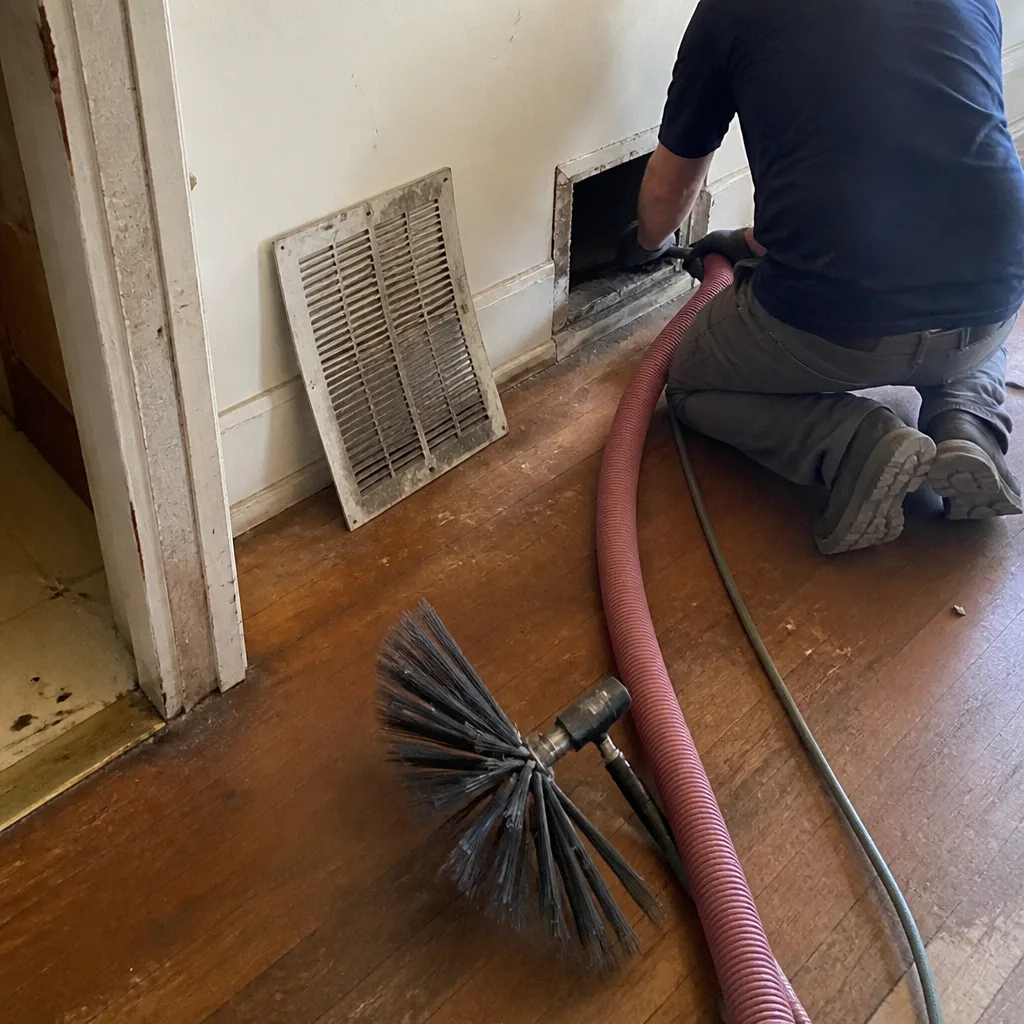 Before
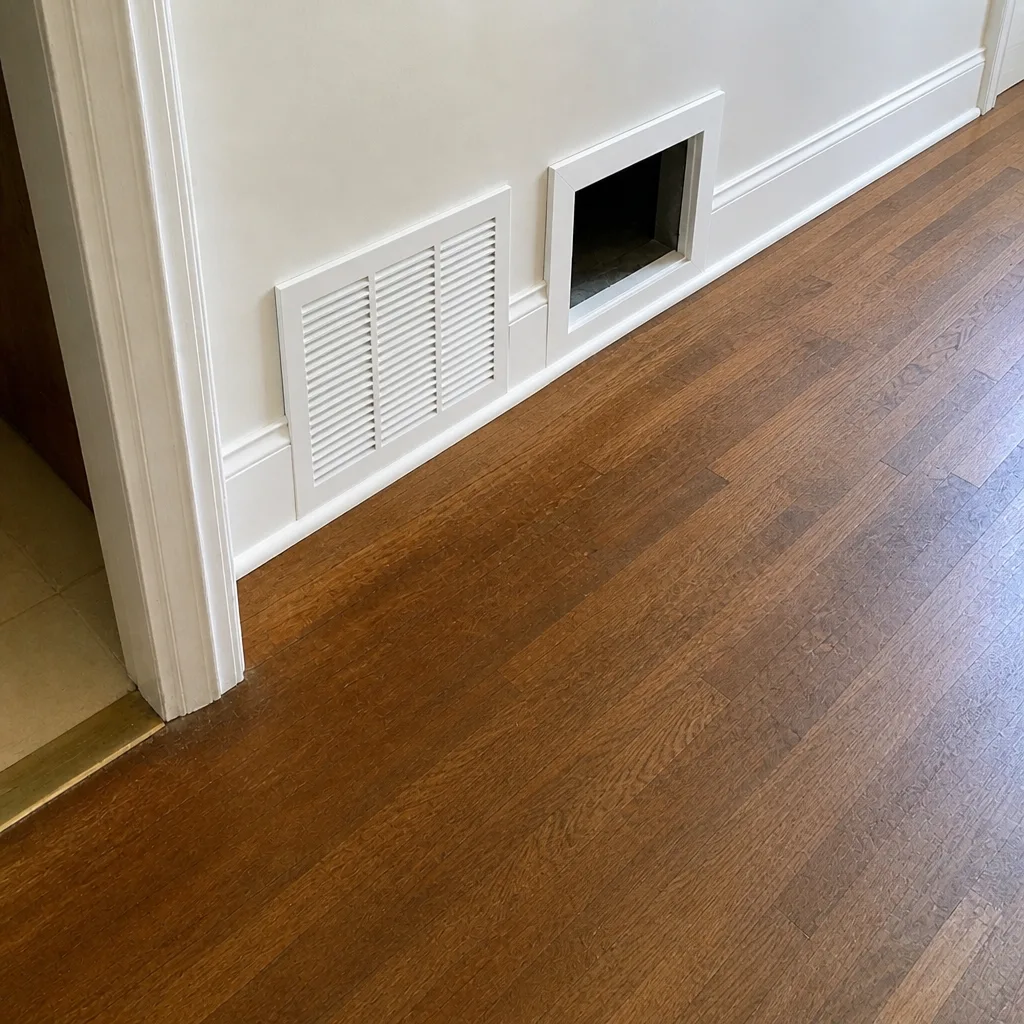 After
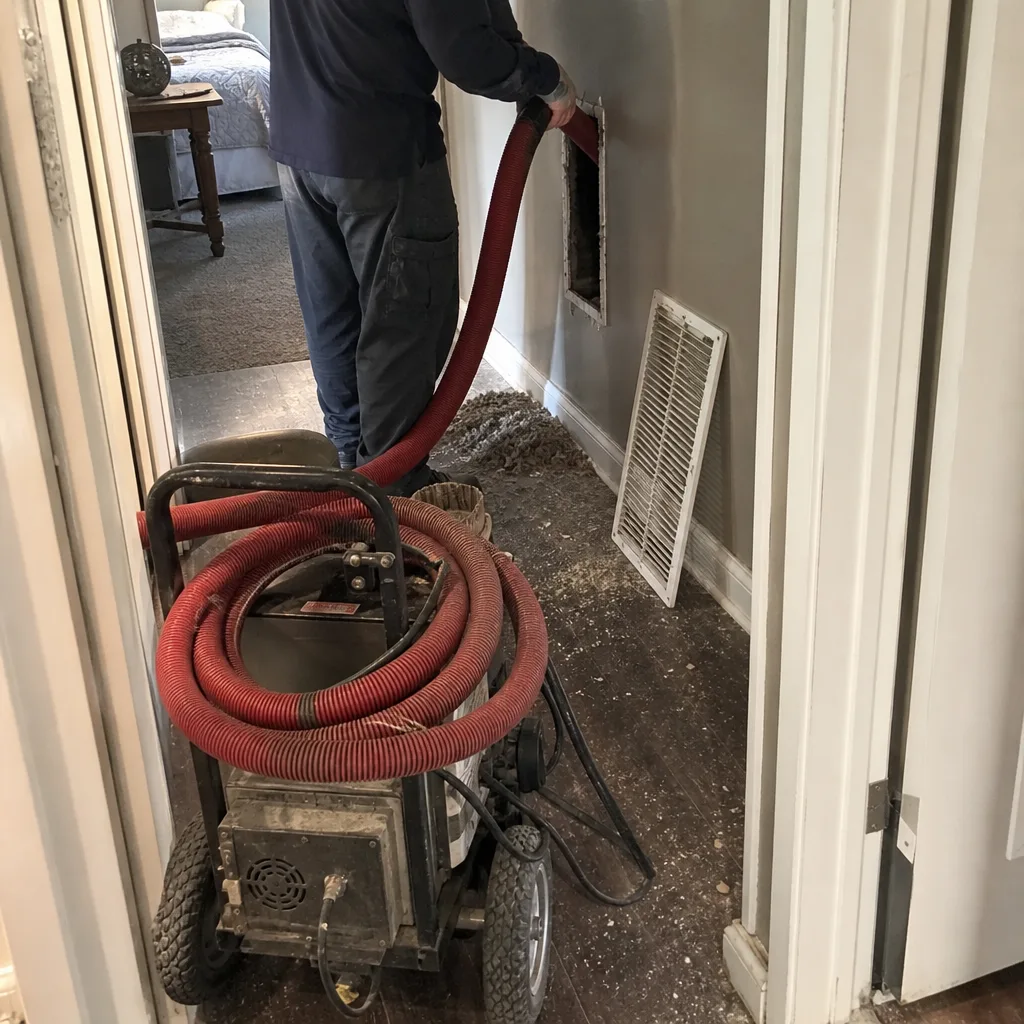 Before
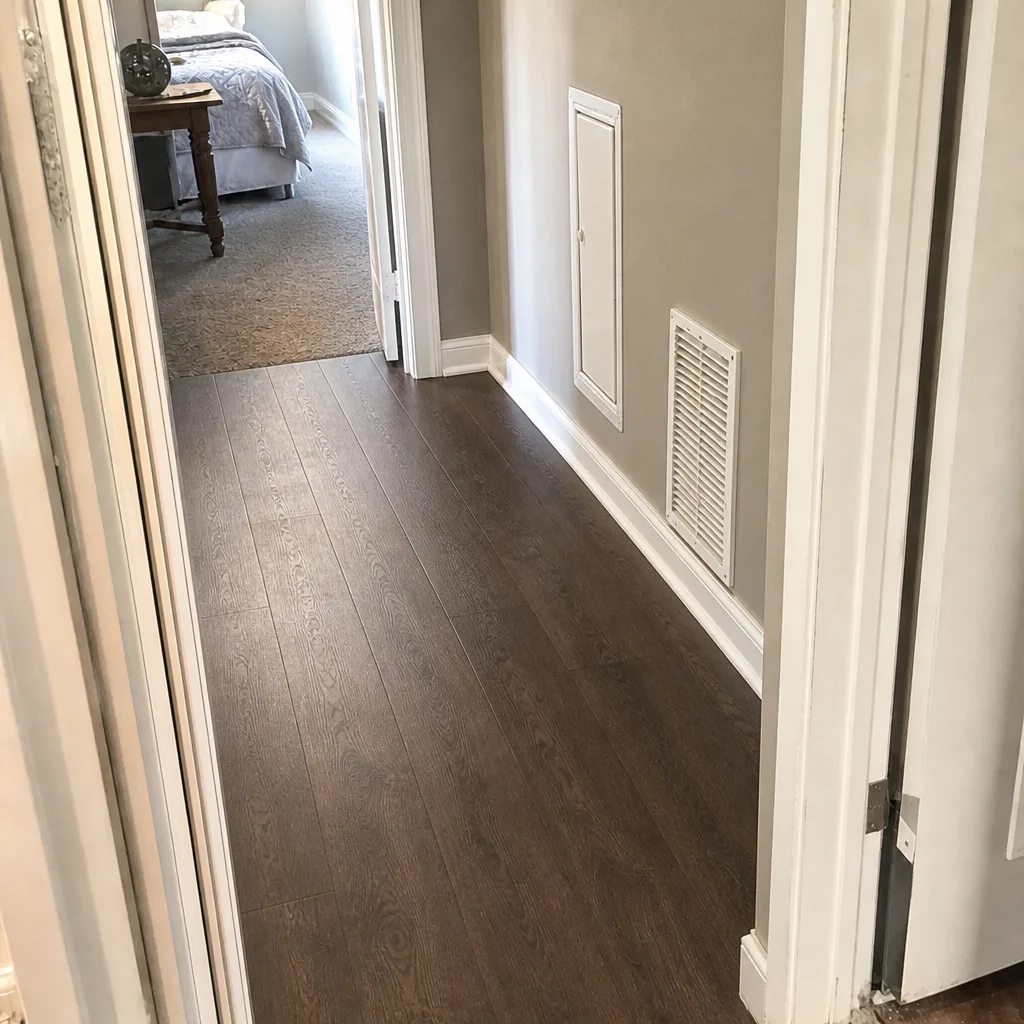 After
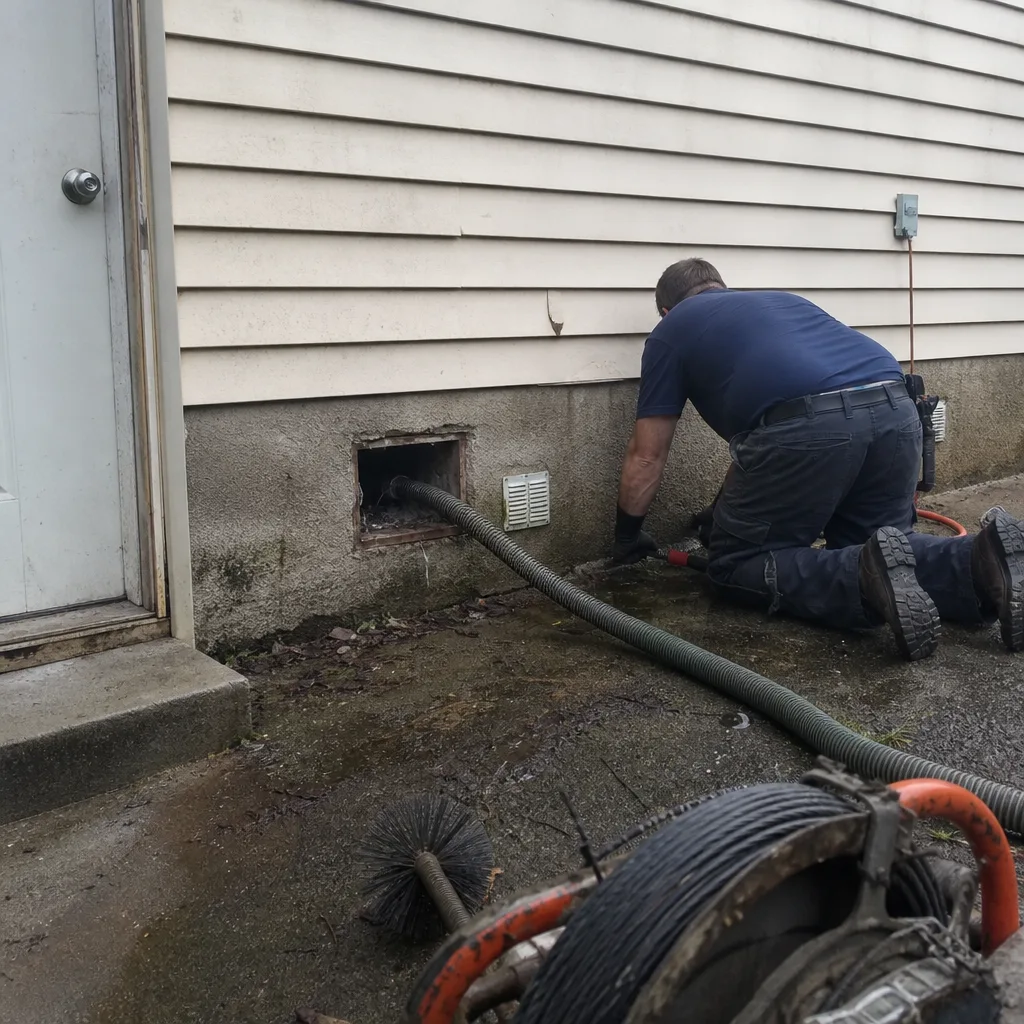 Before
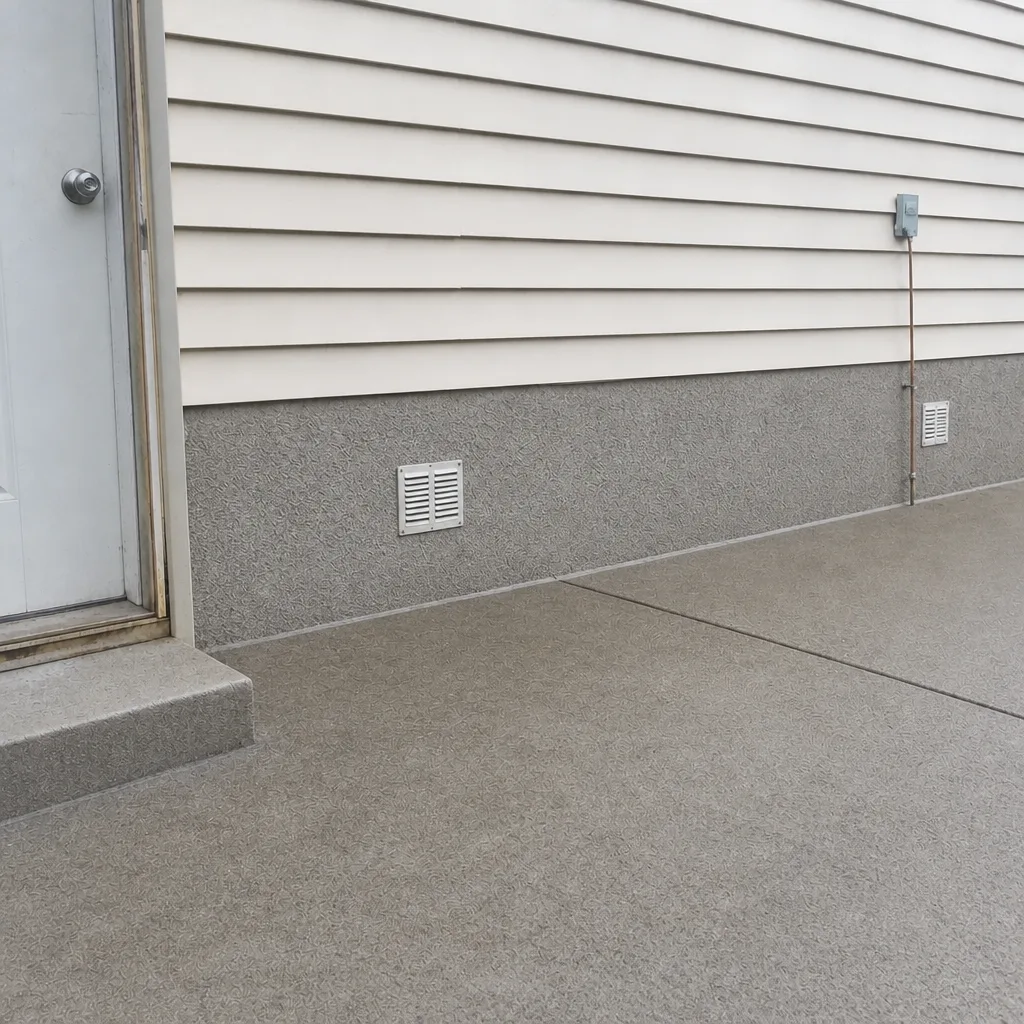 After
Frequently Asked Questions
Full-system air duct cleaning in Highland Creek typically runs by system scope rather than per vent, and the written estimate sets the final price. Any quote should be itemized and based on a pre-inspection, not a door-to-door figure. Call (855) 323-8125 for an exact quote – estimates are free.
Because they’re for a different, smaller job: partial cleaning, no containment, or a teaser price that grows once the technician is inside. Ask every low quote what equipment, containment, and scope it includes before you compare numbers. Call (855) 323-8125 to get a scope-based quote you can compare line by line.
Ask for before-and-after photos of your own duct sections and a written scope summary that matches the original quote. A contractor using professional equipment and a documented process should produce both without hesitation. Call (855) 323-8125 to book a visit and see the photos before and after.
For most Highland Creek homes, it depends on conditions rather than a schedule: pets, recent renovations, allergies, or visible dust trails all shift the answer. A pre-inspection is the honest way to decide whether it’s needed now. Call (855) 323-8125 for a free estimate and a straight answer.
No. Membership means the company pays dues to the association; certification means individual technicians have completed a credentialing process and hold current credentials. Ask specifically how many technicians in your home are certified, not just whether the company is a member.
Improper cleaning can damage flexible ductwork and complicate warranty claims, which is why equipment and technique matter. Professional rotary-brush systems and proper containment reduce that risk. Call (855) 323-8125 to discuss what your system needs before anything touches the ducts.
Structuring the Post-Service Conversation
Most homeowners let the technician pack up and leave without the conversation that makes the job defensible. Have it before they go. Confirm in person that the scope on the written quote matches what was performed, review the before-and-after photos together, and ask whether any conditions were found that will need follow-up – a leak that will make the next cleaning less effective, a flex section that should be repaired, or an air handler issue that needs a separate specialist. If anything doesn’t match, raise it now, not weeks later. A contractor who stands behind their process will walk through it with you. If you’re planning future work, keep the quote, the photos, and any summary in one file. That’s your record if you ever need to make a warranty or follow-up claim, and it’s how a duct cleaning job stays accountable long after the truck has left.
The Bottom Line
Hiring duct cleaning in Highland Creek comes down to five things: verify the equipment (Rotobrush, Nikro, Abatement Technologies, not consumer vacuums), confirm negative pressure and containment, require a documented pre-inspection, distinguish NADCA certification from membership, and insist on an itemized written quote with before-and-after photos. Local references beat national advertising. A walkthrough beats a door price. And if the quote seems too low to cover the scope, it doesn’t. The right contractor will answer these questions without flinching, because the equipment and process back them up. The wrong one will find a reason to skip them.
Air Duct Cleaning Highland Creek specializes in indoor air quality and duct-system services – cleaning, sanitizing, duct repair and sealing, and dryer vent cleaning – with an approach built on source-removal, not surface cleaning. If you’re weighing whether your system needs attention, start with a walkthrough.
Contact
Air Duct Cleaning Highland Creek offers free estimates across Highland Creek and the surrounding area. Call (855) 323-8125. We answer 24/7. Fast dispatch from 7am to 7pm, Sunday through Friday. When you’re comparing contractors, ask each one the five questions in this guide, and choose the one whose answers you can verify. Our technicians have up to 11 years of experience, and one flat price per system is agreed before work starts.
Written by the team at Air Duct Cleaning Highland Creek.