
Last updated November 23, 2026
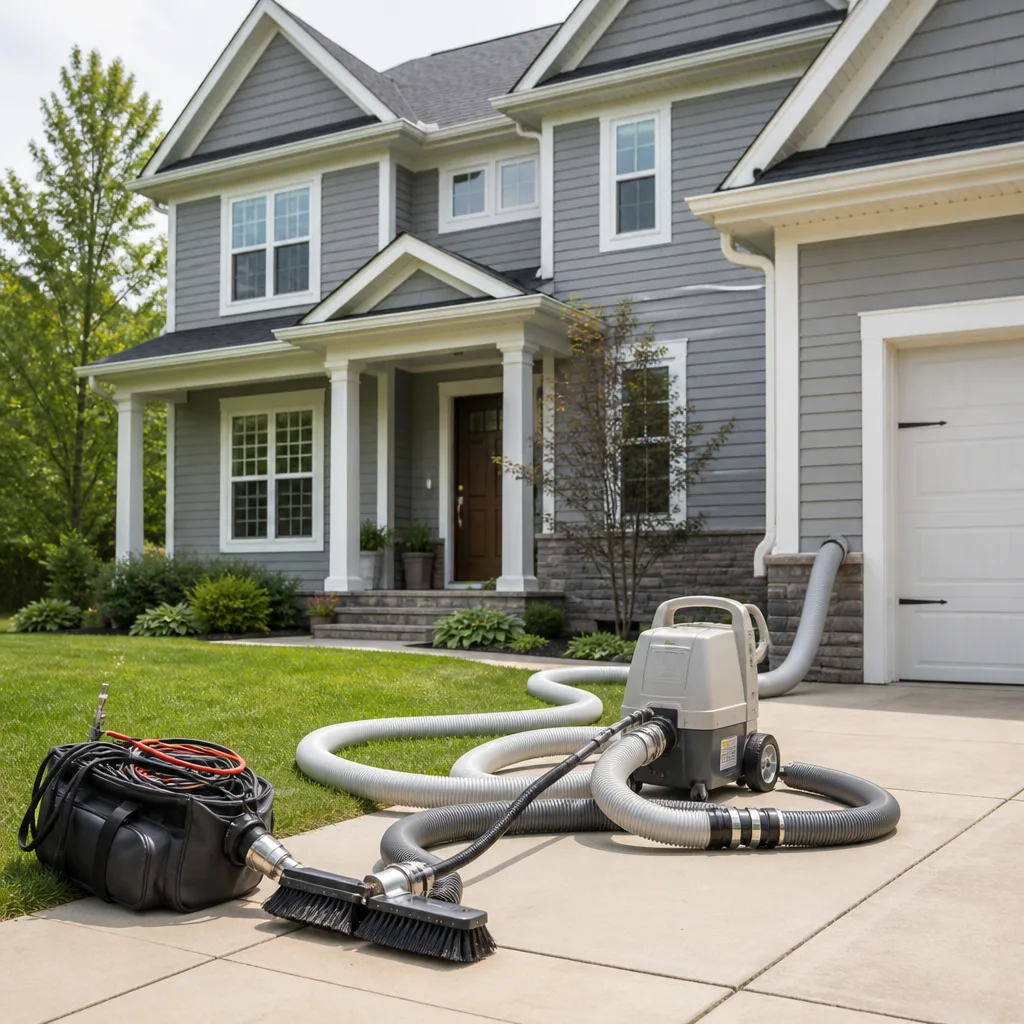 Whole-home duct cleaning
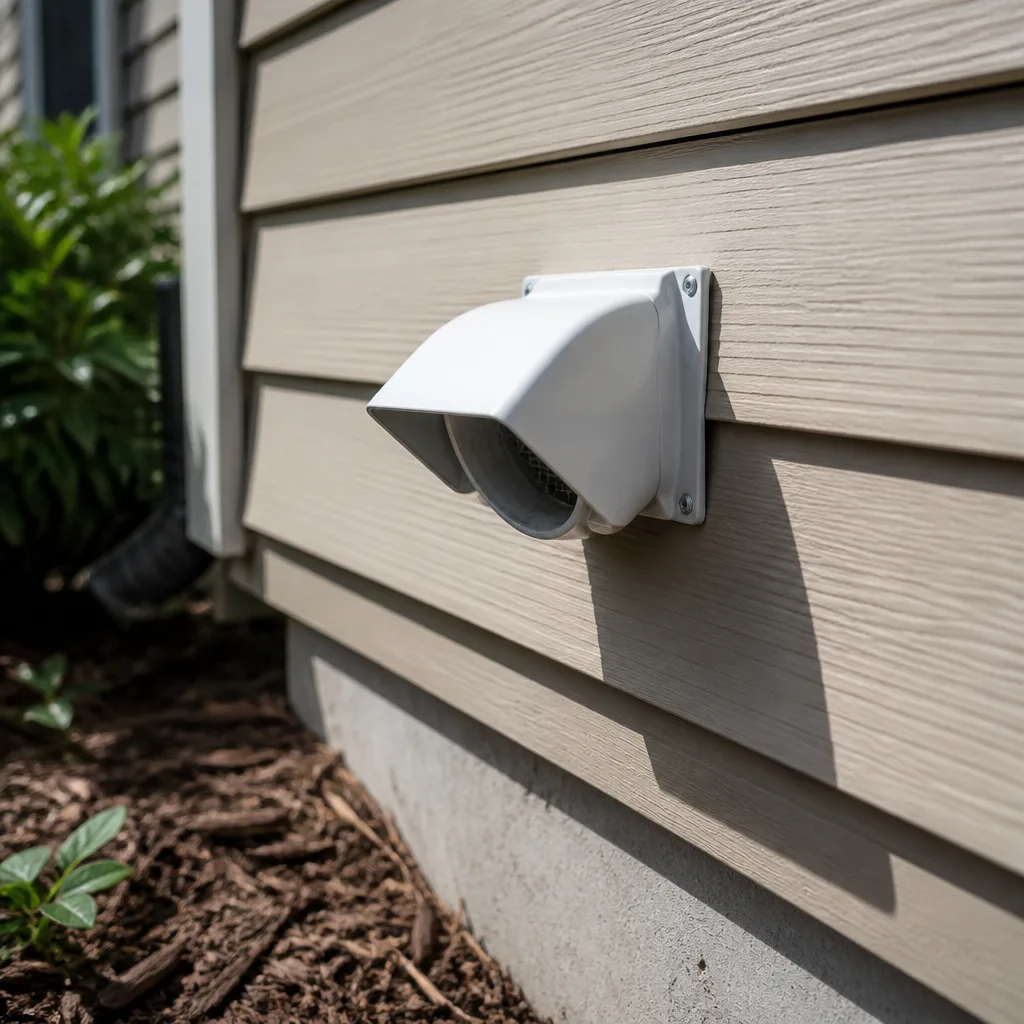 Dryer vent cleaning
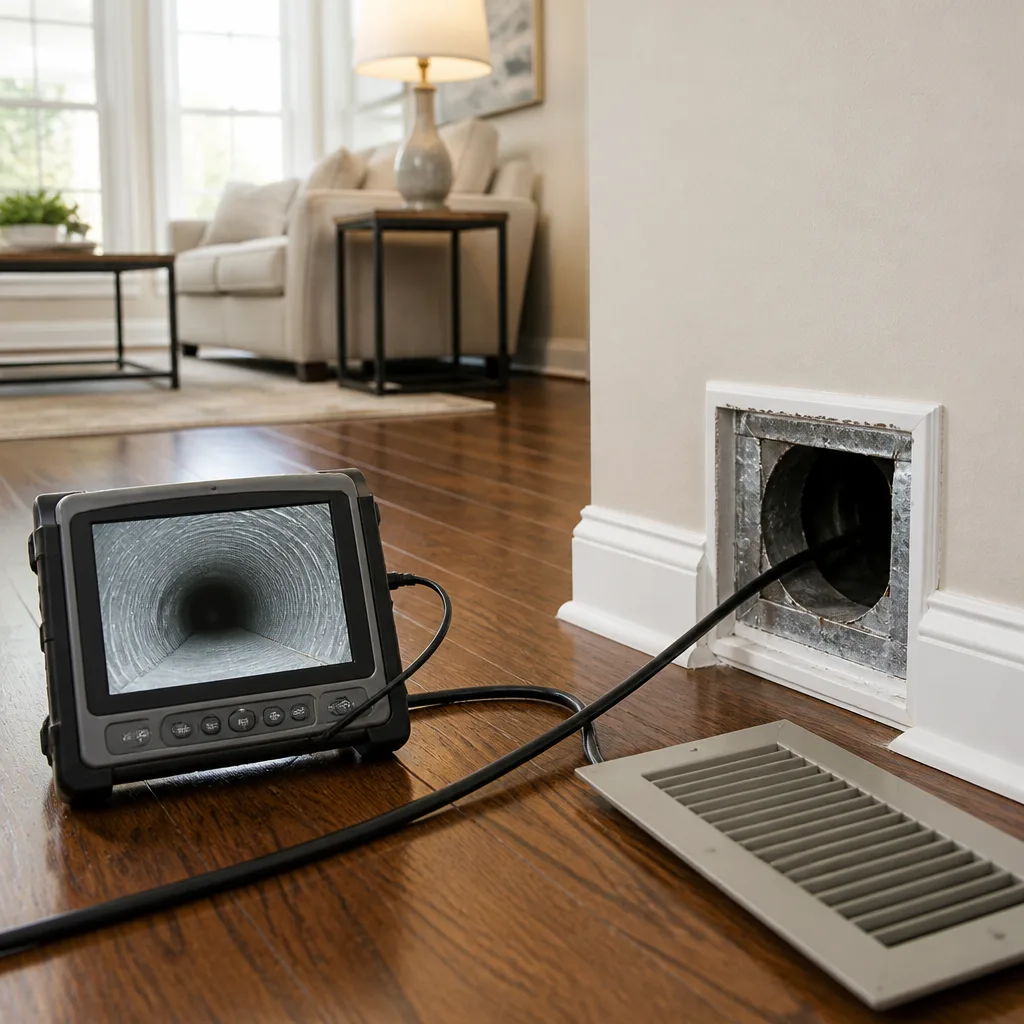 Camera inspection
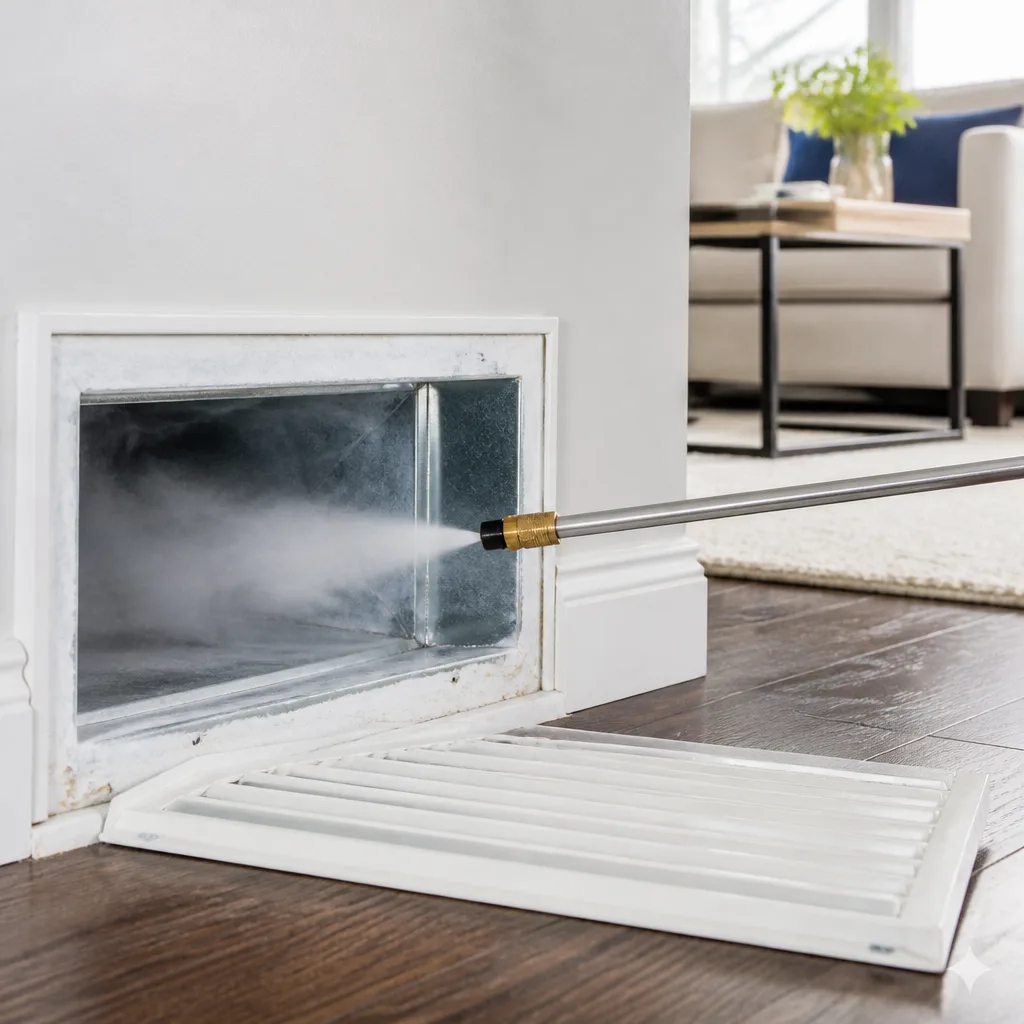 Sanitizing & deodorizing
Whole-system duct and dryer vent check with before-and-after photos - you see exactly what came out of your vents
That "$99 whole-house special" is a bait ad - the real number appears once they are in your hallway, or the "clean" is a shop-vac at the register. We photograph the inside of your ducts before and after instead.
The Complete Guide to Air Duct Cleaning in Highland Creek
Most people assume ductwork is a closed loop that stays clean simply because it’s sealed. In practice, your ducts are the lungs of your house, and in Highland Creek they breathe in something particular: heavy spring pollen, five months of sticky air, and the fine clay dust that finds its way into every return grille. What separates a cleaning that genuinely improves your indoor air from one that mostly stirs up dust comes down to understanding how this climate and this housing stock interact with your duct system. This guide walks through the local contamination patterns we actually encounter, what real source-removal cleaning requires, and how to tell the difference before you write a check.
Quick Answer
Air duct cleaning in Highland Creek means extracting built-up dust, pollen, and moisture-driven microbial growth from the entire air pathway – supply and return ducts, the air handler, registers, and the seals between them – using professional vacuum and rotary-brush equipment rather than consumer tools. Done correctly in this climate, it improves airflow, reduces the dust that settles on your surfaces, and removes the conditions where mold colonization takes hold during the humid months. Done poorly, it just rearranges debris and coats the inside of your ducts to hide it.
Styles & brands we work with
- Whole-home duct cleaning
- Dryer vent cleaning
- Camera inspection
- Sanitizing & deodorizing
Table of Contents
- Why Highland Creek Ducts Get Dirty Differently Than Everywhere Else
- Clay Soil, Slab Foundations, and Return-Air Contamination
- Source Removal vs. Surface Coating: What You’re Actually Paying For
- What the NADCA ACR Standard Actually Requires – and How to Verify It
- Why 2000s Flex Duct Runs Pool Debris at Their Low Points
- Post-Cleaning Verification: What to See Before the Van Leaves
- What Homeowners Can Check Without Professional Equipment
- What Air Duct Cleaning Costs in Highland Creek
Why Highland Creek Ducts Get Dirty Differently Than Everywhere Else
Highland Creek sits in a humidity corridor that pushes indoor relative humidity above 60% for roughly five months a year. That number matters because it’s near the threshold where mold colonization in ductwork shifts from possible to likely – especially on the return side, where air is warmest and dampest as it comes back to the air handler. Compare that to a dry-climate city and the contamination profile changes entirely: here, the problem isn’t just dust load, it’s sustained moisture giving that dust something to grow into.
The pollen calendar adds a second layer. Spring brings a heavy load through open windows and return intakes, and much of it doesn’t stay airborne – it settles on the interior walls of duct runs and in the plenum above the air handler. Once it’s resting on a surface that sees repeated condensation cycles, you get the musty smell that homeowners in Highland Creek describe as “old house smell” even in newer construction.
What we’ve learned working here is that cleaning schedules copied from national advice don’t fit. A three-year interval is reasonable in an arid climate and often too long in a humid one, particularly for homes with oversized systems that cycle short and don’t dry the duct interior between runs. Rather than a fixed calendar, the right interval in Highland Creek depends on three things:
- Whether your returns draw from carpeted rooms, pets live indoors, or windows stay open in spring
- Whether your system has any duct leakage that pulls attic or garage air into the pathway
- How well your indoor humidity is controlled during the long humid season
If you’re dealing with the persistent dust and odor pattern that’s common in Highland Creek, starting with professional air duct cleaning gives you a known baseline. From there you can decide whether sealing or humidity control needs attention too.
Clay Soil, Slab Foundations, and Return-Air Contamination
The ground here is heavy clay, and it moves with the wet-dry cycle in a way that affects foundations and the ducts buried in or beneath them. Clay swells in a wet spring and shrinks in a dry fall, and that movement puts stress on any rigid ductwork routed through or under a slab. Small cracks and joint separations open along the seams, and those gaps don’t stay empty – they draw in soil fines, dust, and the damp earth smell that ends up in the living space.
This is where Highland Creek slab-on-grade homes diverge sharply from crawl-space homes elsewhere in the region. In a crawl-space home, the most common contamination path is through a breach in the floor-level trunk line pulling in humid crawl-space air and whatever’s growing down there. In a slab home, the intrusion is usually finer: clay dust entering through hairline gaps in the under-slab run, plus joint failures at the transition where the slab duct meets the above-slab boot. You get less visible debris and more of a fine, gritty film that settles on the return grilles and builds up on the blower wheel.
What this means for cleaning:
- Return grilles in slab homes tend to show a gritty, grayish film rather than fluffy dust – a fingerprint of under-slab intrusion.
- Any cleaning that doesn’t examine the slab-to-boot transition will miss the most active infiltration point in these homes.
- Duct sealing capability matters here more than in crawl-space homes, because sealing the slab-side joints stops the source rather than cleaning the same intrusion twice.
When we scope a job in Highland Creek, we look at where the returns draw from and where the rigid runs meet the foundation. Cleaning without sealing a clay-soil breach means the problem returns within months, which is why our air duct cleaning Highland Creek work always pairs cleaning with a sealing assessment. Sealed and clean is a different result than just clean.
Source Removal vs. Surface Coating: What You’re Actually Paying For
There are two very different things being sold under the same name in this market, and the price gap between them is where most homeowner disappointment comes from. Source-removal cleaning means the debris is physically extracted from the duct interior and collected, so it leaves the system entirely. Surface coating – sometimes sold as “duct encapsulation” or a “sealing treatment” – applies a coating to the interior walls, which can hide visible contamination without removing the material underneath. One cleans; the other conceals.
The reason generalist contractors default to the second approach is equipment. True source removal requires a truck-mounted or high-capacity vacuum with enough negative pressure to keep the whole duct run under suction while a rotary brush agitates the walls, plus the containment to capture the airborne load. Our technicians use Rotobrush rotary-brush extraction systems to agitate and lift the buildup, and Abatement Technologies negative-air machines to hold the workspace under containment so debris is captured rather than sent into the living space. That’s the commercial and restoration standard of equipment, not the consumer-grade vacuum some crews carry.
How to tell which one you’re being quoted:
- Source removal: Access holes are cut at intervals, the brush and vacuum are inserted, and the debris is bagged or filtered. Before/after photos show actual duct interiors, not just equipment on the truck.
- Surface coating: The crew sprays the interior and the ducts look lighter afterward, but the film, odor source, and microbial load are still present. Ask directly: “Are you removing the debris and hauling it away, or coating the walls?”
- Vacuum-only cleaning: A single handheld vacuum at the registers with no rotary agitation. It’ll pull the loose dust near the grille and leave the adhered material downstream, which is most of it.
We won’t coat a duct and call it cleaned. If the contamination is heavy enough to warrant sanitizing, we use a Guardsman-grade treatment as part of an Air Quality & Sanitizing service after the source is removed – sanitizer is a finish, not a substitute for extraction.
What the NADCA ACR Standard Actually Requires – and How to Verify It
The NADCA ACR standard is the industry reference for how HVAC system cleaning is supposed to be performed – and it’s widely cited in marketing while being followed in practice far less often. Knowing what it actually asks for turns a sales term into a checklist you can hold a company to.
In broad terms, the standard requires the cleaning to cover the entire system, not just the visible portions: all supply and return ducts, the air handler, the coils, the blower, the plenum, and the registers. It requires source removal under negative pressure so dislodged debris is captured. It requires access that lets the technician reach every part of the system, and it requires that the system be inspected before and documented after. A company can say “NADCA” all day; the real question is whether the scope and documentation line up with those requirements.
Here’s how to check in practice before you book:
- Ask whether the quote covers the air handler, coils, and blower, or only the duct runs. A price that only covers “the ducts” is scoped below the standard.
- Ask what negative-pressure equipment they use. Names like Abatement Technologies are a signal the crew is equipped for containment; a shop vac on the register is not.
- Ask how many access holes they cut per run, and whether they re-seal every one before leaving.
- Ask for before-and-after photos of your own duct interiors – not a marketing gallery.
- Ask what happens if they find microbial growth. A standard-compliant company can remediate the source and sanitize; a company that only cleans has to refer you elsewhere.
That last point matters because it’s the difference between one visit and two contractors. Our duct repair and sealing work plus sanitizing capability sit on the same scope as the cleaning for exactly this reason.
Why 2000s Flex Duct Runs Pool Debris at Their Low Points
The 2000s-era subdivisions in Highland Creek were largely built with flex duct runs – the insulated, corrugated plastic ducts now standard in this housing stock. Flex duct is efficient to install and cheap to run, but its corrugated interior is a debris trap, and its tendency to sag in long horizontal spans creates low points where material collects and stays put while the rest of the run stays comparatively clean.
That matters because a vacuum-and-go cleaning accesses the duct at the boots and the trunk but rarely agitates the settled debris at a sag ten feet in. You come away thinking the system was cleaned, and you still have the same pockets feeding the airflow. It’s why a rotary brush with the reach to travel the length of the run is essential, not optional, in flex-duct homes.
Two more complications specific to flex in Highland Creek:
- The corrugations hold pollen and dust that a smooth rigid run would shed passively, so flex systems accumulate faster even with identical use.
- Flex duct that has sagged and separated at a joint pulls attic air – which in this climate is hot and sometimes humid – into the supply side, which is exactly the condition that drives condensation and microbial growth.
When our technicians inspect a flex system here, the first thing they’re looking for is sag and joint integrity. A cleaning that restores airflow through a sagged run but doesn’t address the sag leaves the problem half-solved.
Post-Cleaning Verification: What to See Before the Van Leaves
The single most useful control you have as a homeowner is what the crew shows you before they drive away. A professional cleaning should be verifiable on the spot, and the willingness to show it separates a real job from a courtesy visit.
Ask to see these, in this order:
- Access panel photos. Every access hole the crew cut should have a before-and-after photo of the interior behind it. If they cut the hole, they saw what was inside – the photo proves it.
- Before/after footage of a vacuum run. A quick phone clip showing the hose pulling visible debris from a return, and the same run after the brush pass, is the clearest proof the extraction happened.
- The collection bag or filter. Source removal produces a bag of captured material. Ask where it went. A crew that can’t show the collected debris may not have extracted any.
- Re-sealed access holes. Every cut hole should be sealed before the crew leaves. Unsealed access holes are a new leak path, and in Highland Creek’s humid air, an open hole is a future mold problem.
- The blower wheel. Ask for a photo of the blower wheel before and after. If the blower wasn’t cleaned, the cleaning scope was below standard.
If a company resists showing any of this, that’s your answer. Call (855) 323-8125 and we’ll walk you through what a verification set looks like for your home – we answer 24/7.
What Homeowners Can Check Without Professional Equipment
There’s a short list of things you can do yourself that genuinely tell you whether your system needs attention, and a longer list of things you shouldn’t touch. Start with the first list:
- Remove a supply or return grille and look in with a flashlight. A light film of dust is normal. Visible debris, dark staining, or fuzzy growth along the duct wall means the system needs a professional look.
- Check the return grille for a gritty gray film. In Highland Creek slab homes, this often points to clay-soil intrusion under the slab.
- Note whether dust reappears on a freshly wiped surface within days. Rapid re-settling usually means the supply side is still shedding debris.
- Sniff the return air on a humid day. A musty smell that intensifies in summer is the strongest single sign that moisture and microbial growth are present.
- Replace the filter – and note which one you used. A filter that’s too restrictive can increase system pressure and pull more air through leakage points; a filter that’s too coarse lets the fine debris through.
Do not attempt to clean ducts yourself with a shop vac and a brush on a cord. From the register you can only reach a few feet, and you’re far more likely to dislodge settled debris into the airstream than remove it. The high-capacity extraction and containment are the whole point, and they’re not available at retail.
What Air Duct Cleaning Costs in Highland Creek
Air duct cleaning in Highland Creek is priced per system, not per vent, and any company quoting a per-vent or coupon price should be asked directly what’s included in the scope. Whole-system pricing depends on the number of returns, the length and complexity of the duct runs, the condition found on inspection, and whether duct repair or sealing is part of the job. Typical estimates for a standard residential system in this market run within a range that reflects the full scope: cleaning of all supply and return runs, the air handler, coils, and blower, plus re-sealing every access point. A written estimate after the inspection sets the final price – and we agree that flat price before any work starts, not after the technician is already inside.
The main variables that move the number:
- Number of systems. A two-system home costs more than one, but each system is priced flat.
- Access difficulty. Flex runs in tight attic spaces or under-slab transitions take longer.
- Condition found. Heavy contamination, microbial growth, or failed joints expand the scope.
- Added scope. Duct sealing, sanitizing, or repairs are quoted separately; cleaning alone is not the same job.
The reason no honest quote can be given over the phone without seeing the system is that the difference between a routine cleaning and a contamination-level remediation isn’t visible from the outside. Call (855) 323-8125 for a free estimate. We answer 24/7. Fast dispatch from 7am to 7pm, Sunday through Friday.
Common Mistakes to Avoid
- Buying on a coupon price. A very low advertised number is almost always the entry point, not the total. The scope grows once the technician is inside, and the invoice follows. Ask for the flat per-system price in writing before work starts.
- Assuming the air handler is included. Plenty of quotes cover the ducts only. If the blower wheel and coils aren’t cleaned, the system is still dirty where it matters most.
- Accepting “sanitized” as a substitute for removed. A sanitizer sprayed over debris seals the contamination in rather than taking it out. Source removal comes first; sanitizing is the finish.
- Skipping the access-hole re-seal. In Highland Creek’s humid air, an unsealed access hole is a new path for moisture and dust. Every hole cut should be sealed before the crew leaves.
- Choosing a generalist HVAC contractor over an indoor-air-quality specialist. Generalist crews often don’t carry the negative-air and rotary-brush equipment real source removal requires. The equipment list in the quote tells you which you’re hiring.
- Cleaning without checking flex duct sag. In the 2000s-era subdivisions here, a sagged run pools debris and pulls attic air even after cleaning. Fix the sag or the cleaning doesn’t last.
- Ignoring the return-grille film. A gritty gray cast on return grilles in slab homes often signals clay-soil intrusion at the foundation. Cleaning handles the symptom; sealing addresses the source.
See the difference
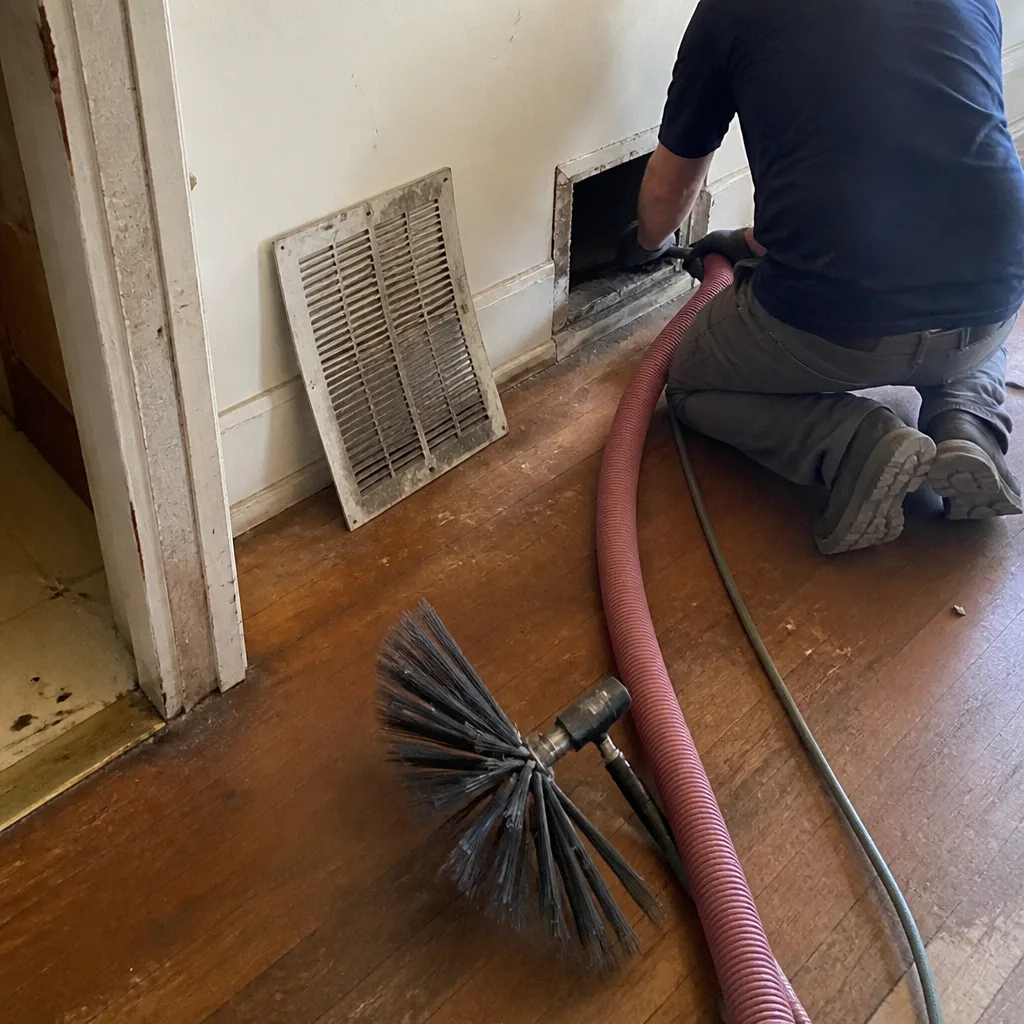 Before
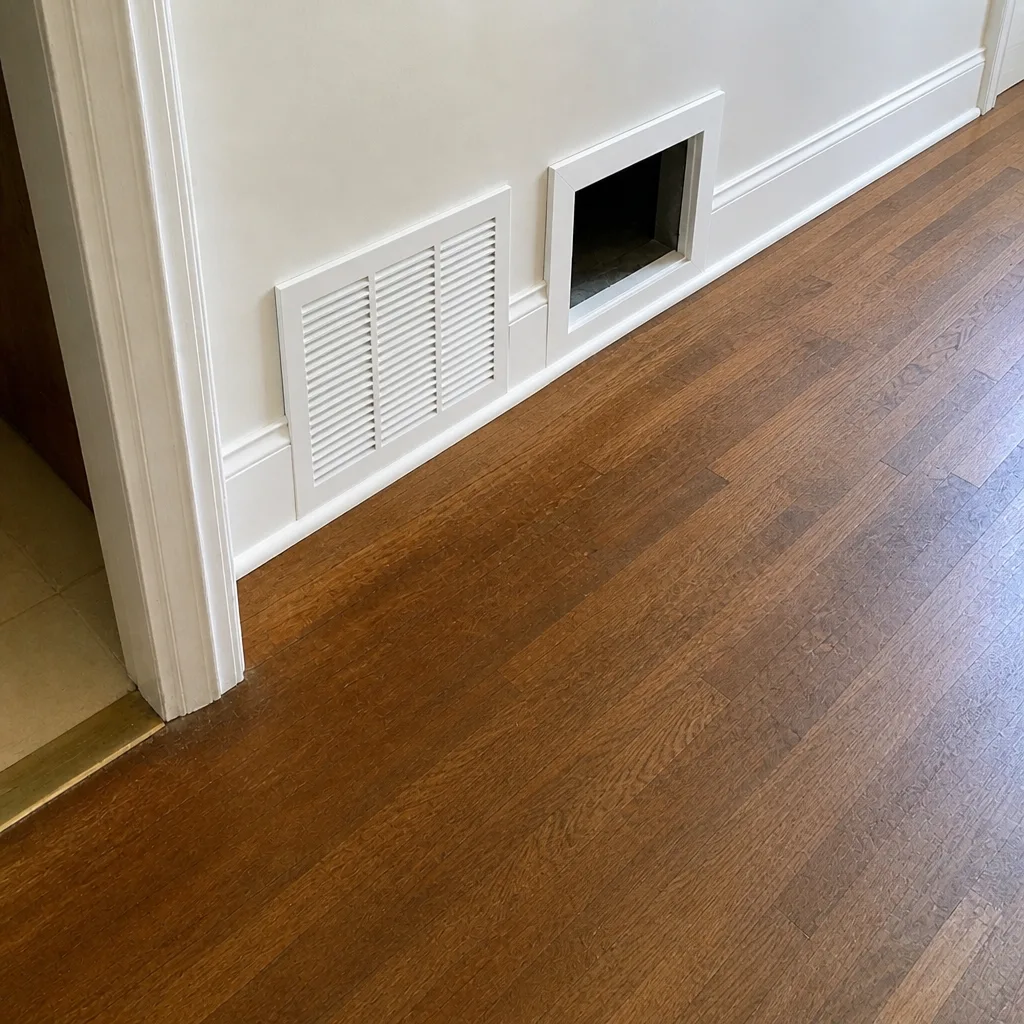 After
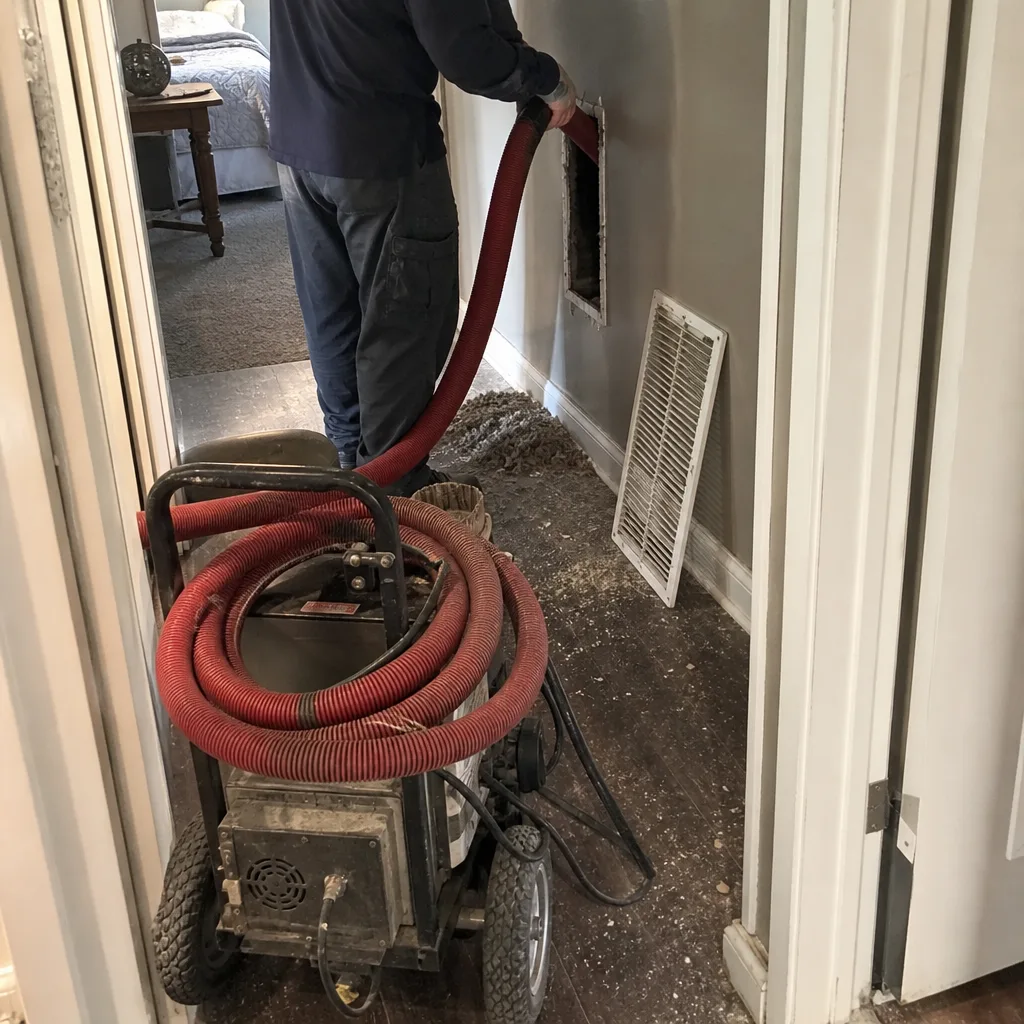 Before
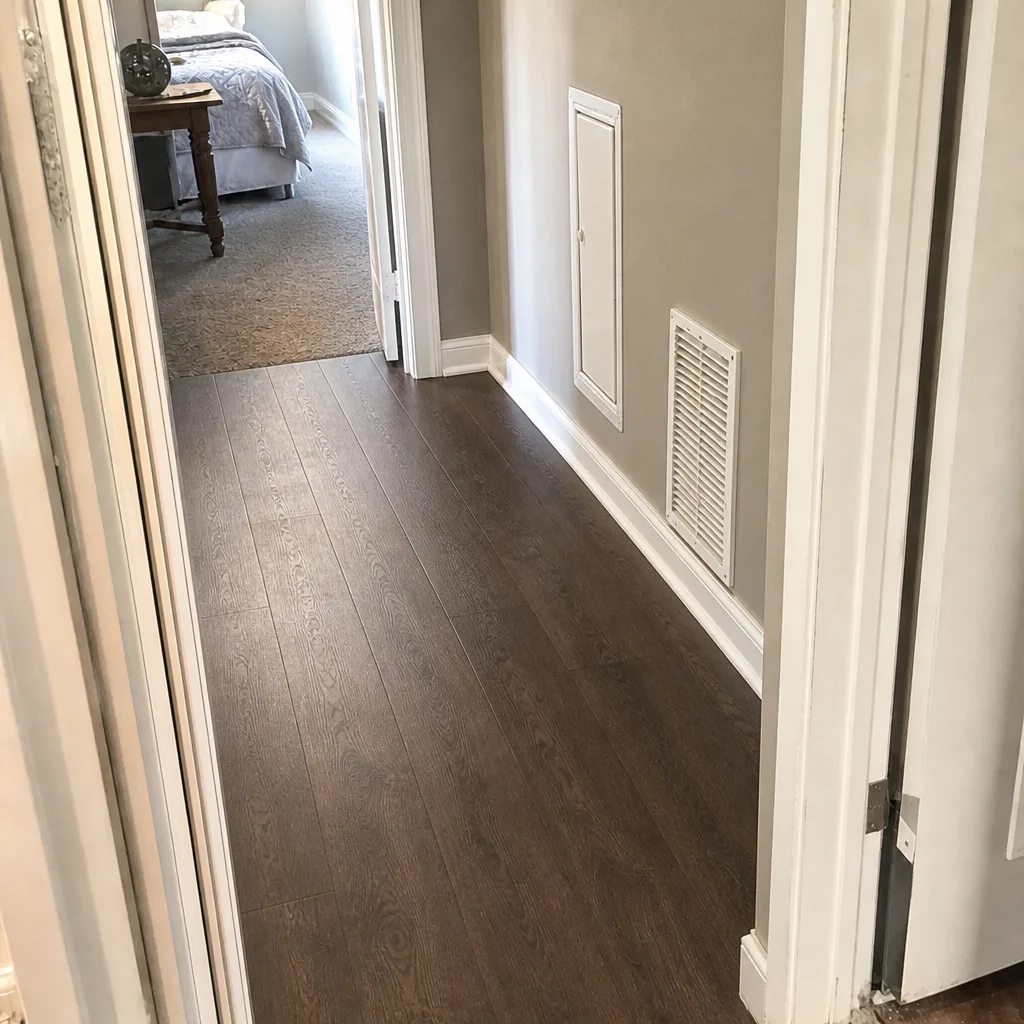 After
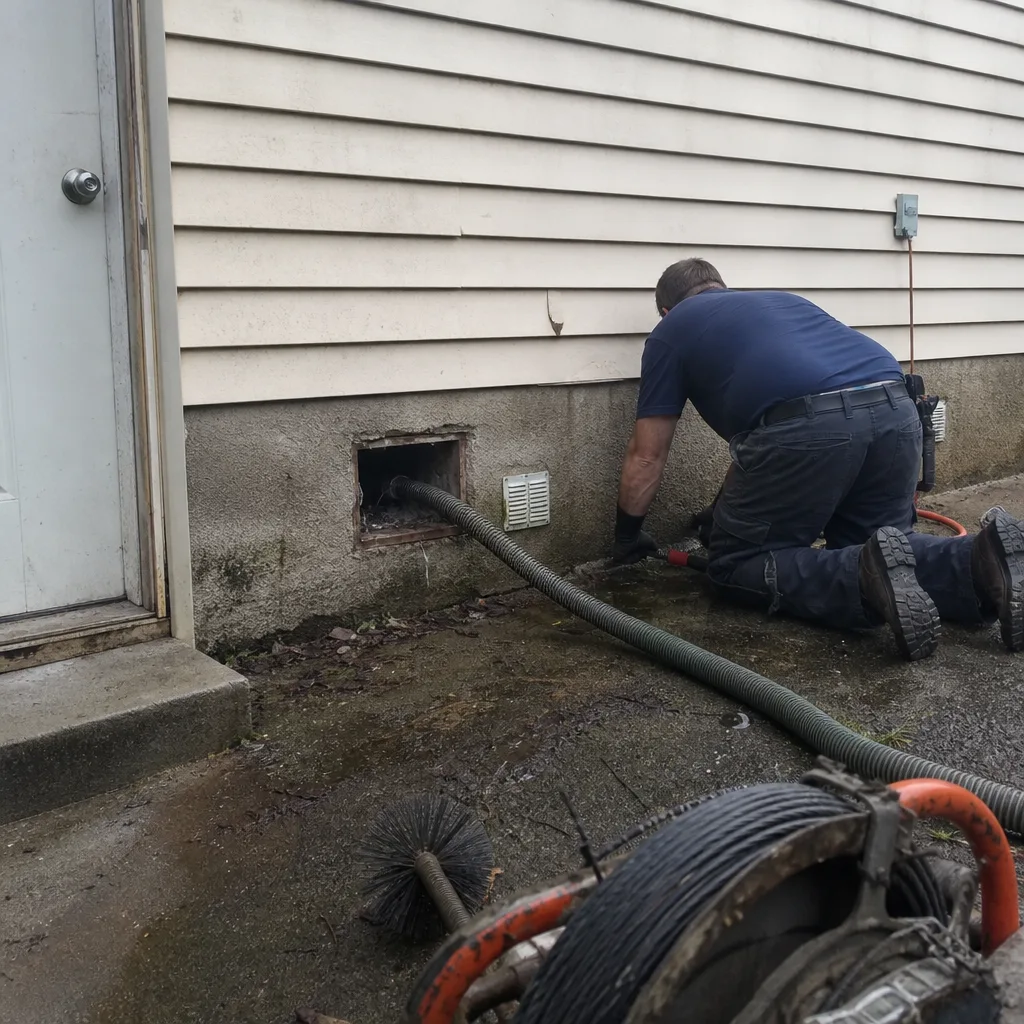 Before
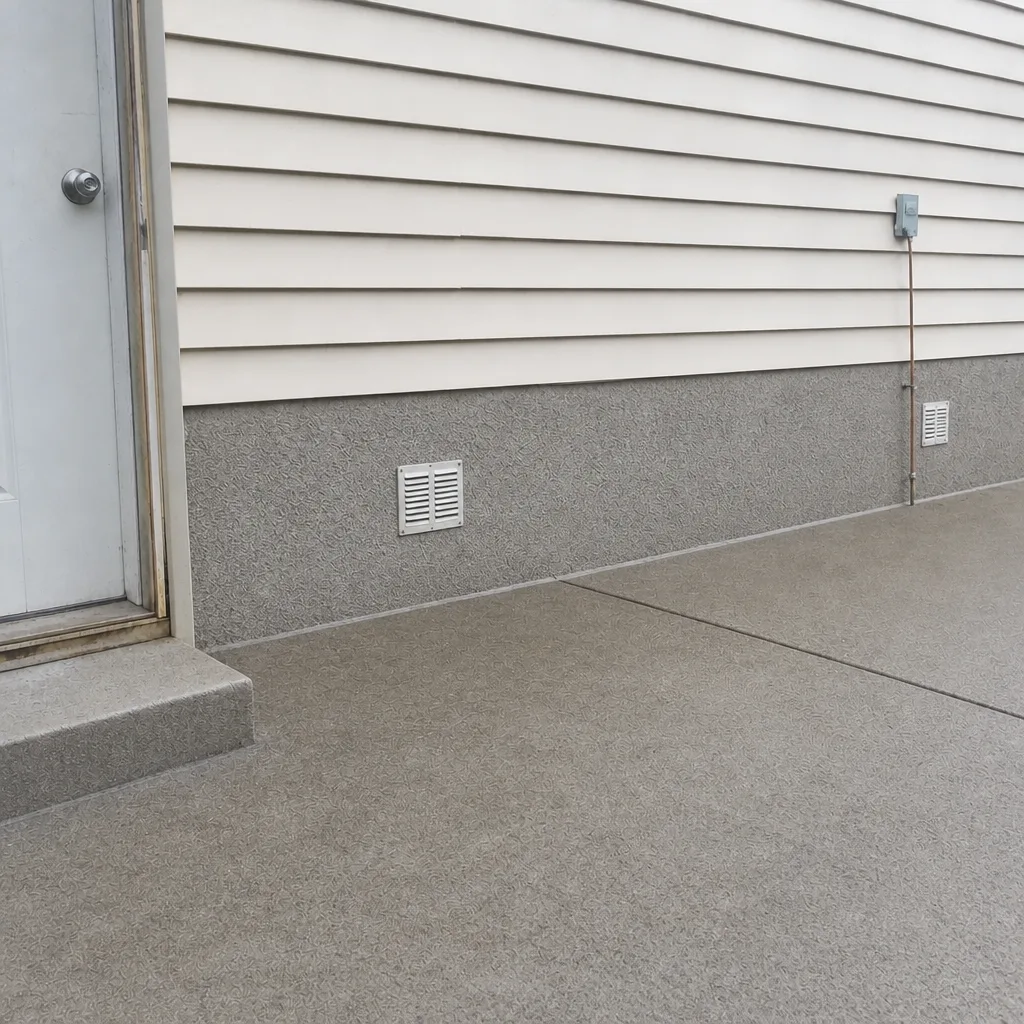 After
When to Call a Professional
Some duct problems are cosmetic; others need a technician with the right equipment. Call a professional if you see visible debris or fuzzy growth inside a duct, if the return air smells musty in humid weather, if dust settles back on surfaces within days of cleaning, or if airflow in one or more rooms is noticeably weaker than in others. Those patterns point to contamination the household vacuum can’t reach. If you’re running a rental property or managing a multi-unit, a scheduled inspection before each humid season is a reasonable habit. Air Duct Cleaning Highland Creek offers free estimates in Highland Creek – call (855) 323-8125. Our technicians have up to 11 years of experience with the equipment these jobs need.
Frequently Asked Questions
It’s priced per system, not per vent, and the written estimate after the on-site inspection sets the final number. The range depends on square footage served, number of returns, flex versus rigid runs, and whether sealing or sanitizing is part of the scope. Call (855) 323-8125 for an exact quote – estimates are free.
Cheaper quotes usually cover a smaller scope: duct runs only, no air handler or coils, and often a vacuum rather than source-removal equipment. Some are also priced per vent, which encourages a fast pass rather than a thorough one. Ask what’s included, ask what equipment they use, and ask for before-and-after photos of your own system. Call (855) 323-8125 for a flat per-system price agreed before work starts.
Ask to see the photos of each access hole before and after, a before-and-after clip of at least one return run, and the collection bag from the extraction. A professional will show all three without hesitation. If a crew can’t produce them, the work can’t be verified. Call (855) 323-8125 and we’ll explain exactly what you’ll see in your verification set.
Every three to five years is a reasonable starting point here, but the humid season often pulls it toward the shorter end for homes with pets, carpeted rooms, or open windows in spring. Homes with flex duct runs in the 2000s-era subdivisions may need a check sooner. Call (855) 323-8125 for a free assessment – the right interval depends on your system, not a fixed calendar.
Cleaning removes the material mold is growing on; sanitizing treats the surfaces afterward. The two are separate steps in the same job, which is why we handle both. If microbial growth is found, source removal comes first, then a Guardsman-grade sanitizing treatment. Call (855) 323-8125 to talk through what your system likely needs.
It’s a separate scope, but we treat it with the same equipment and approach. Dryer vents are a household fire risk when lint builds up, and the source-removal principle applies the same way. Many homeowners combine the two visits. Call (855) 323-8125 to ask about dryer vent cleaning alongside your duct work.
Where HVAC Cleaning Fits In
Ducts are only part of the air pathway. The air handler, coils, and blower move every particle that passes through, and cleaning the ducts without cleaning those components leaves the source half-addressed. If your return air smells musty even after a duct pass, the coil and drain pan are the likely culprit. That’s why HVAC cleaning belongs on the same scope as duct work, not as a separate upsell. One visit, one containment, one cleaned air pathway.
With the duct system and the air handler clean, the next question is keeping them that way. A properly sized filter, a whole-home humidity control strategy during the humid season, and air-quality accessories from Honeywell or Aprilaire help hold the result. That’s the difference between a cleaning you redo in a couple of years and one that lasts.
The Bottom Line
Highland Creek’s climate and housing stock create a duct-contamination pattern that national advice misses. The humidity, the clay soil, the slab-on-grade construction, and the 2000s-era flex duct runs all shape what your system actually accumulates. Source-removal cleaning, verified with before-and-after photos and a flat per-system price agreed up front, is the version worth paying for. Surface coating, per-vent pricing, and a coupon-first approach are the versions that leave you repeating the job. Our technicians have up to 11 years of experience with the equipment these Highland Creek homes require, and we’ll show you the difference before we leave the driveway.
Call (855) 323-8125 for a free estimate. We answer 24/7. Fast dispatch from 7am to 7pm, Sunday through Friday.
Written by the team at Air Duct Cleaning Highland Creek.