
Last updated November 23, 2026
 Whole-home duct cleaning
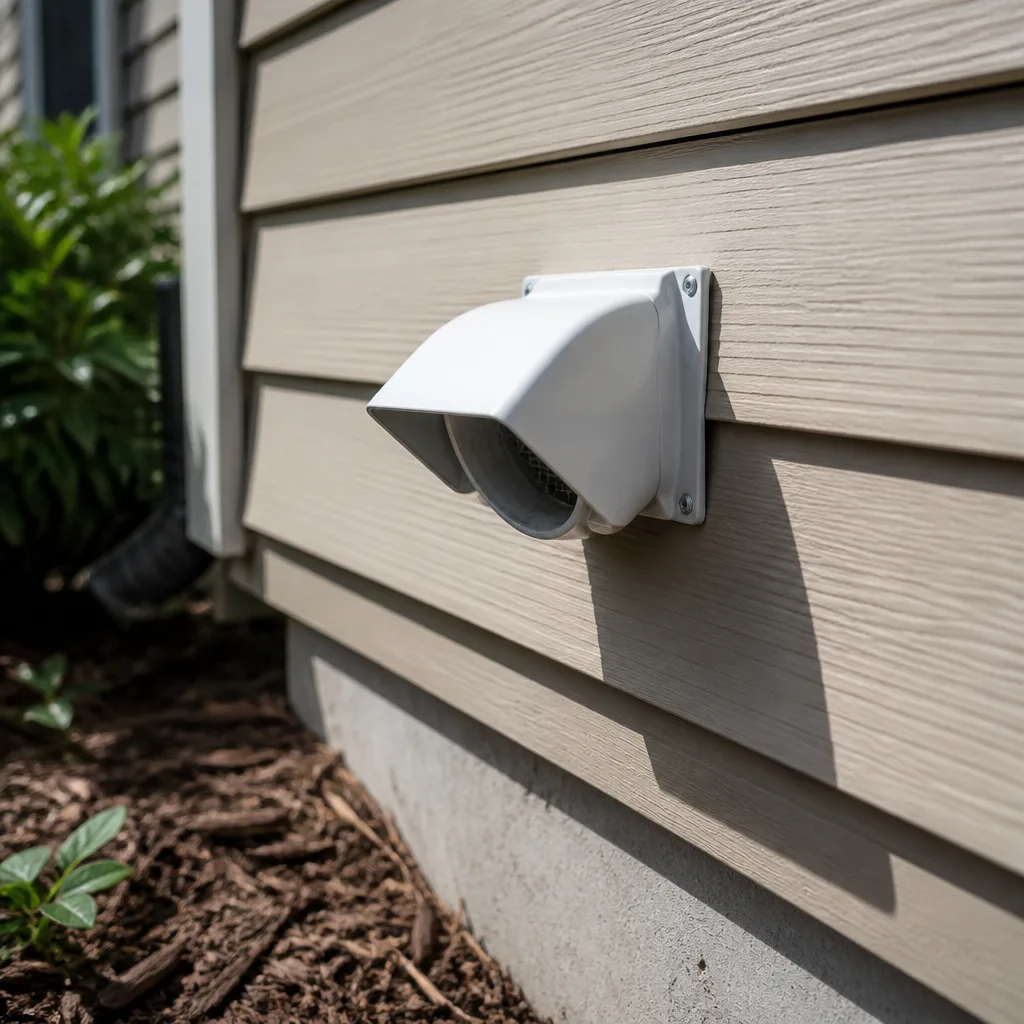 Dryer vent cleaning
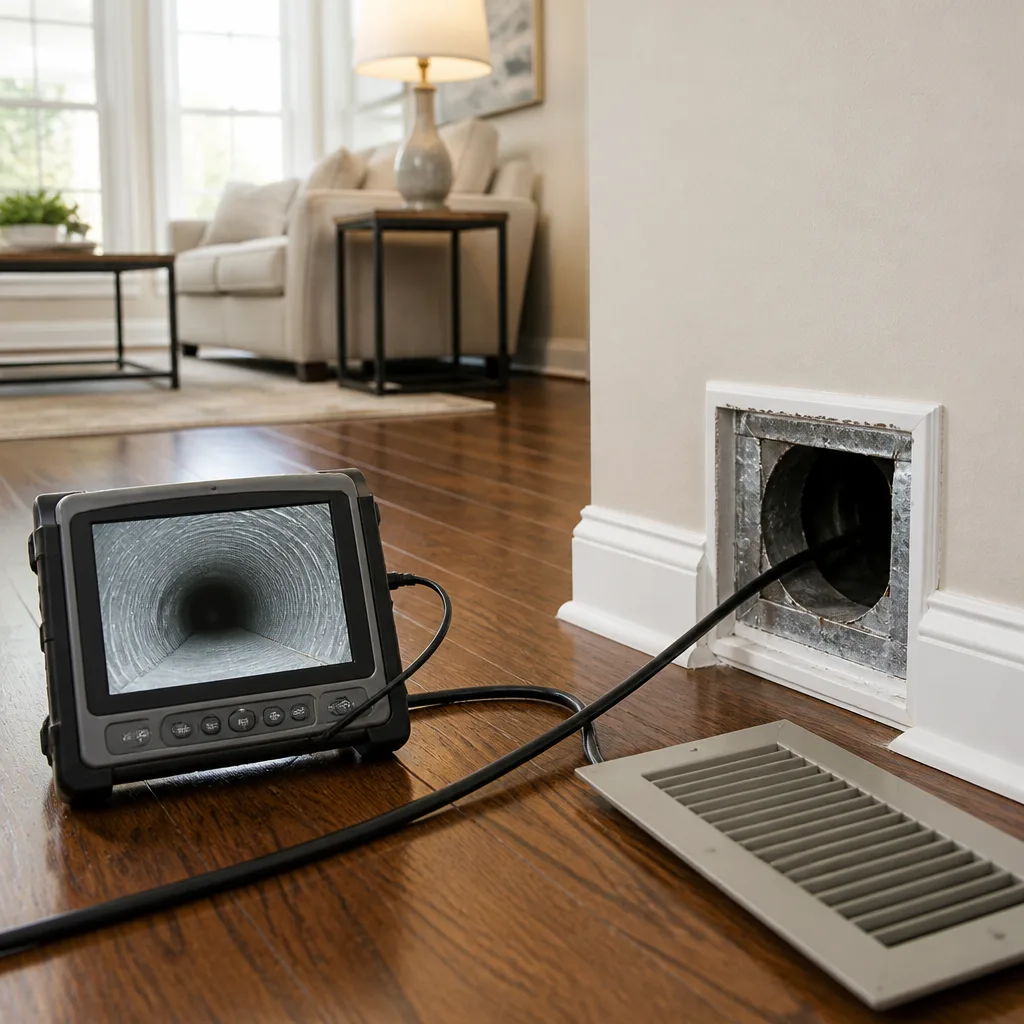 Camera inspection
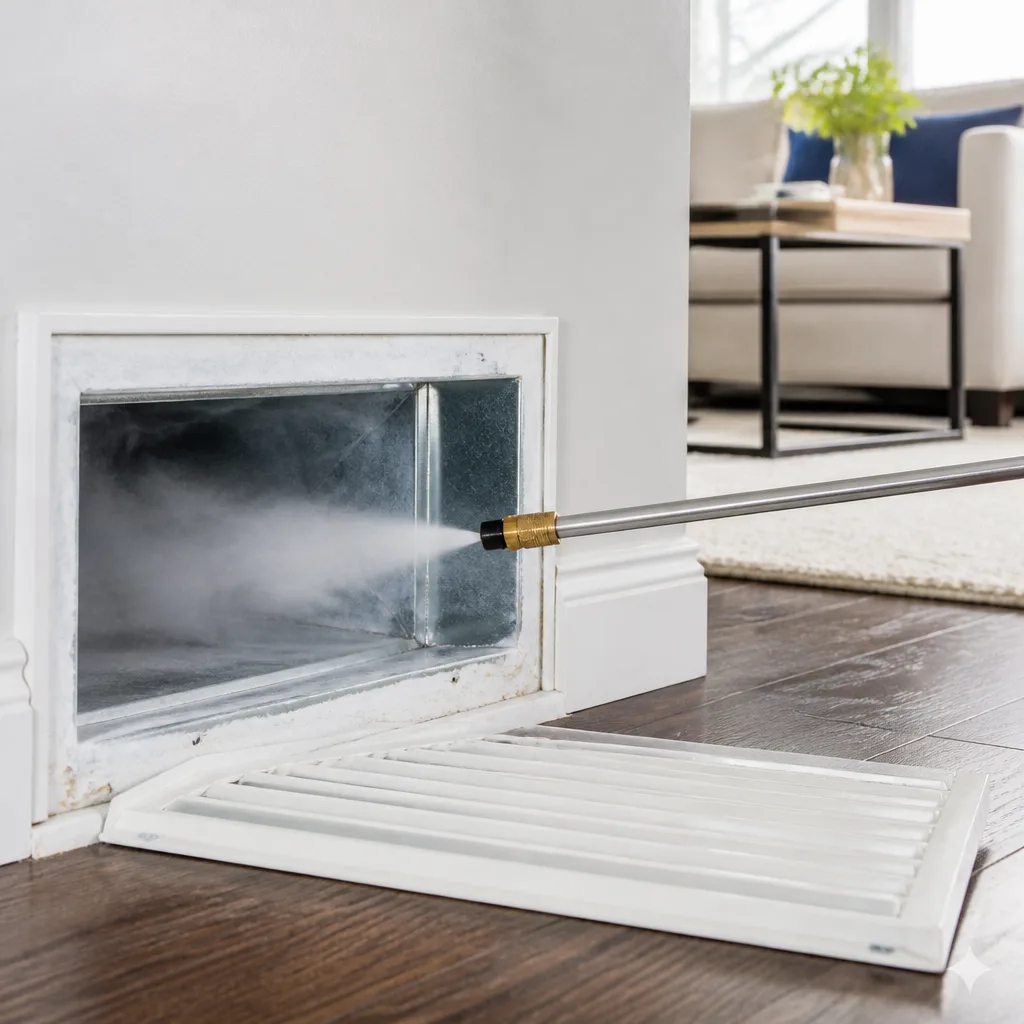 Sanitizing & deodorizing
Whole-system duct and dryer vent check with before-and-after photos - you see exactly what came out of your vents
That "$99 whole-house special" is a bait ad - the real number appears once they are in your hallway, or the "clean" is a shop-vac at the register. We photograph the inside of your ducts before and after instead.
Air Duct Cleaning Emergency Preparedness Guide for Highland Creek Homes
After a roof leak or flooding event, the standard emergency protocol covers walls, floors, and furniture. Ductwork rarely makes the list. It runs through every water-vulnerable space in the house, and it can wick moisture for days before anyone notices. In Highland Creek, hurricanes, ice storms, and power outages are the events homeowners prepare for, yet almost nobody has a plan for what happens to their duct system afterward. That gap is where small water problems turn into long remediation projects. This guide treats ductwork as critical infrastructure, not an afterthought. You’ll learn the response window, how to check exposure, what to document, and when emergency cleaning differs from routine service.
Quick Answer
After water intrusion in Highland Creek, your duct system has a 48 to 72 hour window before moisture problems shift from preventive to remediation. Act in this order: stop the water source, document everything with photos, shut off the HVAC system, and call for an inspection of the ducts, return-air chases, and air handler drain pan. Emergency contamination-response cleaning uses contained negative-air equipment and follows a different protocol than routine cleaning. Waiting six weeks until you smell something means mold work that a standard emergency fund won’t cover.
Styles & brands we work with
- Whole-home duct cleaning
- Dryer vent cleaning
- Camera inspection
- Sanitizing & deodorizing
Table of Contents
- Why Ductwork Is Critical Infrastructure After Water Intrusion
- The 48 to 72 Hour Window: What to Do and In What Order
- How to Tell if Your Ductwork Was Actually Exposed
- Post-Storm Duct Risks Specific to Highland Creek
- Documentation for Insurance Claims Involving Ducts and HVAC
- Emergency vs. Standard Cleaning: Why the Protocol Is Different
- Building a Duct Emergency Kit Before You Need It
- Common Mistakes to Avoid
Why Ductwork Is Critical Infrastructure After Water Intrusion
Most Highland Creek homes have duct systems running through the attic, the crawl space, and interior chases. Every one of those spaces is where water shows up first. When a storm drives rain through a roof breach, or a supply line fails in the attic, the duct run is often sitting directly in the path of that water. The problem is that ductwork doesn’t announce itself. An insulated flexible duct can absorb water into its jacket and stay damp for days without a puddle on the floor below.
That’s the gap. A homeowner dries the carpet, cuts out wet drywall, runs fans in the room, and considers the event handled. Meanwhile the duct liner is holding moisture against a surface that never sees sunlight or airflow when the system is off. Within a matter of weeks, that trapped moisture becomes the source of a musty smell that seems to come from everywhere and nowhere.
In our experience, the calls that begin with “there’s an odor I can’t find” very often trace back to a water event the homeowner had already written off as handled. The duct system is the part of the house that carries air into every room, which means anything growing inside it gets distributed to every room. That’s why we treat ducts as part of the building envelope’s moisture plan, not as an appliance that only matters when the AC stops cooling.
For Highland Creek families, the practical shift is this: add your duct system to the same emergency checklist as your roof, your water heater, and your electrical panel. If you’ve ever had an air duct cleaning visit, you already know what a clean system looks like. After a water event, that baseline is what tells you something has changed.
The 48 to 72 Hour Window: What to Do and In What Order
The first 48 to 72 hours after water intrusion are the difference between a preventive response and a remediation project. In that window, duct cleanup is still about removing moisture and contamination before it establishes. After that window, you’re dealing with growth that has had time to colonize insulation, duct liner, and air handler components.
Here’s the order that matters, and the sequence is not optional:
- Stop the water source. Shut off the supply line, tarp the roof breach, or address the entry point before anything else. Cleaning a duct system while water is still entering is wasted effort.
- Photograph everything before you touch it. Wide shots of each affected room, close-ups of water lines on walls and ceilings, the duct registers, the air handler, and any visible moisture on duct runs. This is for your insurer, not for us.
- Turn off the HVAC system. A running system pulls moist air through the ducts and pushes it into every room. Don’t run the fan to “dry things out” through the ductwork. It does the opposite.
- Remove standing water and begin structural drying in the rooms, not the ducts. Fans and dehumidifiers on the building surfaces are fine. Duct interiors need professional equipment, not a household fan pointed at a register.
- Call for a duct and HVAC inspection within the window. This is where you find out whether the system was actually exposed, and that answer determines everything that follows.
- Document the inspection findings in writing and photos, and keep them with your claim file.
One caveat that matters: don’t open duct joints or cut into insulated runs to “check inside” yourself. You’ll disturb contaminated material and lose the very evidence an adjuster needs. A proper inspection uses contained airflow and camera access. If you’re in Highland Creek and the event happened Sunday through Friday, you can get an inspection scheduled quickly. Call (855) 323-8125. We answer 24/7. Fast dispatch from 7am to 7pm, Sunday through Friday.
How to Tell if Your Ductwork Was Actually Exposed
Not every water event touches the ducts. The question is whether water reached the duct runs, the air handler, or the return-air path. Here’s how to assess it, in plain terms, without doing anything invasive.
Check the return-air chases
Return-air chases are the vertical or horizontal paths that carry air back to the air handler. They’re often built into wall cavities or run through the attic, and they’re where water loves to collect because they’re out of sight. Look for staining on the drywall or paneling around return grilles, soft spots in the surrounding wall, or a musty smell that’s strongest near a return register. Any of those is a reason to have the chase inspected.
Check the air handler drain pan
The condensate drain pan sits under the indoor coil. During a power outage, a clogged drain line, or a storm event, that pan can overflow. Look for standing water, rust lines, or mineral scale that indicates past overflow. A wet pan sits directly next to duct connections, which means moisture can migrate into the duct system from the inside out.
Check attic and crawl space duct runs
Walk the attic and crawl space if it’s safe to do so. Look for water stains on the duct jacket, sagging insulated runs, condensation on the exterior of the duct, or ceiling insulation that’s wet around a duct. In a crawl space, check the soil under the ducts for damp patches that don’t match the rest of the space.
Check for the smell test
Run the system for a short period after the event and notice whether the air coming from the registers smells different. A damp, earthy, or musty odor at the register is a strong signal. Don’t run the system long if the smell is pronounced. Shut it down and get an inspection.
- Clearly exposed: visible water on duct runs, wet insulation touching ducts, standing water in the air handler pan, staining in return chases.
- Possibly exposed: water in the attic or crawl space near duct runs, high humidity in the space for days, storm-driven rain near attic bypasses.
- Not exposed: water confined to an interior room with no duct runs in the affected wall or ceiling, no visible moisture in any chase or HVAC component.
If you’re unsure, that’s the answer right there. Get the inspection. Our technicians have up to 11 years of experience reading exactly this kind of evidence, and the inspection is where the decision gets made.
Post-Storm Duct Risks Specific to Highland Creek
Highland Creek sits in a part of North Carolina where the storm calendar includes tropical systems in late summer and fall, ice events in winter, and the power outages that come with both. Each of those leaves a different signature on a duct system.
Tropical storm moisture infiltration through attic bypasses
Attic bypasses are the gaps around chimneys, recessed lights, plumbing penetrations, and duct chases that connect the attic to the living space. In a wind-driven tropical storm, rain can enter those bypasses and travel down into the duct runs below. The damage isn’t a flooded attic. It’s a steady, invisible wicking that shows up in the duct system days later. Highland Creek homes with attic duct runs are especially exposed here.
Ice-dam condensation in crawl-space systems
Ice events bring a different problem. When ice forms at the roof edge, water backs up under the shingles and can find the interior. In homes with crawl-space duct systems, that moisture often ends up as condensation on cold duct surfaces. Insulated duct jackets that get damp lose their insulating value, and that loss compounds moisture problems. Crawl-space duct systems in Highland Creek need a close look after any ice event, not just after a visible leak.
Construction dust from wind damage
Wind damage means repair work, and repair work means dust. Drywall dust, insulation fibers, and debris from roofing or siding jobs get pulled into the return-air side of a system and distributed throughout the house. If your home had storm repairs in Highland Creek, plan a HVAC cleaning visit after the work is done, not before. Cleaning during the work is pointless. Cleaning after it removes what the work left behind.
Power-outage condensation cycles
Extended outages mean the AC isn’t running and interior humidity climbs. When power returns, the system works harder to pull that humidity down, and condensation forms on and around the air handler and duct connections. That’s a mild version of the same problem, but it adds up over an outage of several days.
Documentation for Insurance Claims Involving Ducts and HVAC
Most homeowner policies cover sudden water damage but treat “mold remediation” and “gradual seepage” very differently from a storm event. The difference between a covered claim and a fight often comes down to what you documented and when. The time to find out what your policy says is before you need it, not after.
What to gather immediately after an event
- Photos of the water source and the path it traveled. Every room, every wet surface, every duct register in the affected area. Timestamped photos are best.
- A written timeline. When you noticed the event, when you shut off the system, who you called and when. Keep it simple, keep it factual.
- The inspection report and photos from the duct assessment. Before-and-after photos of the ducts themselves matter enormously here. Photographs of what was inside the system, and what was removed, are the strongest evidence that remediation work was actually necessary.
- Receipts and records for emergency mitigation you paid for in the window: fans, dehumidifiers, extraction, or any other emergency work.
- Written scope of work from any contractor before the work begins, not after.
Policy language to look for before you need it
- Whether mold or microbial growth coverage exists at all, and what dollar limit applies.
- How the policy defines “sudden and accidental” versus “gradual.” These words decide many claims.
- Whether the policy covers “reasonable and necessary” mitigation access, including the cost of opening walls or chases to reach duct systems.
- Whether structural drying and HVAC cleaning are treated as separate line items or lumped into a single remediation category.
- The deductible, and how it interacts with a remediation sub-limit.
We can work with your insurer and provide the documentation an adjuster asks for. The photos and inspection record we produce are the paper trail that supports the case, and they’re part of the work, not an extra. Before-and-after photos of your own ducts are one of the reasons we require them on every job.
Emergency vs. Standard Cleaning: Why the Protocol Is Different
Routine air duct cleaning in Highland Creek removes accumulated dust and debris from a system that is otherwise dry and functioning. Emergency contamination-response cleaning is a different job with a different goal. Here’s the difference in plain terms.
What standard cleaning involves
- Negative-pressure containment to keep dust from spreading through the house.
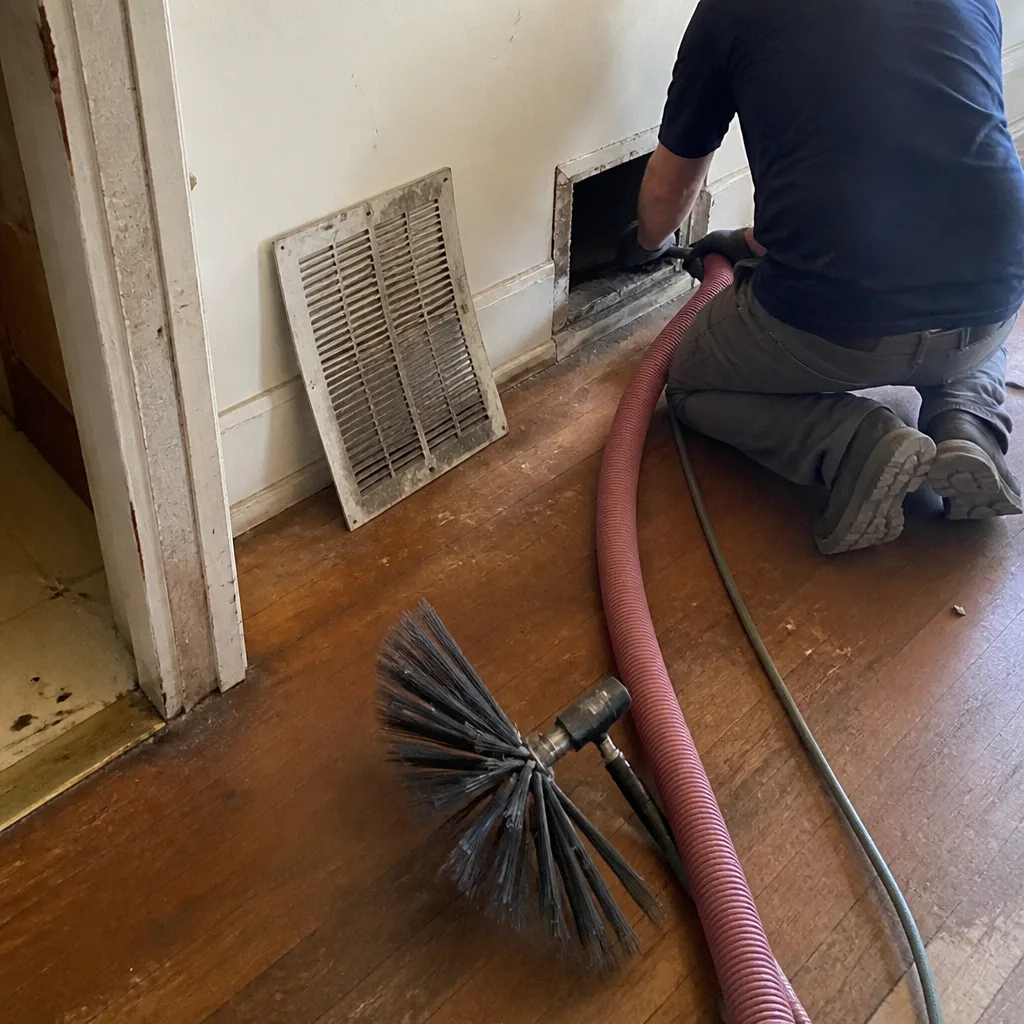
- Rotary-brush agitation through the duct runs to loosen settled material.
- High-volume extraction with a Nikro HVAC cleaning unit.
- Register and grille cleaning, and air handler component cleaning.
- Before-and-after photos so the homeowner can verify what was removed.
What contamination-response cleaning adds
- Contained source removal with Abatement Technologies negative-air equipment. In a wet system, debris doesn’t just blow around. It can hold moisture and biological contamination, and the goal is removal under containment, not dislodging.
- Genuine extraction with a Rotobrush rotary-brush system through the full run, including areas where material has adhered to the duct interior from moisture exposure.
- Sanitizing treatment using Guardsman-grade products, applied after cleaning, not as a substitute for it.
- Inspection of duct components for water damage, sagging, or joint separation that standard cleaning doesn’t check.
- Documentation for insurance purposes: photos, written findings, and a scope of work that an adjuster can review.
- Duct repair and sealing where the water event revealed leaks or disconnected runs.
The equipment matters because the job is fundamentally different. Most generalist HVAC companies carry a vacuum and a brush. They don’t carry negative-air containment or the documentation protocol a contamination response requires. In our experience, the jobs that go wrong are the ones where the equipment and the protocol didn’t match the condition of the system.
One caveat before we go further: if a duct system has visible mold growth across a large area, that’s a remediation project that may involve more than cleaning. We’ll tell you honestly what we find and what it means. We don’t oversell a problem, and we don’t undersell one either.
Building a Duct Emergency Kit Before You Need It
Preparedness is cheaper than remediation. Here’s what to have on hand and what to know before the next storm makes landfall in Highland Creek.
- Photograph your duct system now. Registers, air handler, accessible attic and crawl-space runs, and the return-air chases. Keep those photos in the cloud. They become your before-photos if a water event happens.
- Know your shutoff points. Water main, HVAC disconnect, and any supply lines running through the attic. In an event, you don’t want to be learning where they are.
- Keep a copy of your policy summary with your emergency kit, and highlight the mold, gradual-damage, and mitigation access language.
- Store a waterproof box with a flashlight, nitrile gloves, and a notebook for the written timeline.
- Have a professional contact ready. The time to find a duct specialist is before the storm, not during it. Call (855) 323-8125 and get familiar with how we work.
- Schedule a routine cleaning if you haven’t had one recently, so you have a clean baseline to compare against.
One more thing worth having on the list: check your dryer vent cleaning status. A blocked or lint-loaded dryer vent is a household fire risk that storm-season clutter and extended indoor drying habits make worse. It’s a dedicated service for us, and it gets the same systematic approach as the duct work. If you have a Honeywell or Aprilaire air-quality component in your system, note its model and location in your kit as well. Knowing what’s installed makes the inspection faster and the documentation cleaner.
Common Mistakes to Avoid
- Running the HVAC system to “dry things out” after water intrusion. A running system pulls moisture into the ducts and distributes it through the house. Shut it down and get an inspection first.
- Treating the room and ignoring the chases. Drying the carpet in a Highland Creek home while leaving the return-air chase damp is how six-week odor problems get started.
- Waiting for the smell. By the time the musty odor is obvious, the problem has usually moved from preventive to remediation. The 48 to 72 hour window is real.
- Hiring a company that quotes a low price sight-unseen. A written scope of work, per system, agreed before the work begins, is what protects you from a surprise invoice. Ask for before-and-after photos as part of the job.
- Skipping documentation. Homeowners who begin the claim without photos, timeline, and inspection findings often end up paying for work an adjuster would have covered with the right paper trail.
- Cleaning during repairs instead of after. If roofing or drywall work is ongoing, a duct cleaning before the work is finished just means doing it again. Clean after.
- Using a generalist HVAC company for a contamination response. If the system was wet, the equipment and protocol need to match the condition. Negative-air containment and proper documentation aren’t optional parts of the job.
See the difference
 Before
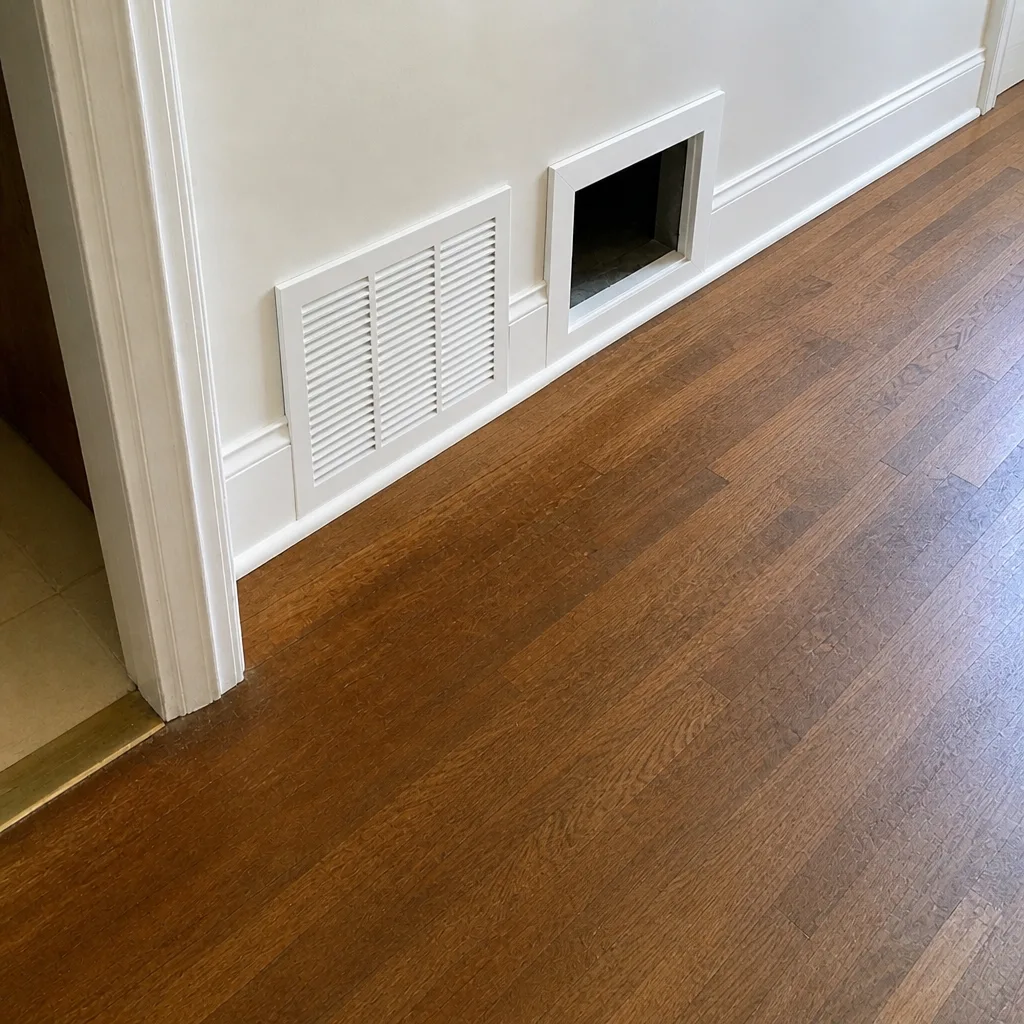 After
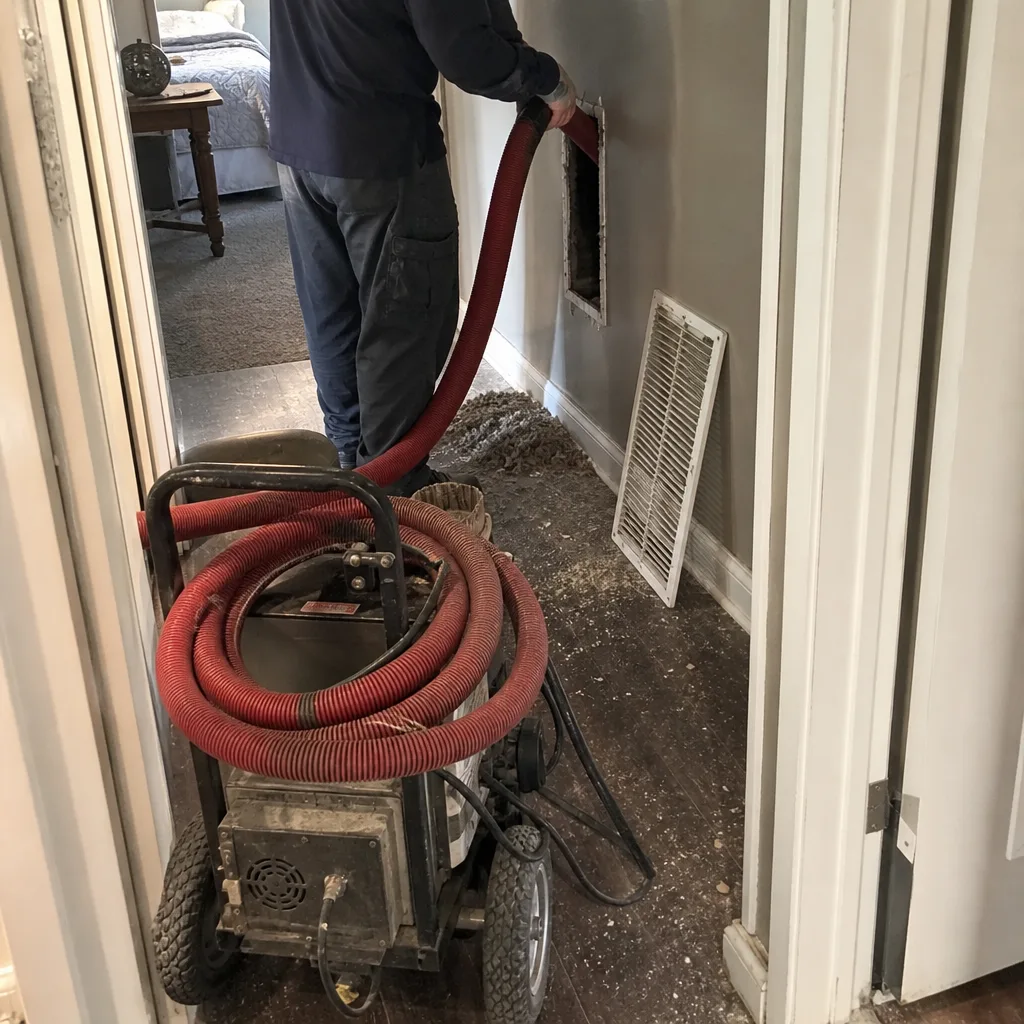 Before
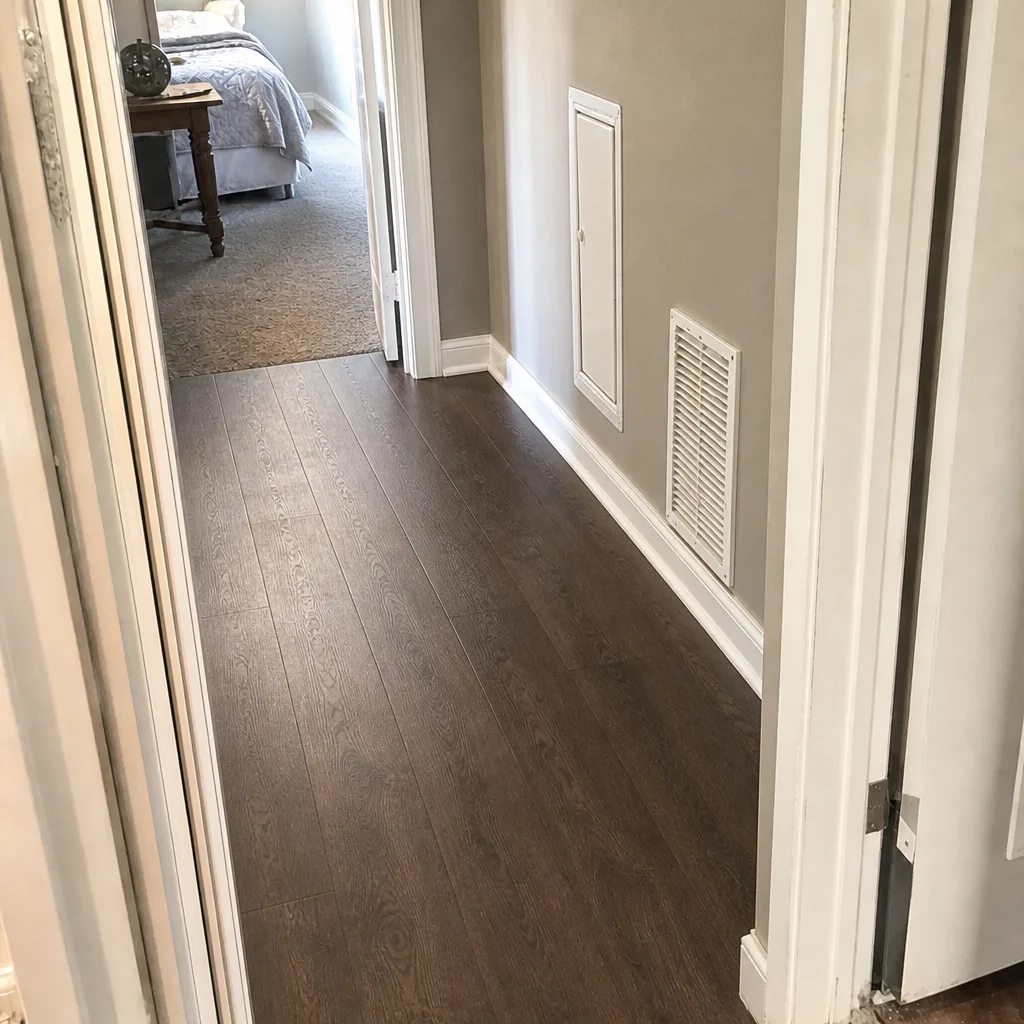 After
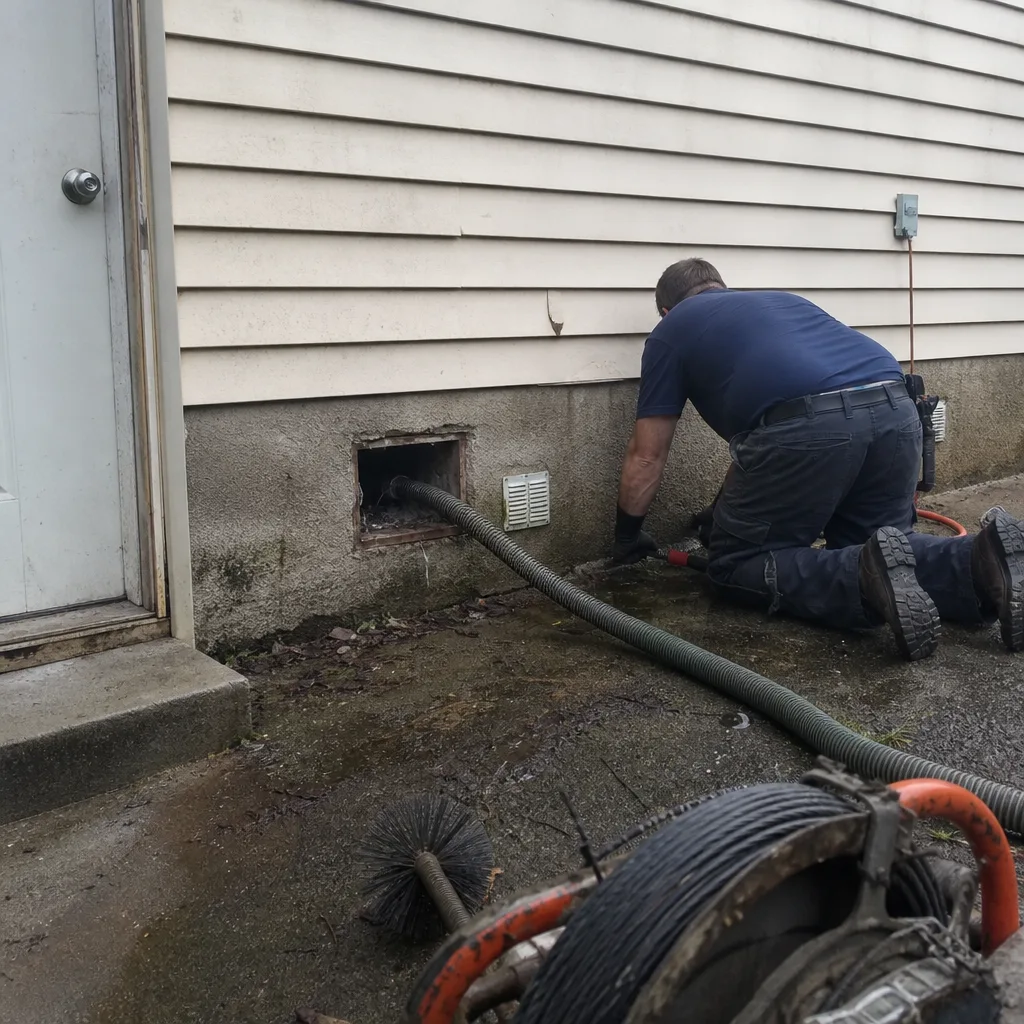 Before
 After
When to Call a Professional
Call a professional if any of the following applies: your home had water intrusion in or near the ducts, attic, crawl space, or air handler; there’s a musty or earthy smell at a register; the return-air chase has staining or soft spots; the air handler drain pan has overflowed; there’s a storm repair project about to begin or recently completed; or your system hasn’t been inspected and you want a baseline before the next event. Same-day service is available in many cases, and the estimate is free. Air Duct Cleaning Highland Creek offers free estimates in Highland Creek. Call (855) 323-8125. We answer 24/7. Fast dispatch from 7am to 7pm, Sunday through Friday. A call outside dispatch hours is booked into the next opening. For duct repair, sealing, and the full system, we can handle the whole air pathway so you’re not coordinating between contractors.
Frequently Asked Questions
Within 48 to 72 hours. That window is when duct response is still preventive rather than remediation, and moisture that’s been sitting in duct liner or insulation for longer usually means a bigger scope of work. Call (855) 323-8125 for an inspection. We answer 24/7. Fast dispatch from 7am to 7pm, Sunday through Friday.
The price is set per job by the written estimate, and a standard cleaning is quoted per system rather than per vent. Emergency contamination-response work involves more equipment, more time, and more documentation, so it’s a different scope and a different estimate. Call (855) 323-8125 and we’ll give you a written scope before work begins. Estimates are free.
You need them inspected. Water in the attic doesn’t always reach the ducts, but insulated runs and return chases can wick moisture without showing a visible puddle. An inspection tells you what’s actually wet. Get it done even if you’re not sure. Call (855) 323-8125 for a free estimate.
Sometimes, and the documentation is what decides it. Sudden and accidental water events are usually treated differently than gradual seepage, and microbial growth coverage varies by policy. We can work with your insurer and provide photos, written findings, and a scope of work an adjuster can review. Call (855) 323-8125 for an inspection. Estimates are free.
Usually because something is missing: negative-air containment, rotary-brush extraction through the full run, before-and-after photos, or a written scope. A low number quoted before anyone looks at the system is a number, not an estimate. We work one flat price per system, agreed before work starts, and you get before-and-after photos. Call (855) 323-8125.
You get before-and-after photos of your own ducts, and a written scope of work that matches what was done. If you ever have a claim, those photos are the proof. Ask any contractor to show you the photos before, not after. Call (855) 323-8125 for a free estimate.
The Bottom Line
Highland Creek homeowners prepare for the storm and skip the ductwork. That’s the gap. In the 48 to 72 hour window after water intrusion, a duct inspection is preventive, and after that window it’s remediation. Know your return-air chases and drain pan, document everything, shut off the system, and call for an inspection before the smell arrives. Emergency cleaning is a different scope of work than routine service, with contained negative-air equipment and a documentation trail your insurer needs. Any additional air-quality work, like Honeywell components, can wait until the emergency is handled. The rest of the guide is the plan. Keep the number, keep the photos, and add the ducts to the checklist.
Call (855) 323-8125 for a free estimate. We answer 24/7. Fast dispatch from 7am to 7pm, Sunday through Friday.
Written by the team at Air Duct Cleaning Highland Creek.