
Last updated November 23, 2026
 Whole-home duct cleaning
 Dryer vent cleaning
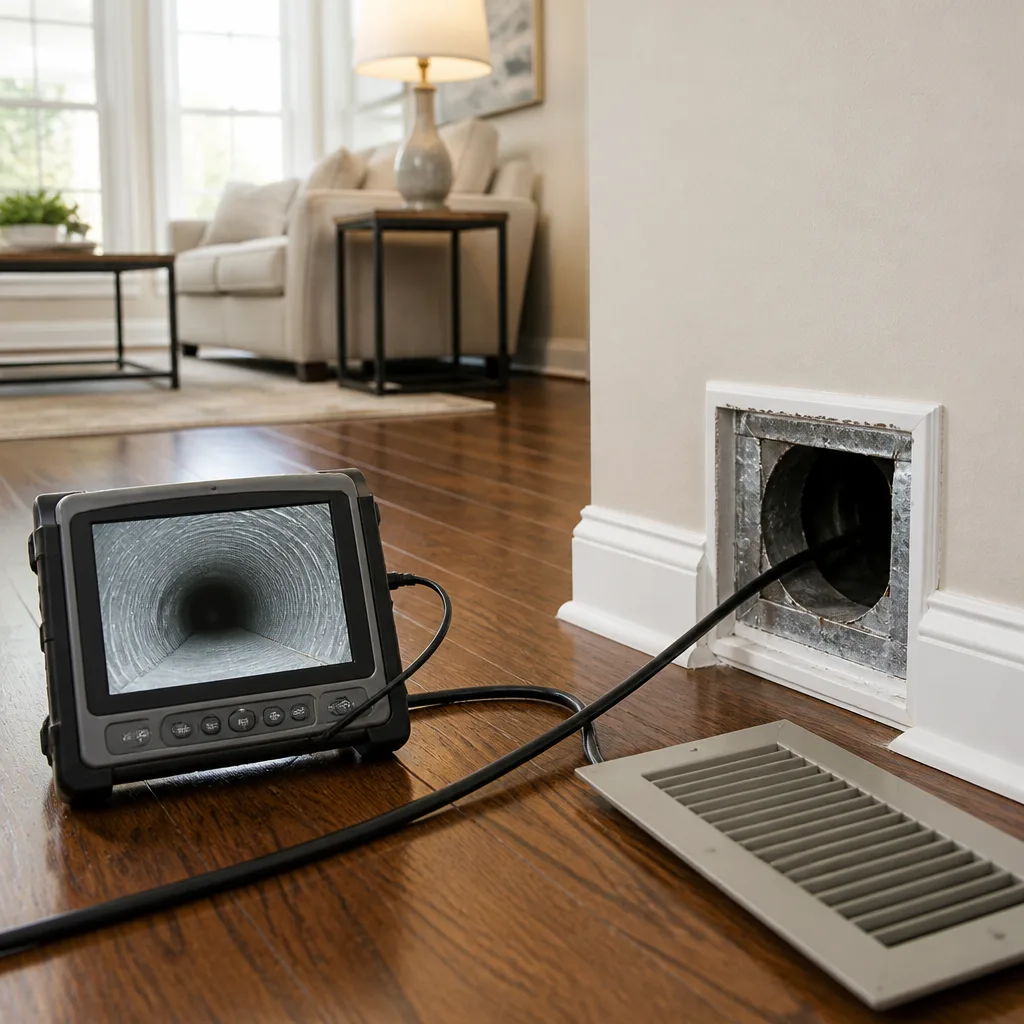 Camera inspection
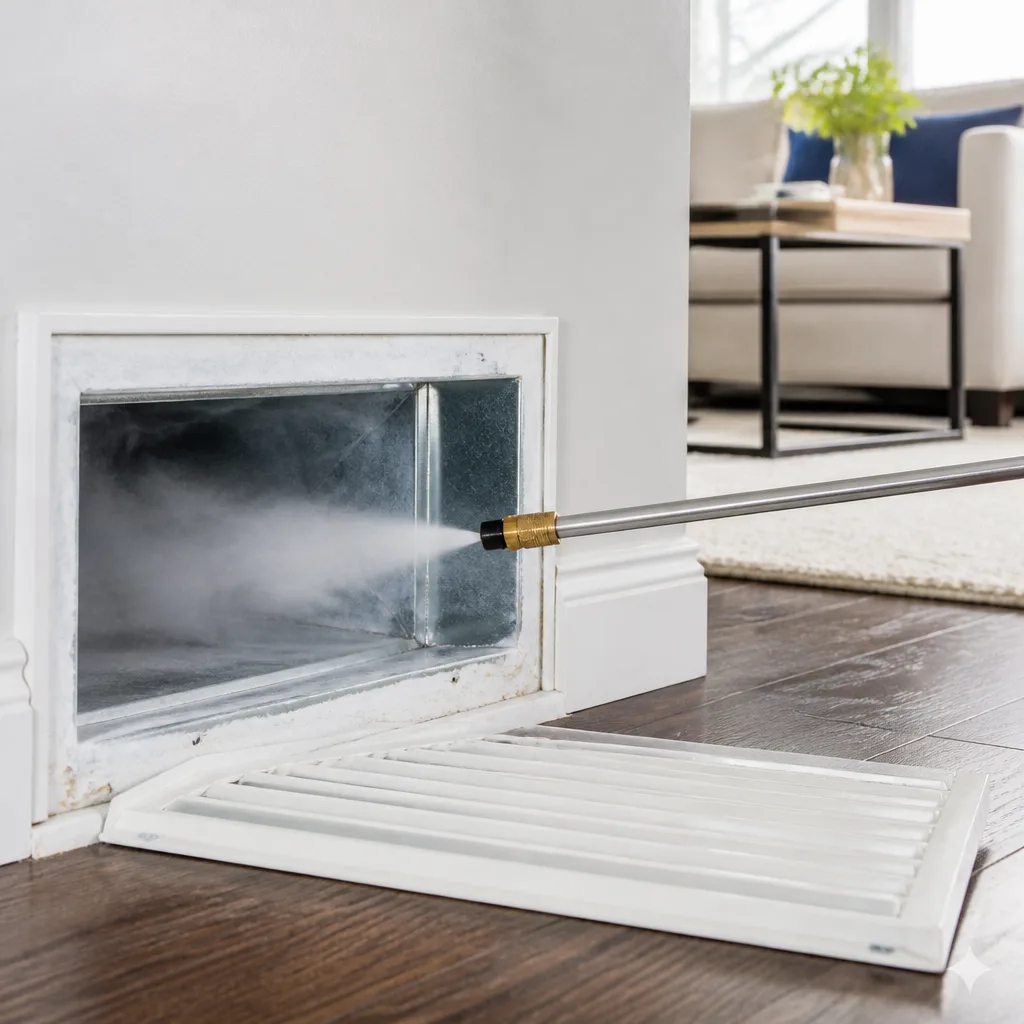 Sanitizing & deodorizing
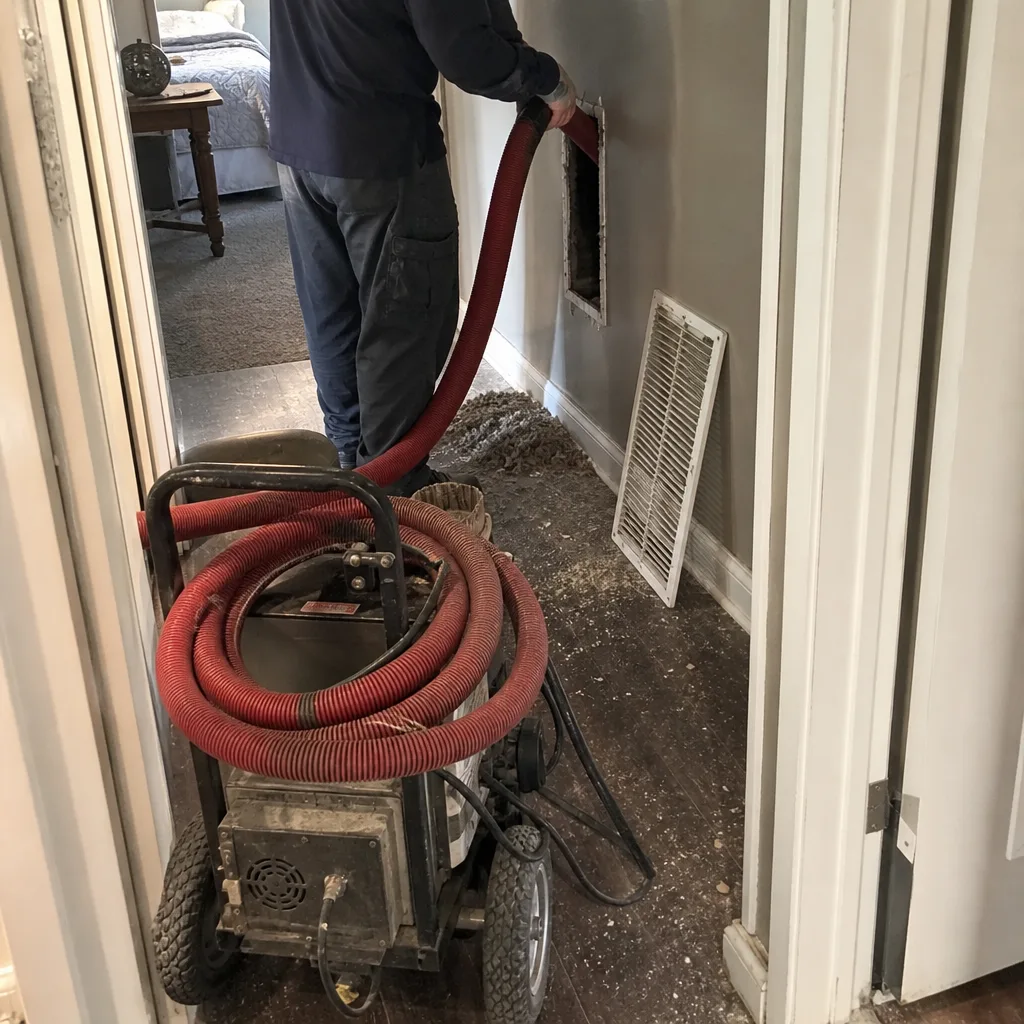
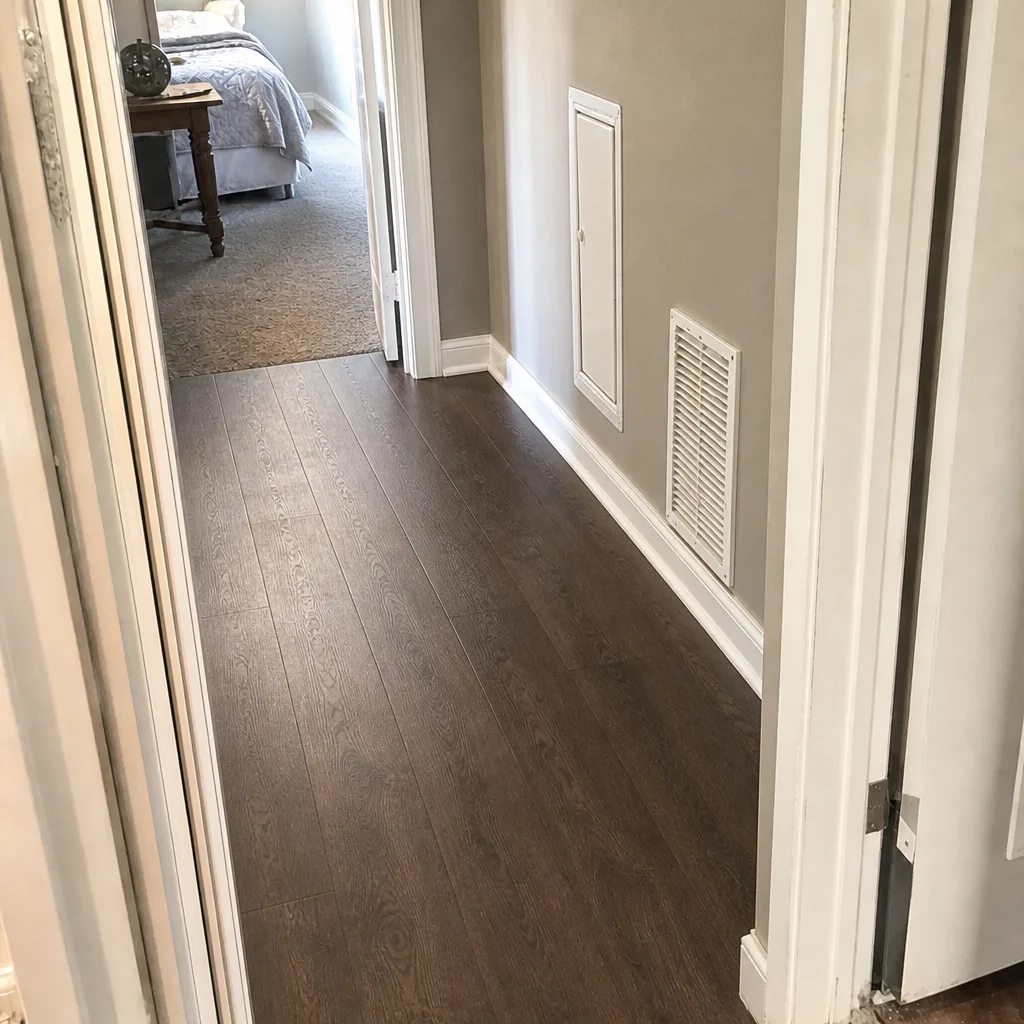
Whole-system duct and dryer vent check with before-and-after photos - you see exactly what came out of your vents
That "$99 whole-house special" is a bait ad - the real number appears once they are in your hallway, or the "clean" is a shop-vac at the register. We photograph the inside of your ducts before and after instead.
Air Duct Cleaning Warning Signs: A Highland Creek Homeowner’s Reference Guide
A musty smell when the heat comes on and a musty smell when the AC comes on are not the same problem. One usually points to residue baking off a heat exchanger; the other points to microbial growth on a cooling coil or in a drain pan. Treat them the same way and you spend money twice for the same dissatisfaction. Most warning-sign lists online are either hopelessly vague (“is your house dusty?”) or theatrical (“toxic black mold is killing you”), and neither helps you decide what to do. This guide is different. It treats every sign as a clue that points toward a specific part of your system, so you can describe what you’re seeing accurately and get the right fix the first time. We’ll walk through Highland Creek homes specifically, because the housing stock here shapes what we find inside ductwork.
Quick Answer
Air duct cleaning is warranted when you can identify a specific, persistent cause – not just general dust. The reliable signals are a musty or chemical odor that appears only when the HVAC runs, visible debris at supply registers that isn’t ordinary household dust, uneven airflow between rooms that has worsened over time, allergy symptoms that improve away from home or when the system is off, and a home whose ductwork has never been cleaned since installation. One sign alone is worth watching. Two or more that persist for months is worth a professional inspection.
Styles & brands we work with
- Whole-home duct cleaning
- Dryer vent cleaning
- Camera inspection
- Sanitizing & deodorizing
Table of Contents
- Smell-Based Diagnostics: Reading Odor Like a Technician
- Visible Debris at Registers: What’s Normal and What Isn’t
- Airflow Symptoms and What They Actually Mean
- Health Pattern Correlations Worth Paying Attention To
- Home Age and Duct History: Mapping Your Risk Profile
- Dryer Vent Warning Signs (The Ones Most People Miss)
- What a Real Duct Inspection Looks Like
- Common Mistakes to Avoid
- When to Call a Professional
- Frequently Asked Questions
Smell-Based Diagnostics: Reading Odor Like a Technician
Odor is the most diagnostic warning sign in ductwork, and also the most misread. When a customer in Highland Creek tells us “the house smells musty,” the useful follow-up is always the same: when exactly does it smell? The answer tells us roughly where to look before anyone opens a panel.
Here’s how we map the four common odor types to their most likely source:
- Musty, damp, or “basement” smell from the cooling side: almost always microbial growth on the evaporator coil, in the drain pan, or on the interior liner of the air handler cabinet. Cooling coils stay wet for hours after each cycle, and any dust that settles there feeds the growth.
- Musty smell from the heating side, especially on first startup in fall: usually dust and residue burning off the heat exchanger. A thin burning-dust smell that fades within minutes is normal. A persistent musty smell on heat mode with the AC off points somewhere else – often a return duct pulling air through a damp crawlspace or a disconnected run.
- Chemical or “new plastic” smell: can come from off-gassing materials in the system, from cleaner residue left by a previous cleaning done with the wrong products, or from an HVAC component overheating. This is the one odor we do not suggest diagnosing yourself – call a professional.
- Earthy, “dirt” smell that intensifies after rain: a sign that return air is being drawn through a wet area – a crawlspace, a garage, or a duct run with compromised sealing – and carrying that air into the living space.
What we do not do is chase the smell with air fresheners or household sprays. If the source is biological growth on a coil or in a plenum, masking it changes nothing about the air moving past your family. A proper diagnosis starts with finding where the smell lives, then extracting the material causing it. That’s the premise behind source-removal cleaning – pulling contamination out rather than stirring it into the air. It’s also why professional HVAC cleaning includes the unit itself, not just the duct runs.
One more piece of local context: Highland Creek sits in the Piedmont of North Carolina, where summer dew points routinely run high and cooling systems work hard for four or five months. A coil that stays wet for hours on end in July is a different environment than the same coil in a drier climate, and it’s why musty smells show up here more than people expect.
Visible Debris at Registers: What’s Normal and What Isn’t
Every home has some dust at the register face. The register grille collects lint and household dust because air passes through it thousands of times a week. That is normal, and it’s not a reason to clean the ductwork. The question is what the dust tells you when you look closely, and what you find when you take the grille off.
Here’s how to distinguish the categories by texture and color:
- Gray or light-brown fine dust on the grille face: normal house dust. Clean the grille, keep a good filter in the system, and move on.
- White, gray, or tan drywall powder and fine grit inside the register throat and duct bottom: construction debris, often left from renovations or (in newer builds) from installation. It can sit in the ductwork for years. This is the classic “the ducts were never properly cleaned after construction” scenario, and it’s one of the clearest reasons to clean.
- Dark, speckled, or visible staining on duct surfaces: biological growth. Often described as “black spots,” but the more useful detail is that the material is adhered to the surface rather than loose dust – it doesn’t wipe off cleanly, and the stain reappears.
- Small dark pellets, shredded material, or nesting debris: rodent evidence. This warrants a professional inspection that includes looking for entry points, because cleaning without fixing the entry means it happens again.
- Debris that falls out when the fan starts: usually indicates the system is dislodging material from a location that a vacuum-and-go cleaning won’t reach.
Here’s a quick numbered way to check a register without pulling anything apart:
- Turn the system off.
- Remove the register grille (usually a couple of screws).
- Shine a flashlight down the duct throat and into the first two or three feet.
- Look for accumulations on the bottom of the duct, staining on the sides, or anything that isn’t just the thin film you’d expect on any surface.
- Put the grille back and note what you saw in each room. Patterns across multiple rooms matter more than a single register.
If you see staining or debris accumulation in several rooms in a Highland Creek home, that’s the point to stop testing and book a proper evaluation.
Airflow Symptoms and What They Actually Mean
“Weak airflow” has at least five different causes, and each one points to a different fix. The reason we ask about the pattern of the airflow problem – which rooms, since when, whether it’s getting worse, and whether it’s hot air, cold air, or both – is that each cause has a recognizable signature.
- One room consistently weak while others are fine: usually a branch-duct problem specific to that run.
- Rooms at the end of a long trunk run weak, rooms closest to the air handler fine: usually a duct design or static-pressure issue, often called out by a technician as an airflow balance problem, not a cleaning problem.
- Airflow weak in every room, gradually worsening over a season or two: debris accumulation in the trunk line, a dirty evaporator coil, a clogged filter, or a failing blower. Cleaning the ducts may be part of the fix, but the cause has to be identified.
- Weak flow from a register that now makes a hissing or whistling sound: a restricted or kinked flex duct – common in attics where runs were installed quickly and never properly supported.
- A room that used to be fine and now feels stuffy while the thermostat reads the set temperature: pressurization problem – either a leak in a supply duct dropping air into the attic, or a leak in a return pulling attic or crawlspace air into the system.
Here’s a simple test to run before you call anyone. Use a piece of tissue paper at each supply register and hold it loosely against the grille. What you want is a consistent, steady hold across rooms. Note the registers where the tissue droops or flutters. That map of results is the single most useful thing you can give a technician, and it takes about ten minutes.
In our experience cleaning Highland Creek homes, the pattern that most often gets misdiagnosed is the “weak room at the end of the house.” Pull the register off and you find collapsed flex duct – crushed where a contractor stepped on it or squeezed it past a joist. Cleaning the ductwork makes no difference to a crushed run; it has to be repaired. That’s why our scope includes air duct cleaning in Highland Creek paired with actual duct repair and sealing: cleaning without fixing the leak means the same problem returns within a few months.
Health Pattern Correlations Worth Paying Attention To
The most useful question you can ask yourself about symptoms is not “does anyone feel bad?” – that’s too broad to act on. The useful question is: where and when do the symptoms improve? That’s the pattern that separates an HVAC contribution from something else going on in the house.
These are the patterns we hear most from Highland Creek homeowners, and what each suggests:
- Symptoms improve when away from home for a stretch (work, travel) and return within a day or two of coming back: this points to something in the indoor environment. Ductwork is one candidate, but so are mattresses, carpet, and pets. Worth a walk-through with a flashlight at your own registers.
- Symptoms improve when the HVAC is off and worsen within an hour of the system running: this is the strongest single indicator that the system is distributing something. A professional inspection of the duct interior and air handler is warranted.
- Symptoms worse in one or two rooms only: suggests a local source – a specific register or return, a leak drawing attic air into a room, or a duct problem in that branch.
- Symptoms worse on first startup in fall and spring (seasonal transitions): often a sign of material accumulated in the ductwork through the off-season. It doesn’t automatically mean cleaning is necessary, but combined with other signs, it’s worth checking.
- Symptoms that don’t change with HVAC use, or that exist outdoors too: likely not a duct issue. A new filter is cheap; start there. If there’s no change, the pattern points elsewhere.
We’re assuming you’ll do the sensible thing if you’re worried about a family member’s symptoms and see a doctor. What we’d ask before that conversation is whether you can confirm the pattern – “worse when the system runs” is the observation that most reliably justifies paying for an inspection.
Where biological growth or heavy debris is confirmed, cleaning alone isn’t always enough. A sanitizing treatment with a product like Guardsman can be appropriate after the material is removed, but the treatment is a follow-on to source removal, not a substitute for it. Spraying a sanitizer into a duct full of debris is the biggest missed step we see.
Home Age and Duct History: Mapping Your Risk Profile
How long you’ve lived in your Highland Creek home, and roughly when the house was built, changes what we expect to find. Two households with identical symptoms can need completely different work, and the difference is the ductwork’s history.
Here’s the profile map we’d sketch if you told us about your home:
- A 2005-era Highland Creek subdivision home, never cleaned: construction dust and drywall residue in the trunk line, flex duct runs that were installed quickly and may have lost support, and registers that have been swapped but never cleaned behind. This is the most common profile in neighborhoods around the northern Highland Creek area.
- A Highland Creek home that was renovated or had HVAC equipment replaced: a second layer of construction debris, and often a mismatch between new equipment and old duct sealing. Cleaning plus a smoke-test of the duct sealing is a reasonable starting point.
- A home you’ve owned for a decade or more, unchanged system: the contamination is more likely to be biological and dust-load driven than construction-driven. Any musty smell combined with a coil that hasn’t been pulled and cleaned is a strong cleaning candidate.
- A recently purchased home in Highland Creek where you don’t know the duct history: the honest answer is “assume never cleaned unless there’s documentation.” A visual inspection is cheap, and it settles the question.
- A home with pets or recent flooring work: higher dust and dander loading, plus construction debris. Cleaning plus a filter upgrade to a properly sized high-MERV filter is often what’s needed – but only if the filter is serviced, which too often it isn’t.
The reason we emphasize this is that the same complaint – “it feels dusty in here” – has different answers for a 20-year-old subdivision home with original ductwork than for a home with a five-year-old system. The warning signs in this guide read differently against the age of the duct run.
Dryer Vent Warning Signs (The Ones Most People Miss)
Dryer vent problems don’t feel like an air quality issue – they feel like a laundry inconvenience. That is exactly why they go unnoticed. A dryer that takes two cycles to dry a load, a dryer that feels hot to the touch on the top and sides, or a laundry room that feels humid and warm when the dryer is running are signals that the exhaust is restricted. Every one of those signals matters for safety, not just for the bill.
Three daily-use signals to watch for:
- The dryer runs a normal cycle but clothes come out damp, and it’s getting worse.
- The exterior vent flap doesn’t open fully, or doesn’t open at all, when the dryer runs.
- The lint screen fills less than usual – lint is accumulating somewhere in the vent, not reaching the screen.
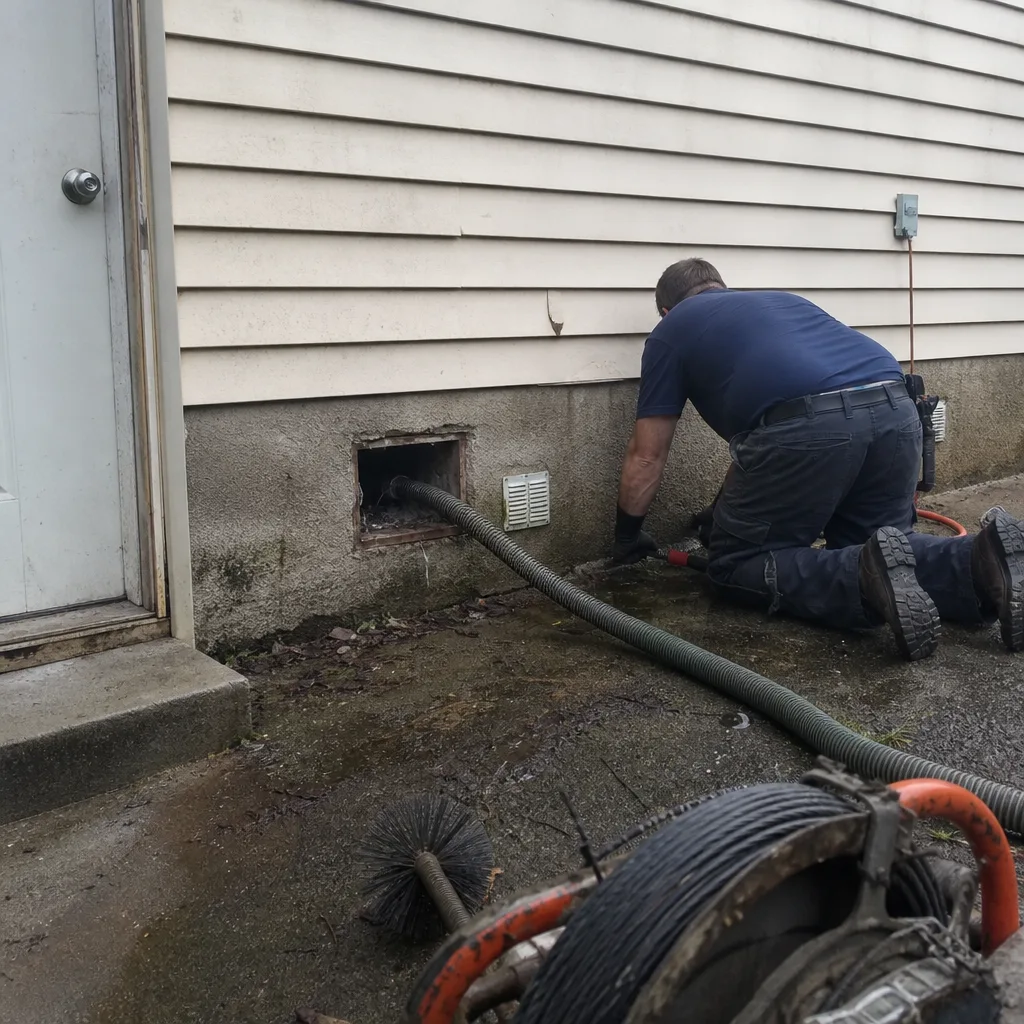
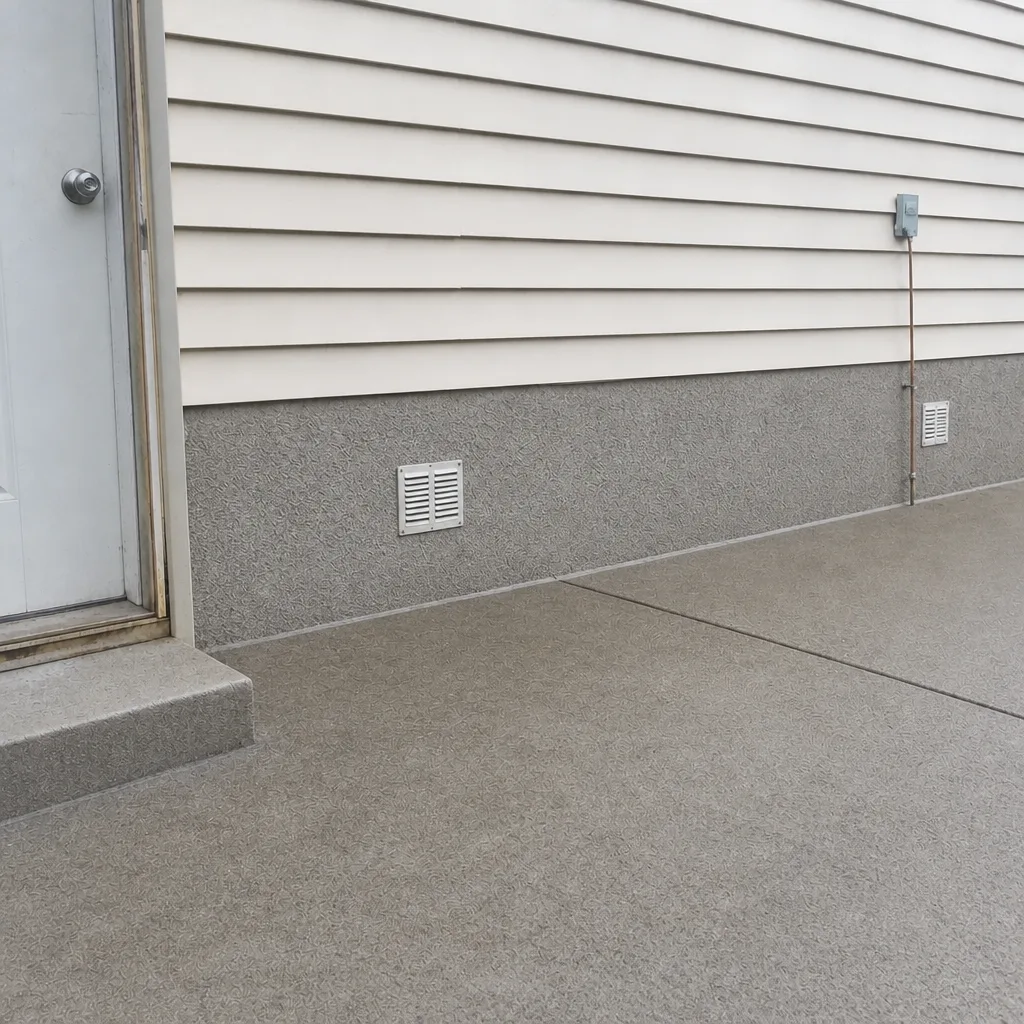
Dryer vents on Highland Creek homes installed in the 2000s often run through walls with several elbows, and long runs with multiple elbows lose pressure. A dedicated vent cleaning with a rotary brush addresses the accumulation; a shop vac through the outside flap does not. Fire-risk reduction is the reason this is a service on its own, not an add-on. We treat dryer vent cleaning as a separate job with the same equipment and the same systematic approach as duct cleaning, because that’s what it takes.
What a Real Duct Inspection Looks Like
If you take anything from this guide, take this: not every duct cleaning is the same scope, and a written scope of work is the thing that separates a professional from a person with a shop vac. Here’s what a proper inspection includes, and what you should expect to see before any work starts.
- A visual inspection of the system, not just the two registers nearest the thermostat. We look at every supply and return, the air handler cabinet, the plenum, the evaporator coil, and where accessible, the first several feet of every trunk and branch line.
- Photographs of what we find. Before-and-after photos of the interior of the ductwork are standard on our jobs, and they’re the single best defense against the bait-and-switch reputation the industry has earned.
- A written scope with a single flat price for the whole system. The price is set before work starts, per system, not per vent. Anyone who quotes per-vent pricing and then adds charges on the day of the work is following a playbook that starts with a low number.
- Containment planning. Using Abatement Technologies negative-air equipment to contain airflow during cleaning is standard for a proper job – without it, debris gets stirred into your living space instead of extracted from it.
- Source-removal equipment named. A Rotobrush rotary-brush system actually contacts the interior walls of the duct; a portable vacuum held to a register does not. Ask what’s being used, and why.
- A conversation about sealing afterward. Cleaning without duct repair and sealing is a short-lived result in Highland Creek homes with attic-mounted ductwork. Ask whether sealing is in scope, or whether it should be.
Our technicians have up to 11 years of experience doing exactly this work. What that means for you is practical: we’ve cleaned enough Highland Creek ductwork to recognize patterns quickly, and we’d rather tell you “your ducts are fine, replace the filter” than sell a cleaning you don’t need.
Common Mistakes to Avoid
- Treating “the house is dusty” as a diagnosis. It isn’t. It’s a symptom with at least five causes, and cleaning the ductwork only fixes one of them. Track where the dust settles and which rooms, and you’ll learn more in a week than a service call can tell you.
- Hiring on price alone from a coupon or phone advertisement. A low per-vent figure that becomes a per-room, per-coil, and per-mister upsell on the day of the visit is the most common complaint in this industry. Ask for a flat price per system, in writing, before anyone takes a register off.
- Assuming a filter upgrade fixes a duct problem. A high-MERV filter that’s installed on a system not designed for its resistance can reduce airflow and make comfort worse in Highland Creek homes with long trunk runs. Upgrading without checking static pressure is a common self-inflicted problem.
- Skipping the air handler cabinet and coil. Cleaning only the duct runs while leaving the coil, drain pan, and cabinet untouched is like dusting the floor and ignoring the ceiling fan. The equipment is where the air comes from, and it must be in scope.
- Ignoring a musty smell because “it’s only on heat mode.” Heat-mode smells that don’t fade after a few minutes can be a caused-by-something-else situation – often a disconnected duct pulling crawlspace or attic air. Treat it as a clue, not a nuisance.
- Not asking for before-and-after photos. “The crew was in and out in 30 minutes” is not a proof of work. Photos of your own duct interior before and after are.
- Waiting for symptoms to become serious. If a smell, a symptom pattern, or an airflow problem has persisted for two months or more, the “watch and see” window has run its course. Book an evaluation.
When to Call a Professional
Any single sign in this guide, alone, is worth watching for a few weeks. Two or more persistent signs together – a smell that only appears on cooling, weak flow in specific rooms, staining at multiple registers, and a home whose ductwork has no documented cleaning history – are worth a professional look. Call us when the pattern has survived a filter change and a couple of months of observation, for an odor that appears on cooling mode, or for a dryer that is clearly taking longer to finish a load than it used to. Air Duct Cleaning Highland Creek offers free estimates in Highland Creek – call (855) 323-8125. We answer 24/7, and fast dispatch from 7am to 7pm, Sunday through Friday. The written estimate sets the price, and the estimate itself is free.
Frequently Asked Questions
Pricing is set per system by a written estimate, and we don’t quote a per-vent figure that gets around the more important question of what scope of work your system actually needs. The honest way to answer is that the price depends on the number of systems in the home, the number of returns, whether the coil and cabinet need cleaning, and whether sealing is part of the scope. Ask any company for the flat price per system before work starts. Then ask what’s included: coil, cabinet, plenum, registers, and the trunk and branch ducts. Call (855) 323-8125 for an exact quote – estimates are free.
The lower the quote, the more likely it’s a per-vent teaser price that doesn’t include the coil, cabinet, or returns. The industry’s bait-and-switch reputation comes almost entirely from this practice. You’ll get a call or a knock at the door offering one price, then be told on-site that the coil cleaning, sanitizing, and sealing are “extra.” A real quote from a professional is a flat price per system, agreed in writing before the work starts. Call (855) 323-8125 for an exact quote – estimates are free.
You ask for photographs of the interior of the ductwork before and after. That’s the single most reliable way to verify the work, and it’s standard on every job we do. Ask before work starts whether before-and-after photos are included, and ask to see them. Our technicians use Rotobrush rotary-brush systems that contact the duct walls, and the evidence is visible in the photos. Call (855) 323-8125 for an exact quote – estimates are free.
Most homes don’t need it on a fixed schedule. A reasonable rule is to clean when there’s a reason: after a major renovation, after a new system installation, after moving into a Highland Creek home with no duct history, or when the warning signs in this guide show up together and persist. Homes with pets, recent construction, or family members with respiratory sensitivities may benefit from a more frequent schedule, but “every X years” isn’t a real rule. Call (855) 323-8125 for an exact quote – estimates are free.
It’s more likely a coil or drain pan job first, and the ductwork second. Musty smell on cooling mode points to biological growth on the evaporator coil or in the drain pan, and the fix is to pull and clean the coil and cabinet, then address any duct contamination downstream. Cleaning the duct runs alone won’t fix it. That’s why our scope is the entire air pathway – coil, cabinet, plenum, ducts, and seals – in one job. Call (855) 323-8125 for an exact quote – estimates are free.
Cleaning first, then sealing. Cleaning before sealing removes the contamination that would otherwise be trapped or re-deposited inside the sealed system, and sealing after cleaning fixes the leaks that let attic or crawlspace air back into your ductwork. Highland Creek homes with attic-mounted ductwork commonly have leak percentages high enough that cleaning alone won’t last more than a few months. Both jobs belong in the same scope. Call (855) 323-8125 for an exact quote – estimates are free.
See the difference
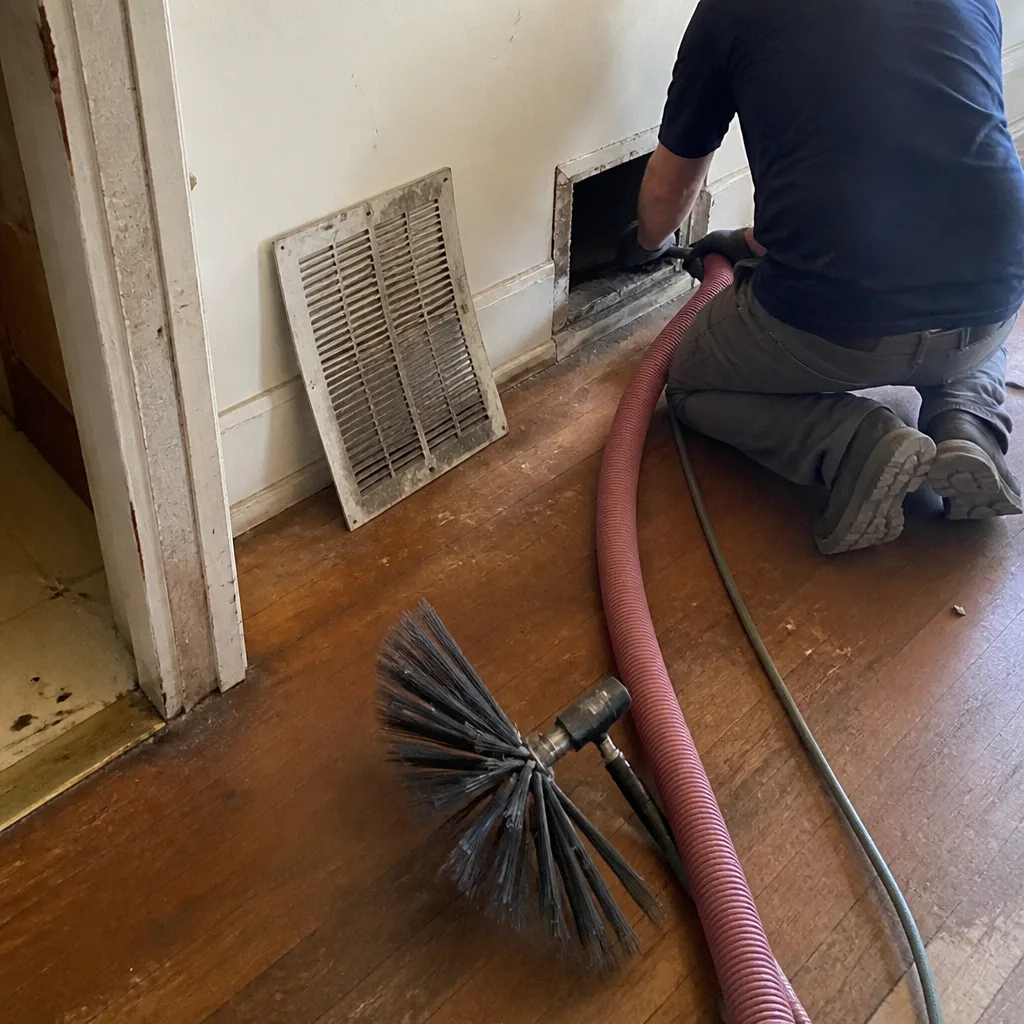 Before
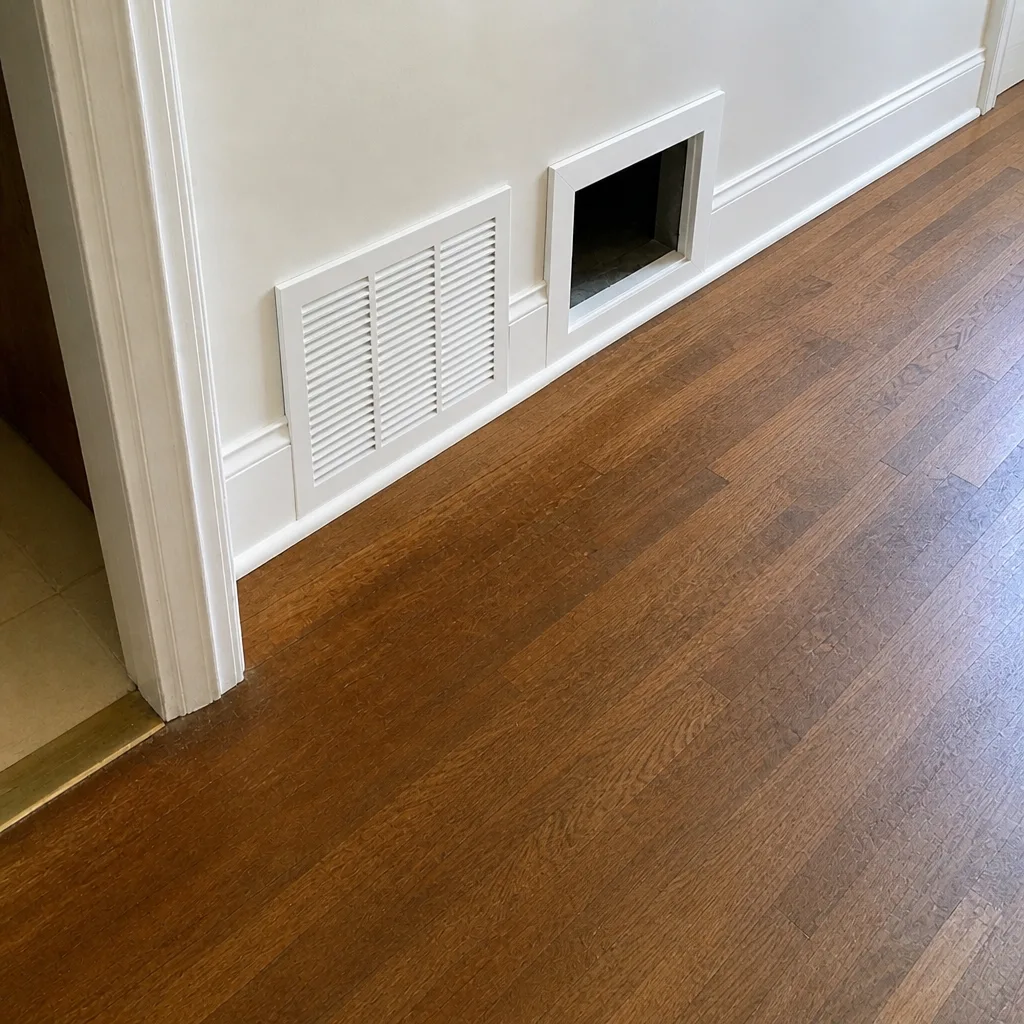 After
 Before
 After
 Before
 After
The Bottom Line
Warning signs are only useful if you can translate them. A musty smell on cooling points at a coil; musty smell on heating points at residue or a duct leak. Dark stains at registers point to biological growth; drywall grit points to construction debris. Weak airflow in one room points at a collapsed branch duct; weak airflow everywhere points at the trunk or the equipment. Patterns across rooms and patterns across time – when symptoms improve, when smells appear – are the data that lead to the right fix. If the pattern is real and persistent, an inspection with before-and-after photos is worth the phone call. That’s how you end up with sealed and clean ductwork rather than a second bill in six months. If you’ve read this far and most of these signs sound familiar, book the evaluation. A free estimate is the cheapest step in the whole process.
Contact Us
If you’ve identified a pattern worth investigating in your Highland Creek home, we’ll come out, inspect the whole air pathway, and give you a written estimate with a flat price per system before any work starts. No per-vent teaser, no after-the-fact add-ons, no surprises. Call (855) 323-8125 for a free estimate. We answer 24/7, and fast dispatch from 7am to 7pm, Sunday through Friday. If you’d rather start with the basics, our air duct cleaning service page walks through the process, and the local pro is licensed and insured as their state requires.
Written by the team at Air Duct Cleaning Highland Creek.